7 Best Zernio Alternatives in 2026
Postqued is the best Zernio alternative when you want a ready-made social calendar on top of your API. Solo costs $9/month for 5 accounts and gives you unlimited posts across 10 platforms, a REST API and 62-tool MCP server on every plan, and a 7-day free trial. Your team, scripts, and AI agents share one workspace with revision-aware approvals, so you do not have to build a dashboard yourself. Zernio is still the better fit when you are embedding social features in your own product and need DMs, reviews, ads, or messaging endpoints.
Zernio alternatives at a glance
| Product | Starting price | Best for | Limitation |
|---|---|---|---|
| Postqued | $9/month | Shared dashboard, approvals, API and MCP | Not a white-label embedded API |
| Post for Me | $10/month | Usage-based publishing API | No social-care features |
| Upload-Post | Free; Basic $16/month yearly | Broad destinations and media processing | Limits vary by plan |
| Ayrshare | $149/month | Multi-tenant social features in SaaS | Priced per customer profile |
| Postiz | $29/month cloud | Hosted or self-hosted scheduling | Self-hosting means running it yourself |
| Mixpost | Free Lite; Pro $299 one-time | Self-hosted social workspace | You maintain servers and provider apps |
| n8n | Free self-hosted Community edition | Custom workflow orchestration | Not a social API |
What does Zernio offer and cost in 2026?
Zernio is a developer platform for publishing, scheduling, analytics, comments, DMs, reviews, ads, and messaging. Its platform docs list 15 destinations, including X, Instagram, Facebook, LinkedIn, TikTok, YouTube, Pinterest, Reddit, Bluesky, Threads, Google Business, Telegram, Snapchat, WhatsApp, and Discord.
Its pricing uses graduated per-account bands:
- First two accounts: free.
- Accounts 3 to 10: $6 each per month.
- Accounts 11 to 100: $3 each.
- Accounts 101 and up: $1 each.
That works out to $48/month for 10 accounts, $78 for 20, $168 for 50, and $318 for 100. X usage is billed separately. Every account includes API access, analytics, inbox, and ads, plus a hosted MCP server.
1. Postqued: best for a shared publishing workspace
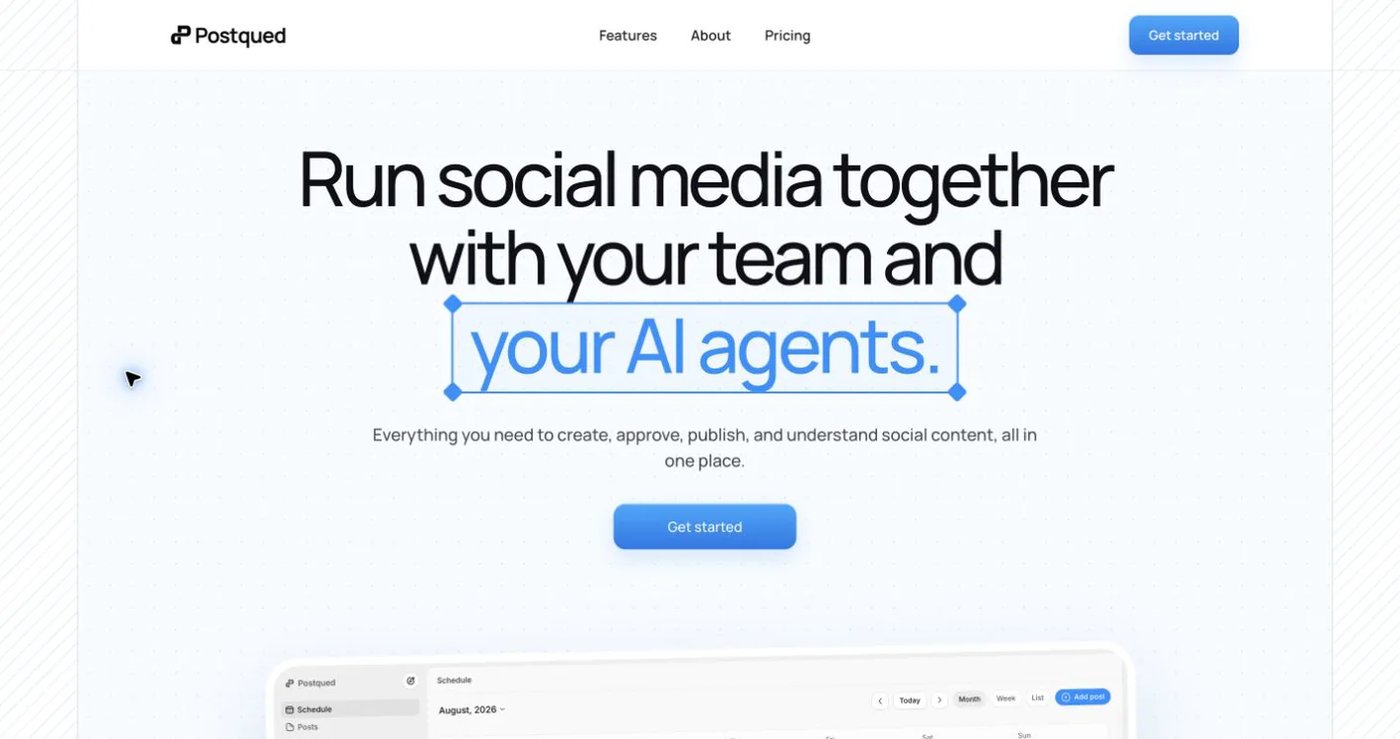
Postqued gives you the dashboard Zernio expects you to build, at a flat price.
- Flat plans instead of per-account bands: 20 accounts cost $78/month on Zernio before X usage. Postqued Creator covers 20 accounts for $29, and Pro covers 30 for $49.
- A shared calendar and approvals: people, scripts, and AI agents work in one workspace, and revision-aware approvals mean the approved version is exactly what publishes.
- A safe publishing API: dryRun validation, a required Idempotency-Key header that prevents duplicate publishes when you retry, and dispatchAt scheduling.
- A 62-tool MCP server on every plan for Claude and other assistants.
- Replies and reporting: an Engagement Inbox on six networks and analytics on TikTok, Instagram, Facebook, Threads, and YouTube.
Not included: DMs, reviews, ads management, or a headless account-connection UI.
Choose Postqued when a visible editorial workflow matters as much as the API. Compare Postqued and Zernio or see pricing.
2. Post for Me: best for usage-based publishing volume
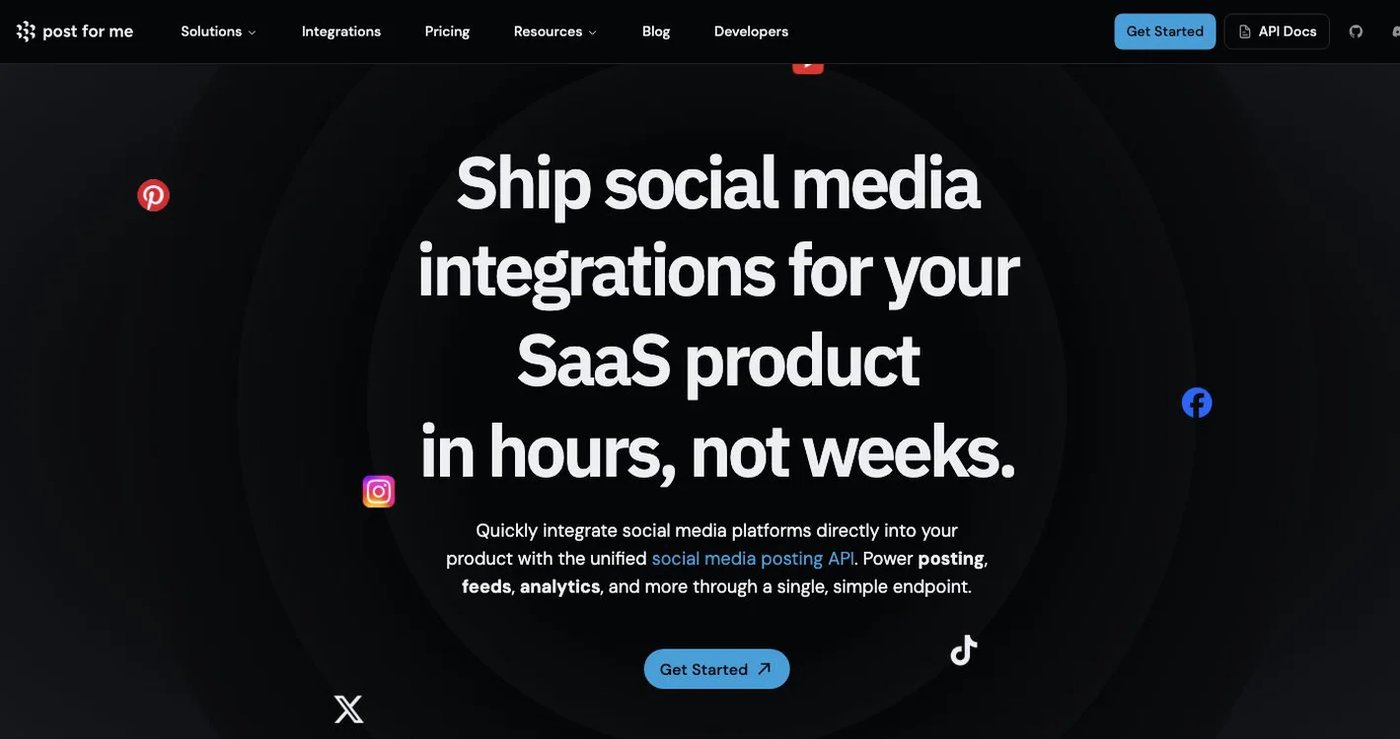
Post for Me is a developer-first service for connecting accounts, publishing, reading feeds, and pulling post analytics. Its pricing page starts at $10/month for up to 1,000 successful posts, with unlimited social accounts, projects, API keys, and team members. You can use its developer credentials or your own.
It does not promise DMs, reviews, ads, or messaging.
Choose Post for Me when publishing volume is predictable and you will build the dashboard yourself. See Postqued vs Post for Me.
3. Upload-Post: best for broad publishing and media processing
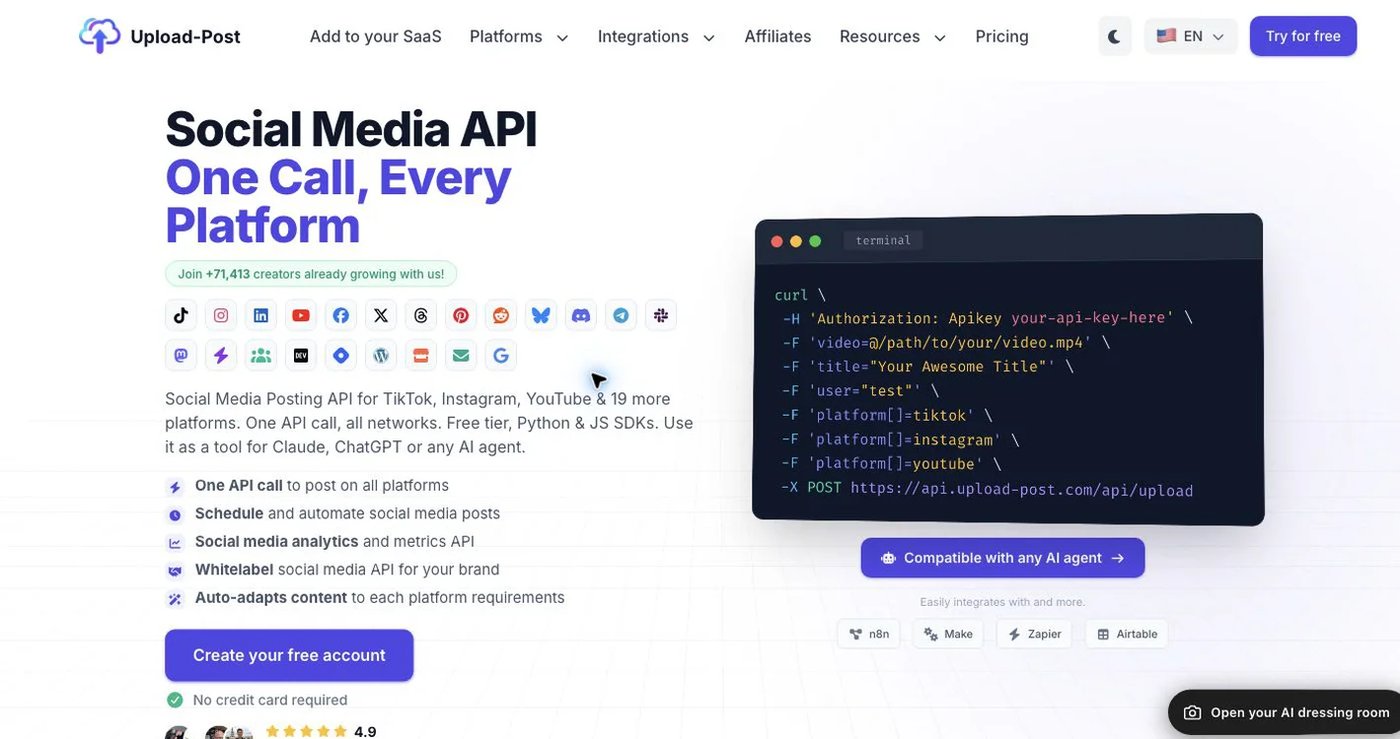
Upload-Post pairs a dashboard with an API, SDKs, n8n and Make integrations, MCP, media adaptation, and an FFmpeg processing API. Its pricing includes a free plan with 10 uploads per month and two profiles. Basic is $16/month billed yearly for five profiles; Professional is $33 and adds white-label integration.
“Unlimited uploads” still follows per-account daily limits in its rate-limit guide.
Choose Upload-Post when media conversion and a wide destination list are central. See Postqued vs Upload-Post.
4. Ayrshare: best for embedded multi-tenant social features
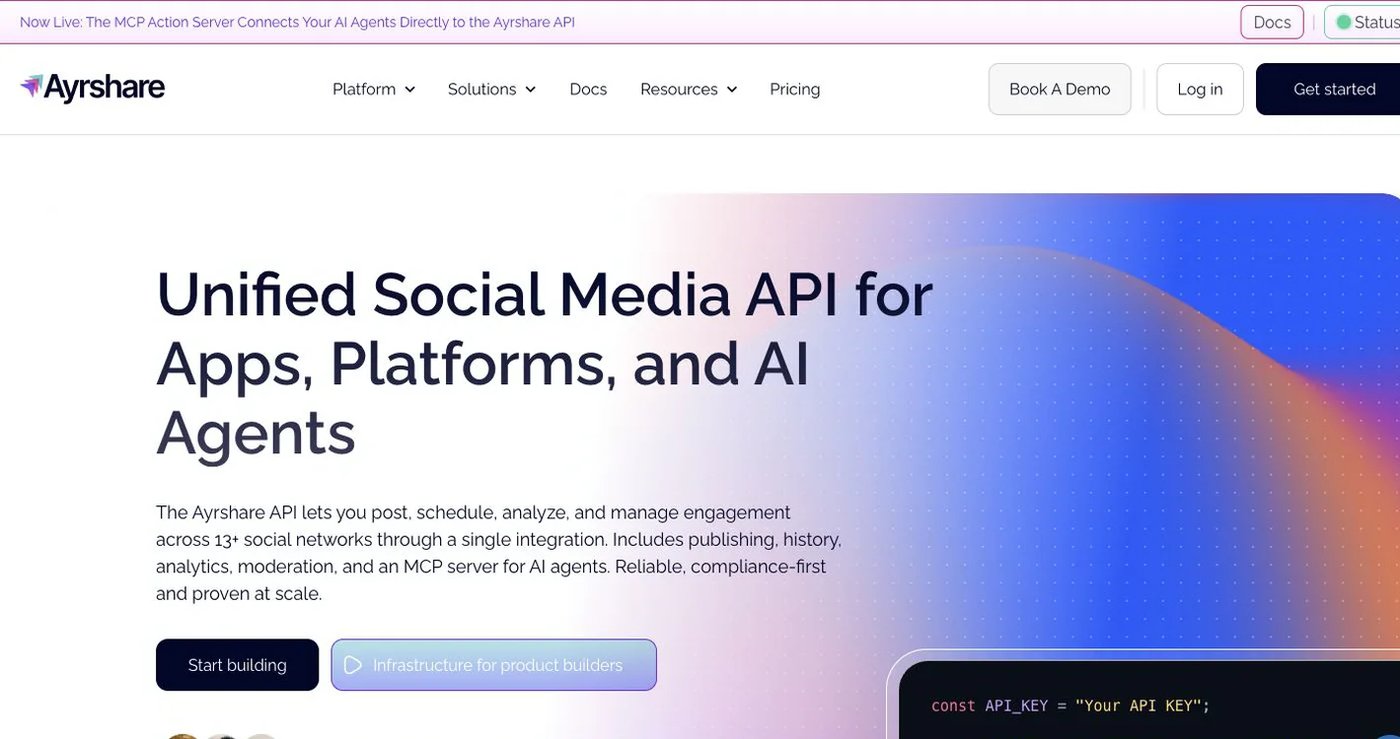
Ayrshare bills by social profile: one customer, brand, or location can connect several networks and count once. Its pricing page lists Premium at $149/month for one profile, Launch at $299 for up to 10, Business at $599 for 30, and custom Enterprise pricing from 300 profiles. All plans include API access, unlimited team members, and 13 or more networks.
Comments, DMs, and moderation exist, but messaging carries plan-specific charges.
Choose Ayrshare when your customers map cleanly to social profiles. See Postqued vs Ayrshare.
5. Postiz: best for hosted or self-hosted scheduling
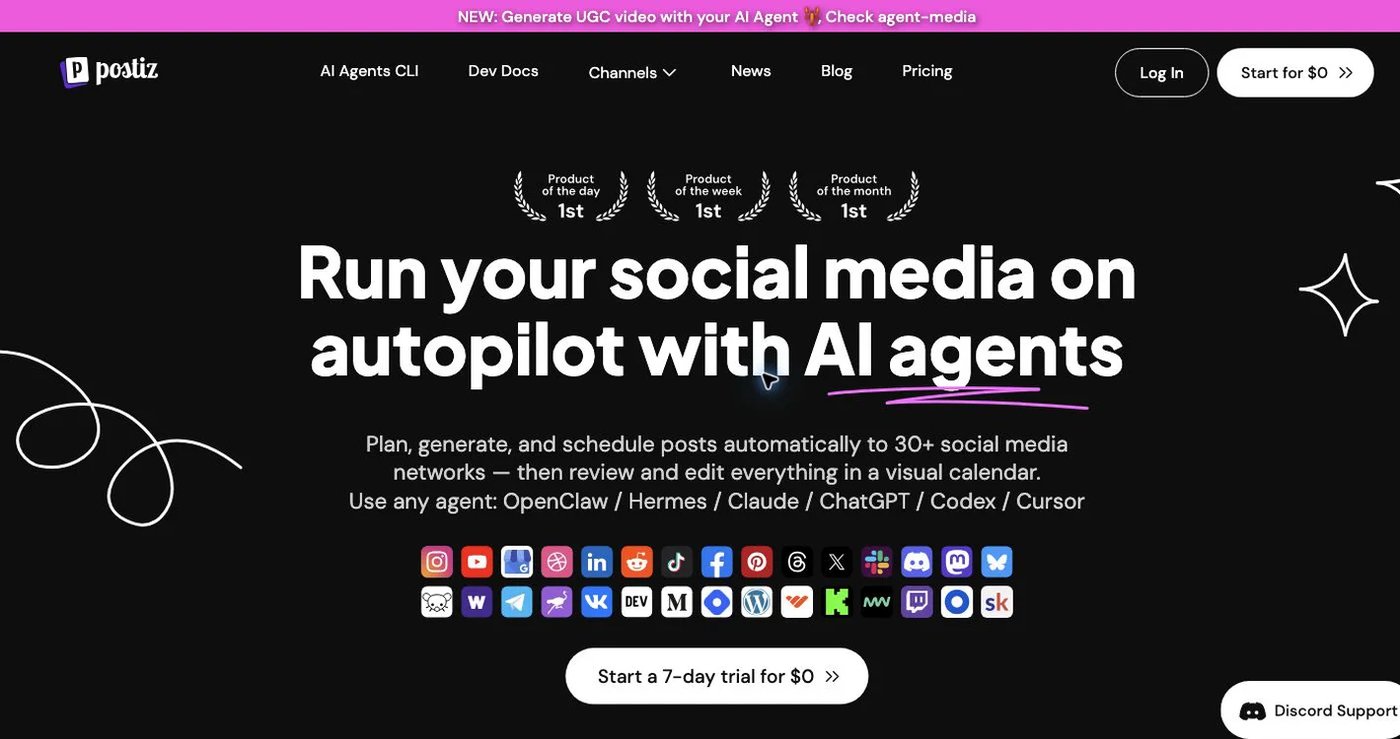
Postiz offers a calendar, API, webhooks, repeat scheduling, analytics, AI tools, and a self-hosted edition. Its cloud pricing lists Standard at $29/month for five channels, Team at $39 for 10, Pro at $49 for 30, and Ultimate at $99 for 100.
Its MCP docs say the tools can schedule posts but cannot yet read or reply to comments. Self-hosting requires Temporal for background jobs.
Choose Postiz when source access matters and you can run the infrastructure. See Postqued vs Postiz.
6. Mixpost: best for a self-hosted social workspace
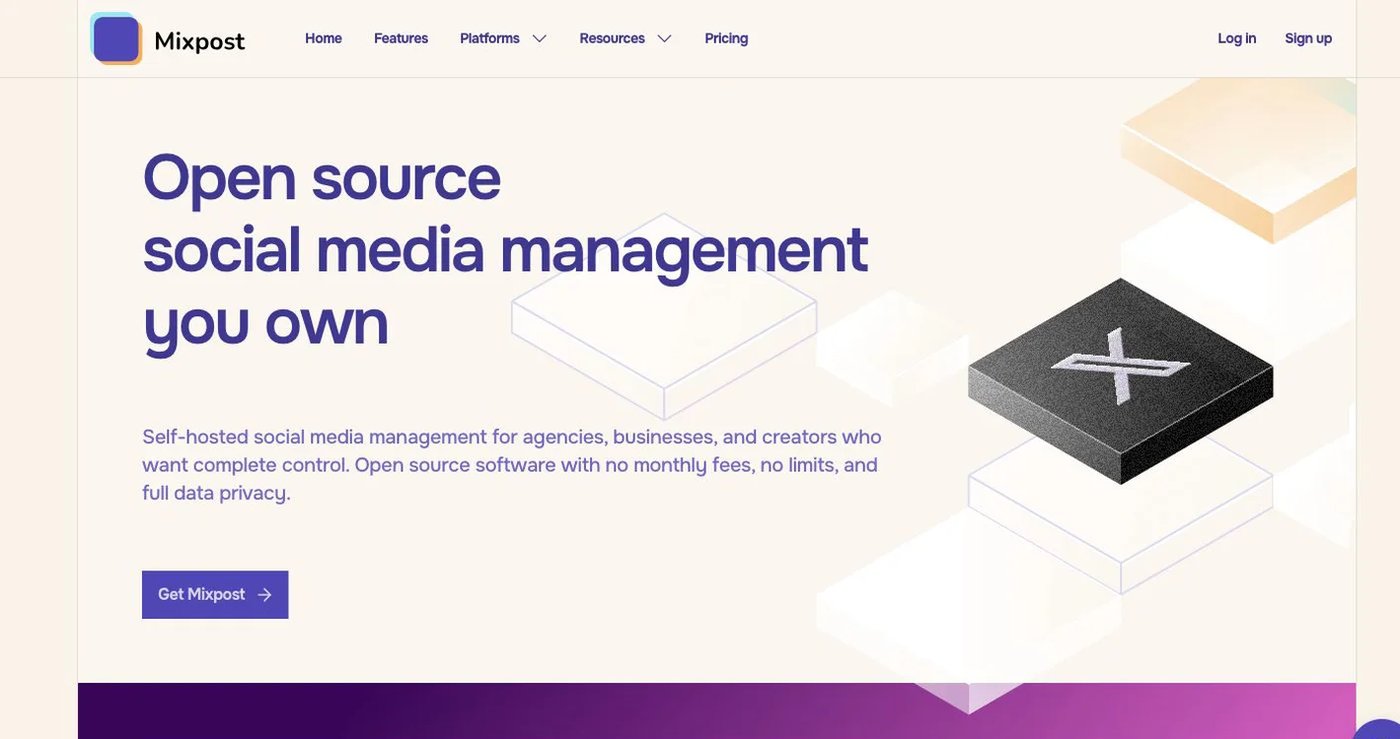
Mixpost runs on your own servers. Lite is free and publishes to Facebook Pages, Mastodon, and X. Its pricing page lists Pro at $299 one-time and Enterprise at $1,199, each with one year of updates.
Pro adds more platforms, unlimited accounts and members, approvals, analytics, API, MCP, and webhooks. The Pro license covers internal use; Enterprise is for reselling a hosted product.
Choose Mixpost when self-hosting is a firm requirement, not just a way to avoid a monthly bill. See Postqued vs Mixpost.
7. n8n: best for custom workflow orchestration

n8n is a workflow engine, not a social API. Teams call provider APIs or services like Zernio through nodes and HTTP requests, then add branching, retries, and human-review steps.
n8n Cloud is priced by executions: its plan docs list 2,500 per month on Starter and 10,000 or 50,000 on Pro. A free self-hosted Community edition exists, but its licensing guide says embedding n8n in a customer product can require Enterprise or Embed licensing.
Choose n8n when you need orchestration around a social API you already use.
How do you choose a Zernio alternative?
- Pick your billing unit: connected account, customer profile, successful post, execution, or license.
- Decide whether users work in a vendor dashboard or inside your product.
- List every platform, format, analytics field, and inbox action you need.
- Test uploads, idempotency, retries, rate limits, and status polling.
- Include hosting and licensing costs when comparing self-hosted options.
Final recommendation
Pick Postqued if people and AI agents need a shared calendar with approvals on top of the API. You get 10 platforms, unlimited posts, and a REST API plus 62-tool MCP server from $9/month on a flat plan. Pick Post for Me for per-post pricing, Upload-Post for media processing, Ayrshare for multi-tenant SaaS, Postiz or Mixpost for self-hosting, or n8n for orchestration. Keep Zernio if DMs, reviews, ads, and messaging inside your own product are the requirement.
If you want a ready-made dashboard on top of the API, Creator at $29/month covers the 20 accounts that cost $78 on Zernio. Start a 7-day free trial.