7 Best Vista Social Alternatives in 2026
Postqued is the best Vista Social alternative for teams that mainly plan, approve, and publish. Solo costs $9/month for 5 accounts and gives you unlimited posts across 10 platforms, a REST API and 62-tool MCP server on every plan, and a 7-day free trial. Vista Social starts at $99/month, charges $29/month extra for X, and sells its API as an add-on; Postqued includes X and API access on every plan. Vista Social is still the better fit when DMs, review management, and listening are central to your work.
Vista Social alternatives at a glance
| Product | Starting price | Best for | Limitation |
|---|---|---|---|
| Postqued | $9/month | Publishing, approvals, API and MCP | No DMs, listening, or reviews |
| Planable | First 50 posts free | Detailed content review | Analytics and inbox are add-ons |
| Buffer | Free; Essentials $6/channel | Simple queues | Approvals need the Team plan |
| Hootsuite | $99/user/month (annual) | Inbox, listening, governance | Standard caps at 10 accounts |
| Sprout Social | $79/seat/month yearly | Social care and reporting | Smart Inbox starts at $199/seat |
| NapoleonCat | $89/month | Moderation and inbox automation | API is Enterprise-only |
| Metricool | Free; Starter $25/month | Cross-network analytics | API needs Advanced or Custom |
What does Vista Social offer and cost in 2026?
Vista Social combines publishing, analytics, an inbox, reviews, listening, approvals, AI tools, and employee advocacy. Its pricing page lists:
- Professional: $99/month ($950/year), 15 profiles, two users.
- Advanced: $199/month ($1,910/year), 30 profiles, three users.
- Scale: $449/month ($4,310/year), 70 profiles, four users.
- Enterprise: custom pricing.
Add-ons raise the total: X costs $29/month, listening across social, web, and news starts at $75/month, and employee advocacy starts at $199/month for 25 employees. The REST API is a paid add-on, and its MCP guide places basic MCP on Advanced. You can reply to Google Business and Facebook reviews; other review sources are monitoring-only.
1. Postqued: best for shared publishing and agent workflows
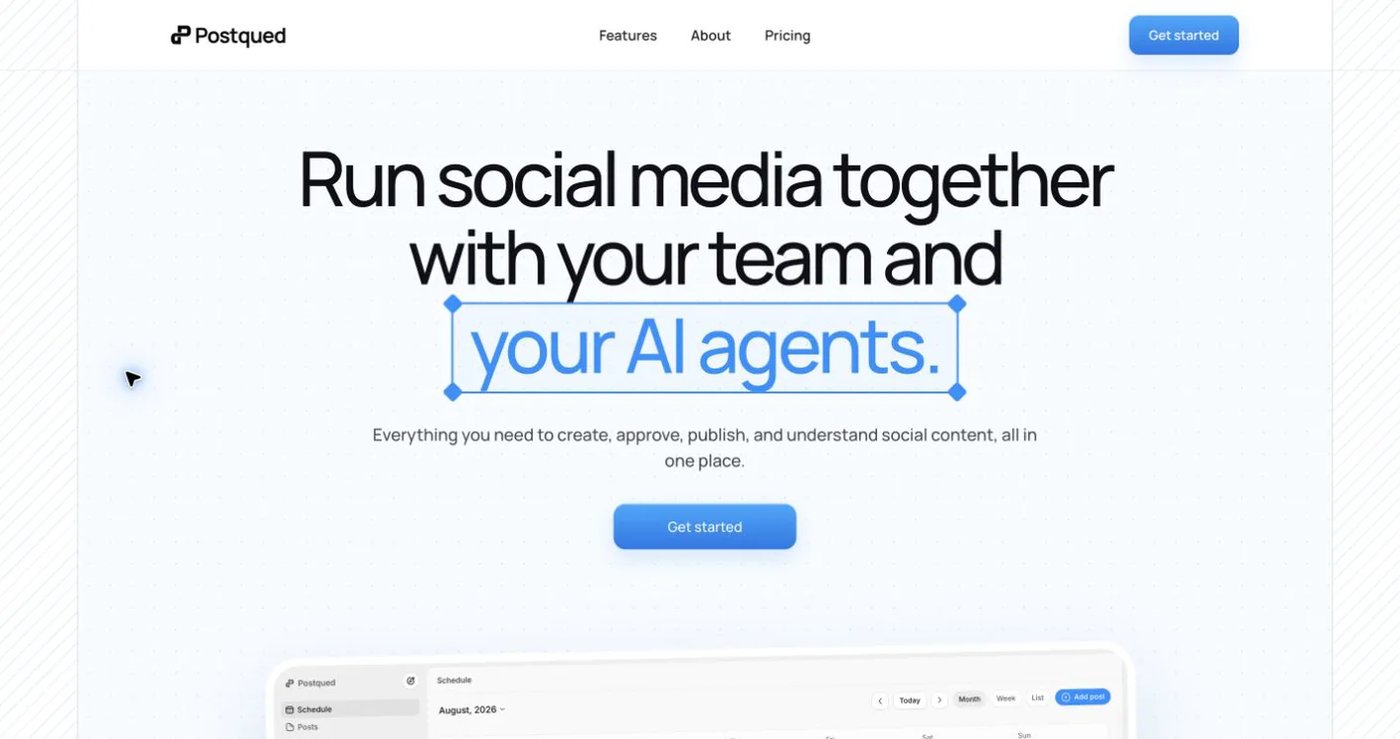
Postqued gives Vista Social users the publishing core without the add-on math.
- Lower cost at 15 to 20 accounts: Vista Social Professional costs $99/month for 15 profiles and two users. Postqued Creator costs $29/month for 20 accounts.
- X included: Vista Social charges $29/month extra for X. Postqued publishes to X with nine other networks on every plan.
- API and MCP without add-ons: Vista Social sells its REST API separately and puts basic MCP on Advanced ($199). Postqued includes a REST API and a 62-tool MCP server from Solo at $9/month.
- Seats: Pro at $49/month covers 30 accounts with unlimited seats, where Vista Advanced includes three users.
- Approvals and replies: revision-aware approvals on every plan, and an Engagement Inbox for comments on Facebook, Instagram, Threads, X, LinkedIn, and Mastodon.
Not included: DMs, social listening, review management, or employee advocacy.
Choose Postqued when your daily work is planning, approval, publishing, and comment replies. Compare Postqued and Vista Social or see pricing.
2. Planable: best for detailed content approvals

Planable puts review before publishing. Teams comment on drafts, suggest edits, preview feeds, and require approval before posts go live.
Its pricing page offers the first 50 posts free. Basic is $33 per workspace per month billed yearly, with 60 posts, four pages, and unlimited users. Pro is $49 billed yearly, with 150 posts, 10 pages, required approvals, and a public API. Multi-level approvals are Enterprise-only, and analytics and inbox are paid add-ons.
Choose Planable when a controlled review trail matters more than unlimited posting. See Postqued vs Planable.
3. Buffer: best for a straightforward publishing queue
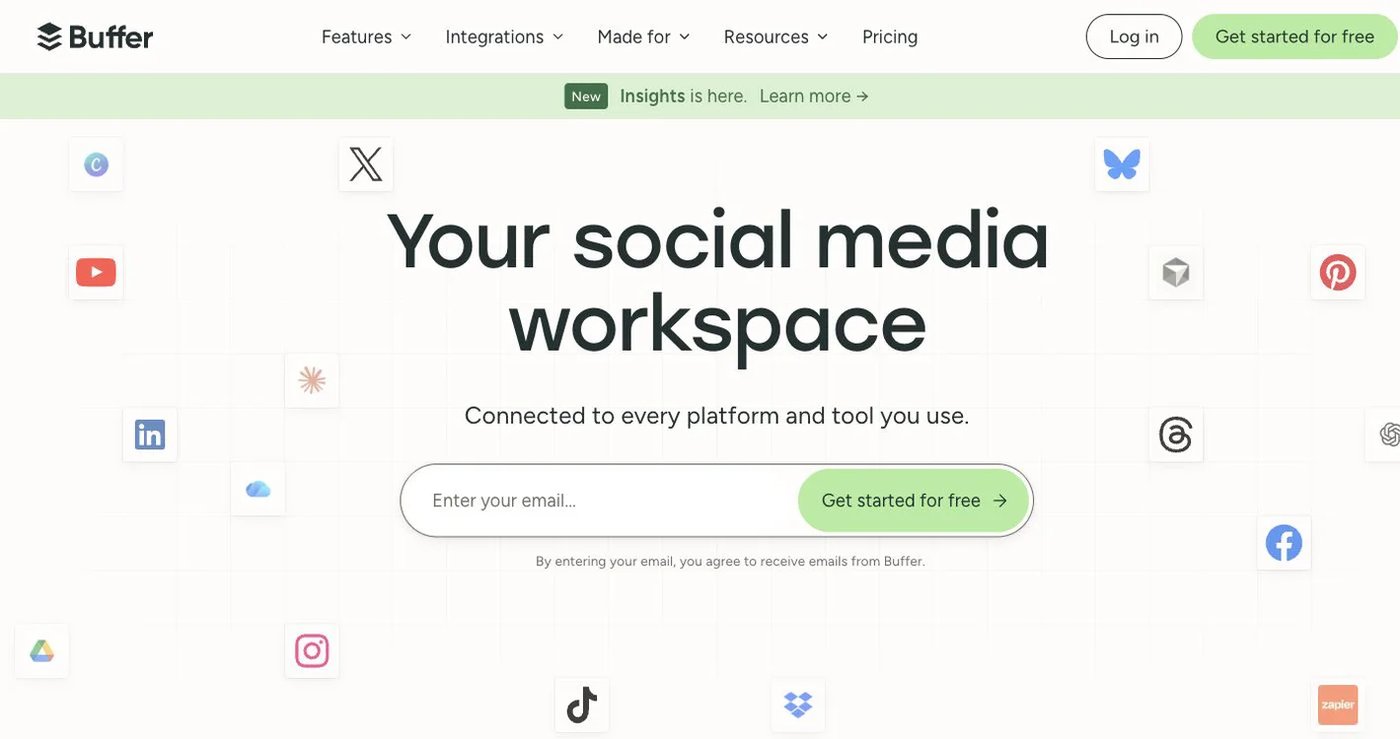
Buffer’s free plan includes three channels, one user, and 10 queued posts per channel. Per its plan guide, Essentials costs $6 per channel monthly with one user, and Team costs $12 per channel with unlimited users and approvals. Rates fall above 10 channels.
Buffer includes analytics, a community inbox, and an API.
Choose Buffer when a few accounts and a familiar queue are enough. See Postqued vs Buffer.
4. Hootsuite: best for listening and organizational controls
Hootsuite combines publishing, a unified inbox, analytics, listening, AI tools, and governance. Its plans page lists Standard from $99/month, Professional at $199, and Advanced up to $399, billed yearly per user. Standard supports 10 social accounts; Professional removes the cap.
Advanced adds approval workflows and message routing. Enterprise adds SSO and compliance integrations.
Choose Hootsuite when listening, private messages, and governance belong in one system. See Postqued vs Hootsuite.
5. Sprout Social: best for social care and reporting

Sprout Social covers publishing, analytics, customer care, reviews, and optional listening, priced per seat. Its pricing page lists Essentials at $79 per seat monthly (yearly billing), Standard at $199 with the Smart Inbox and review management, Professional at $299 with approvals and competitive reports, and Advanced at $399 with the Sprout API.
Premium Analytics and Listening are add-ons.
Choose Sprout when customer care and deep reporting justify per-seat pricing. See Postqued vs Sprout Social.
6. NapoleonCat: best for inbox moderation and automation
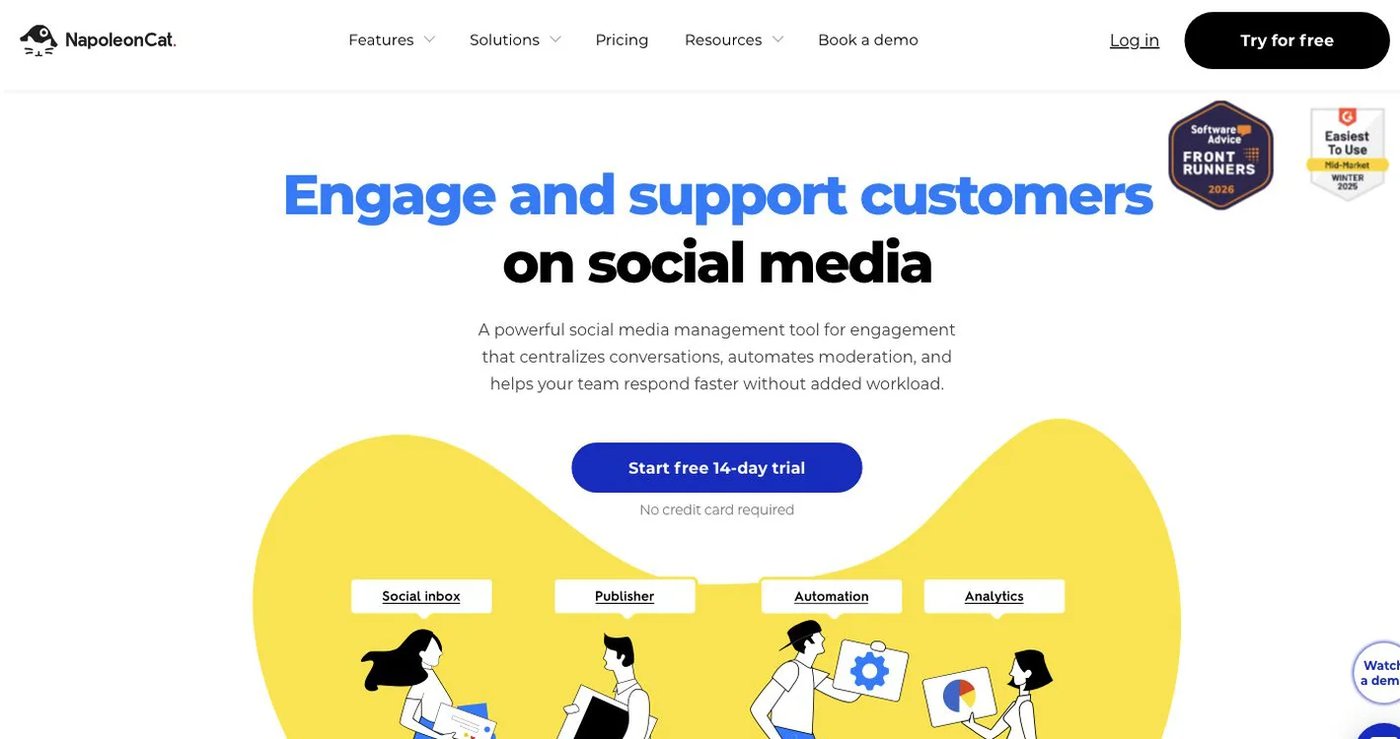
NapoleonCat focuses on publishing, analytics, a social inbox, and moderation rules. Its pricing page lists Standard at $89/month for two users and five profiles, Pro at $109 with the Social Inbox, and Expert at $139 with automatic moderation and sentiment analysis. Enterprise starts at $465/month and is the only tier with API access.
Choose NapoleonCat when moderating public conversations is the main job. See Postqued vs NapoleonCat.
7. Metricool: best for analytics across many channels
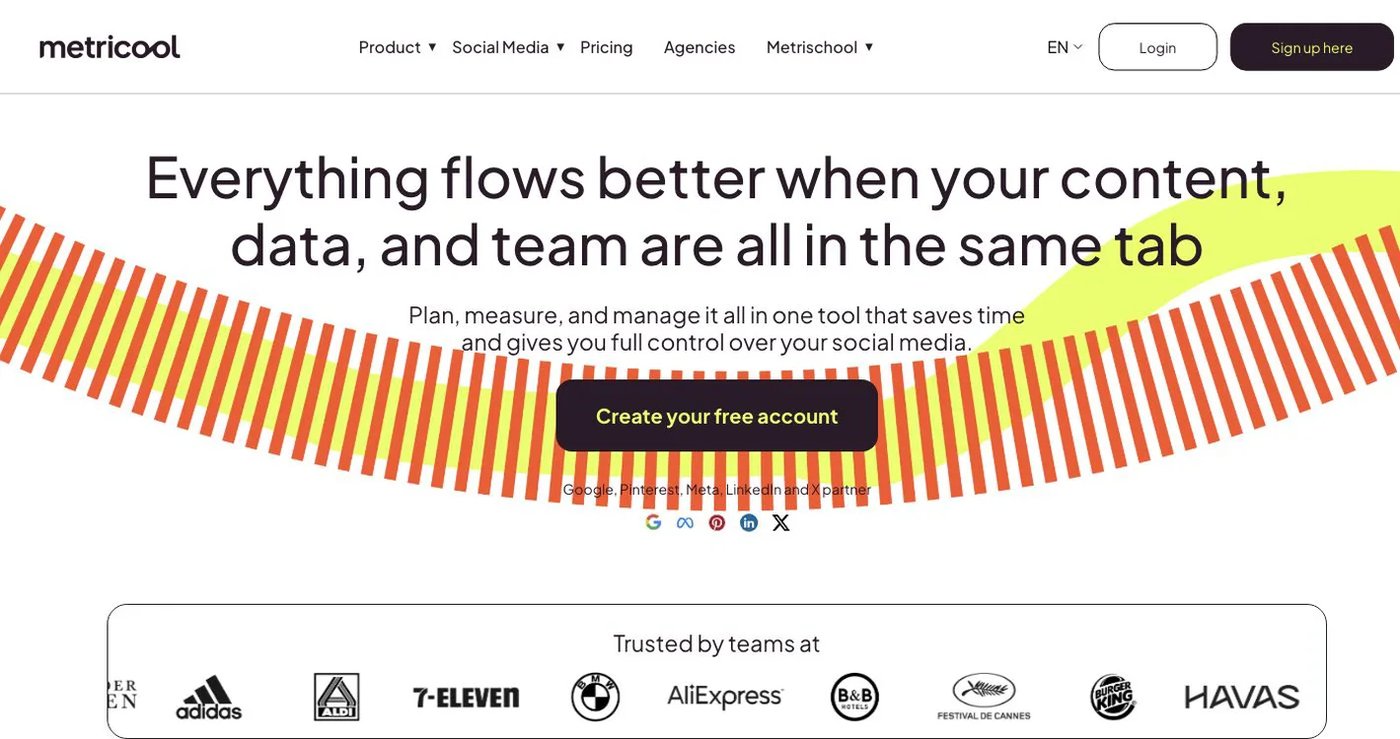
Metricool pairs scheduling with cross-network analytics, competitor tracking, and ad data. Free covers one brand and 20 posts per month but excludes LinkedIn and X.
Starter is $25/month ($20 yearly) with more brands and downloadable reports. Advanced is $67/month ($53 yearly) and adds approvals, client management, Looker Studio, and the API. Its plan guide says MCP is available even on Free. X can cost extra.
Choose Metricool when analytics and client reports drive the decision. See Postqued vs Metricool.
How do you choose a Vista Social alternative?
- Count profiles, users, and the post formats you need.
- Separate public comments from DMs, reviews, and listening.
- Map who drafts, approves, and publishes.
- Add up X, listening, API, and advocacy add-ons for a true total.
- Export required history before canceling; nothing transfers automatically.
Final recommendation
Pick Postqued if publishing, approvals, and automation are your core workflow. You get 10 platforms with X included, revision-aware approvals, and API plus MCP from $9/month instead of $99/month plus add-ons. Pick Planable for content review, Buffer for simple queues, Hootsuite or Sprout for large management programs, NapoleonCat for moderation, or Metricool for analytics. Keep Vista Social if DMs, reviews, and listening are part of your daily work.
Teams that mainly publish can replace Vista Social Professional with Creator at $29/month for 20 accounts, X included. Start a 7-day free trial.