7 Best Tweet Hunter Alternatives in 2026
Postqued is the best Tweet Hunter alternative if your content now goes beyond X. Solo costs $9/month for 5 accounts and gives you unlimited posts across 10 platforms, a REST API and 62-tool MCP server on every plan, and a 7-day free trial. You plan X, LinkedIn, Threads, TikTok, and Instagram in one calendar with approvals instead of juggling an X-only tool. Tweet Hunter is still the better fit when X growth tools like Auto-DMs, a viral-post library, and an X CRM are the whole job.
Tweet Hunter alternatives at a glance
| Product | Starting price | Best for | Limitation |
|---|---|---|---|
| Postqued | $9/month | 10-platform publishing, approvals, API and MCP | No Auto-DMs, X CRM, or viral library |
| Typefully | Free plan | Writing, collaboration, API and agents | Five text-led networks |
| Taplio | $39/month | LinkedIn writing and lead work | LinkedIn only |
| Buffer | Free; Essentials $6/channel | A simple multi-network queue | Cost grows with channel count |
| Publer | Free; Professional from $5/month | Bulk tools, RSS, and recycling | API on Business and Enterprise only |
| Metricool | Free; Starter $25/month | Analytics, reports, competitors | API needs Advanced or Custom |
| Hypefury | $6/month per channel | Writing and visual repurposing | Current plans do not list X |
What does Tweet Hunter offer and cost in 2026?
Tweet Hunter is an X growth product, not a general social media manager. Its pricing page lists three plans, each with a 7-day trial:
- Discover, $29/month: one X account, viral-post library, scheduling, evergreen posts, Auto-Plug, Auto-Retweet, X analytics, and up to 3,000 Auto-DMs per month.
- Grow, $49/month: five accounts, plus the AI writer, rewriting tools, an X CRM, and more Auto-DMs.
- Enterprise, $199/month: unlimited accounts, ghostwriting mode, a custom-trained AI model, and unlimited AI use.
It does not document a general posting API or MCP server. Switch when your calendar includes visual and video networks, when a team must approve posts, or when publishing starts in another system. Export your evergreen posts, lead records, and X analytics first, because they rarely transfer.
1. Postqued: best for publishing beyond X with approvals and automation
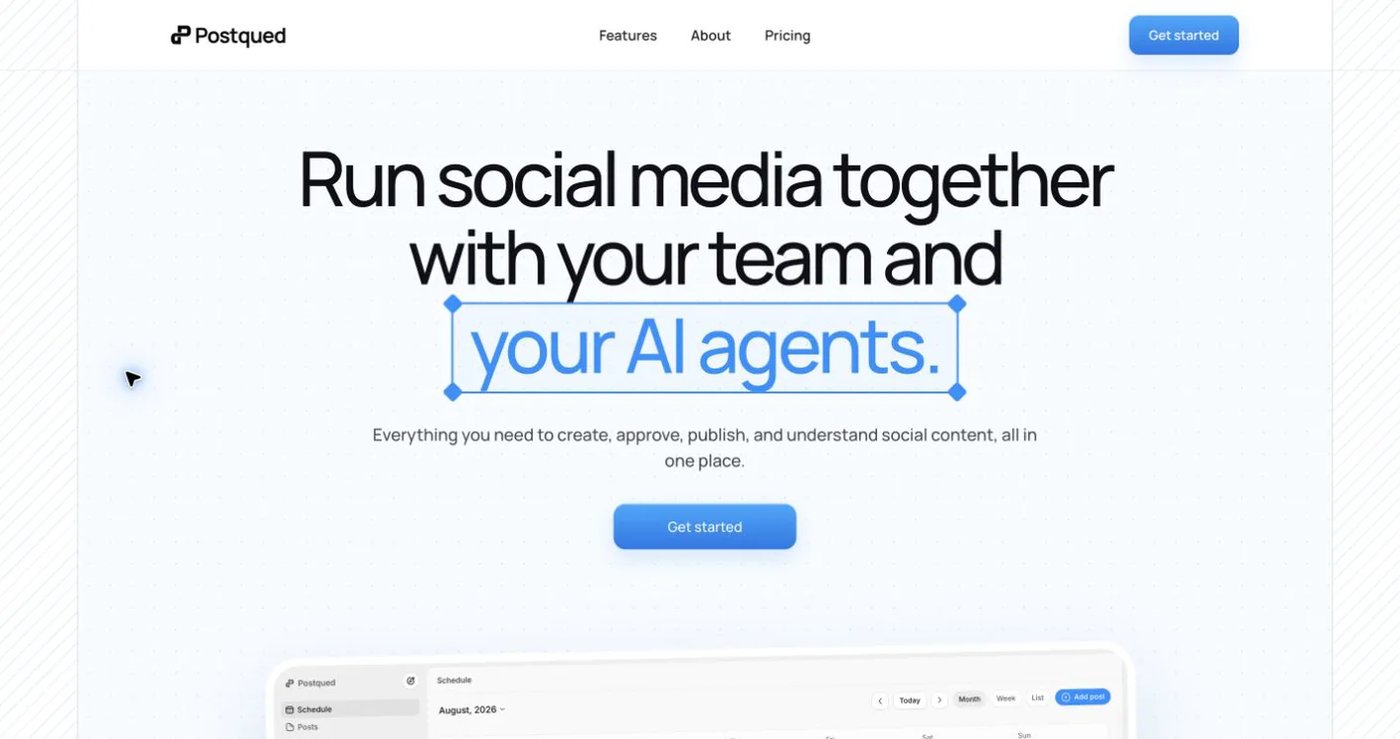
Postqued replaces Tweet Hunter’s scheduler when your calendar now spans more than X.
- Five accounts on any network for $9: Tweet Hunter Grow costs $49/month for five X accounts. Postqued Solo costs $9/month for five accounts across X, LinkedIn, Threads, TikTok, Instagram, YouTube Shorts, Facebook, Pinterest, Bluesky, and Mastodon.
- X publishing: text, up to four images or a GIF, or video, with an optional first comment and X replies in the Engagement Inbox.
- Team review Tweet Hunter lacks: revision-aware approvals on every plan, so the approved version is exactly what publishes, with external reviewers by email.
- A documented API and MCP: a REST API with dryRun validation, an Idempotency-Key header that prevents duplicate publishes when you retry, and dispatchAt scheduling, plus a 62-tool MCP server for Claude and other assistants.
- Analytics on TikTok, Instagram, Facebook, Threads, and YouTube. Use X’s native analytics for X.
Not included: Auto-DMs, a viral-post library, or an X CRM.
Choose Postqued when your daily job is planning, approving, and publishing across several networks. Compare Postqued and Tweet Hunter or see pricing.
2. Typefully: best for a focused writing workspace
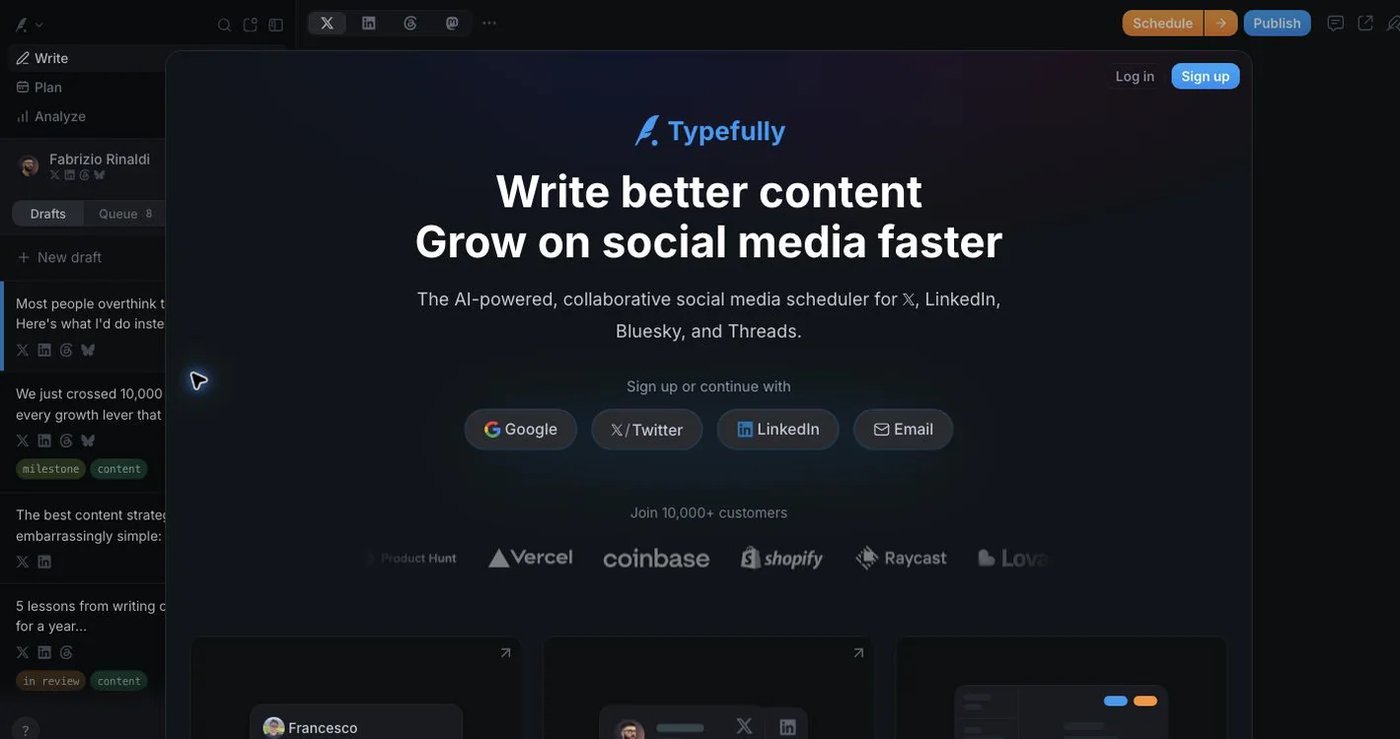
Typefully’s product page lists publishing to X, LinkedIn, Threads, Bluesky, and Mastodon, with shared drafts, comments, previews, analytics, a calendar, and AI-assisted writing. It advertises a free plan.
Its v2 REST API covers drafts, scheduling, publishing, media, tags, comments, analytics, and webhooks. It also documents a remote MCP server and Agent Skills.
Choose Typefully when the writing experience and a text-led network mix matter most. It lacks Tweet Hunter’s X CRM and Auto-DMs, and it does not cover TikTok, Instagram, Facebook, YouTube, or Pinterest.
3. Taplio: best for LinkedIn content and lead work
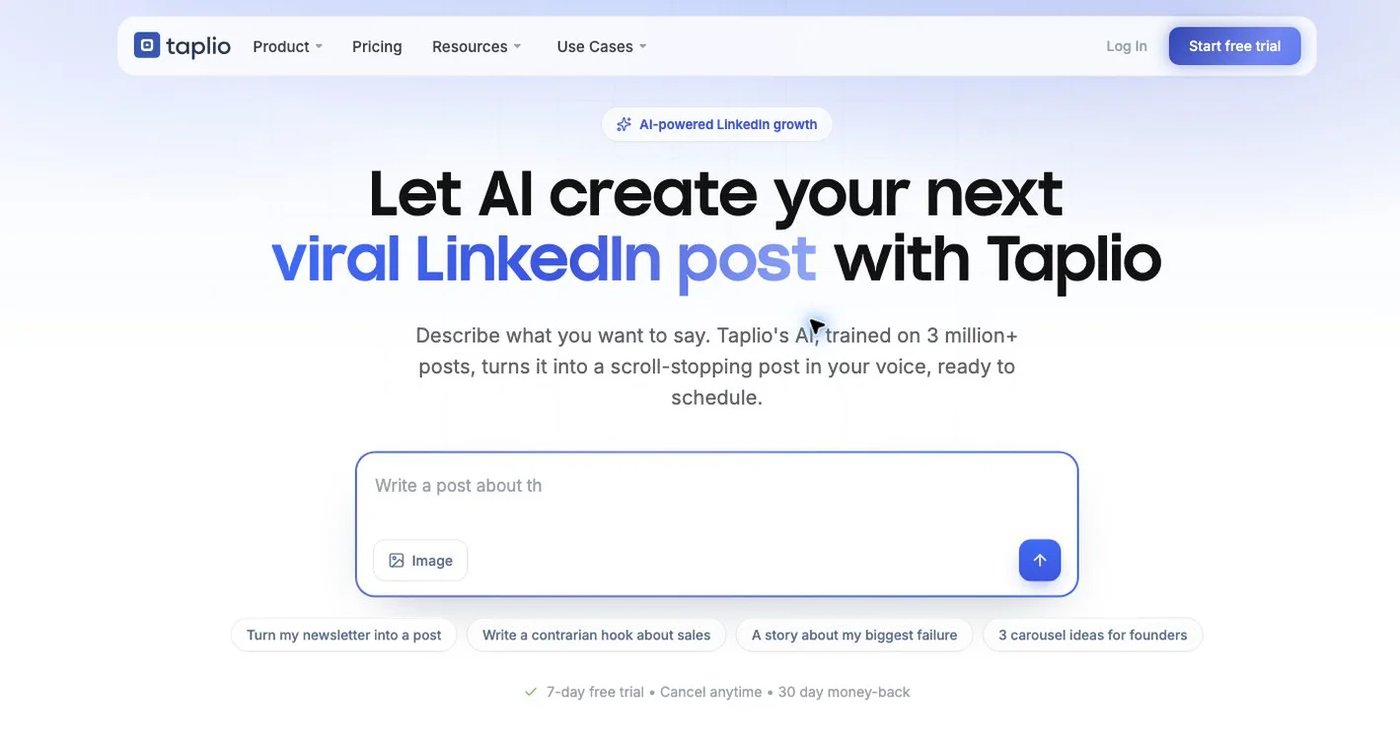
Taplio suits people moving their main publishing and prospecting from X to LinkedIn. It combines post ideas, scheduling, analytics, AI writing, engagement tools, and lead research.
Its pricing page lists Starter at $39/month, Growth at $69, and Pro at $199, with lower annual rates ($32, $49, and $149). Starter covers scheduling, the content library, carousels, and analytics. Growth adds AI drafting and engagement tools. Pro adds unlimited AI and larger lead workflows.
Choose Taplio when LinkedIn has become your revenue channel. It is not a multi-network replacement and does not publish to X.
4. Buffer: best for a simple multi-network queue
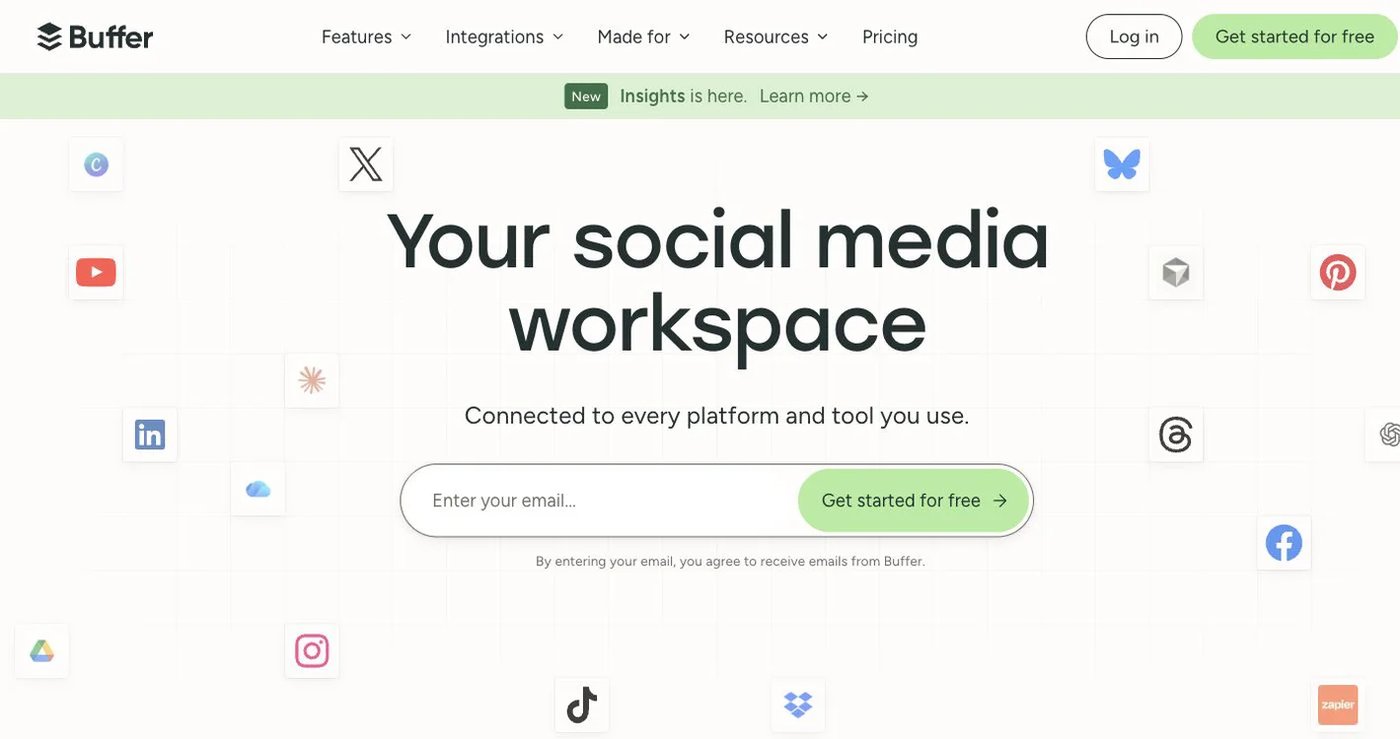
Buffer’s free plan supports three channels with 10 scheduled posts each. Essentials costs $6 per channel per month; Team costs $12 per channel and adds unlimited users, permissions, and approvals. Annual billing and volume discounts above 10 channels lower the rate.
Buffer has a documented GraphQL API with plan-specific key and request limits.
Choose Buffer when you need a clean queue for a handful of channels. Count every connected channel before comparing totals, since per-channel pricing adds up quickly.
5. Publer: best for bulk publishing, RSS, and recycling
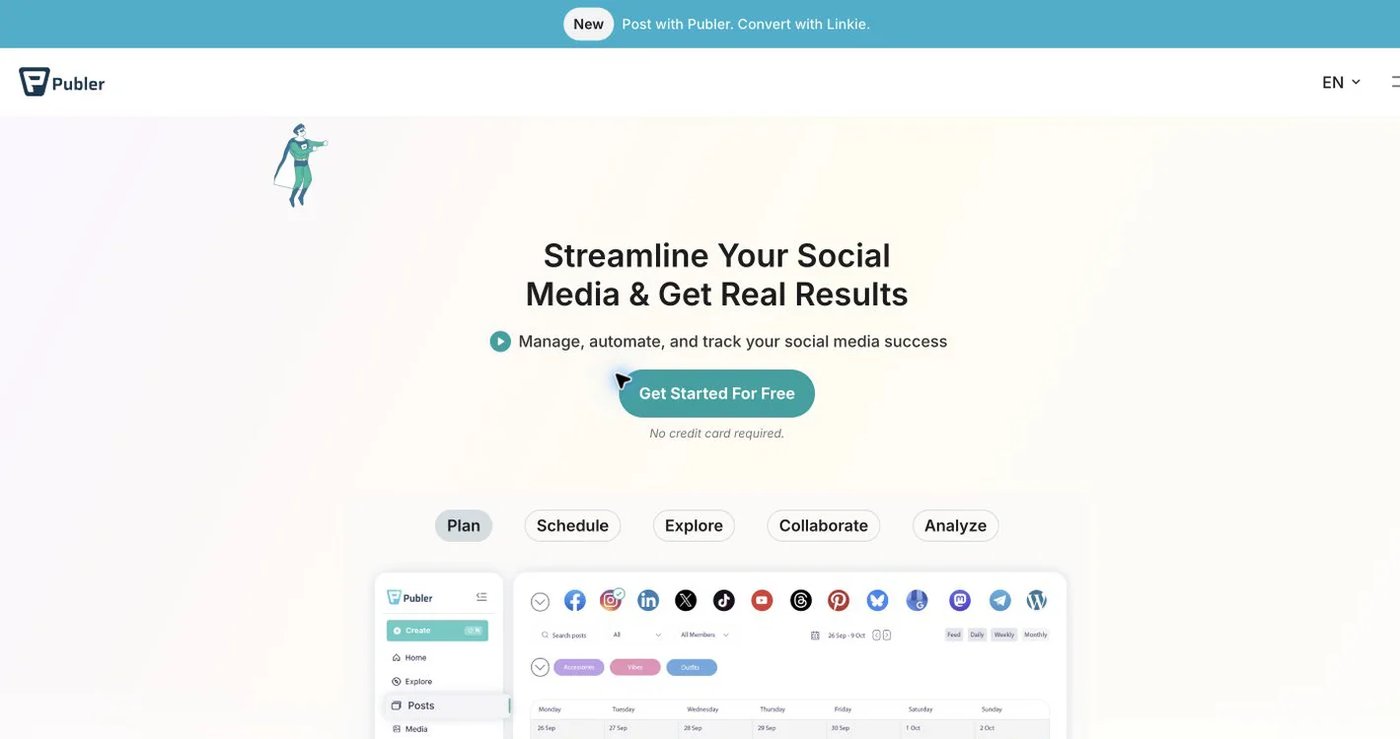
Publer offers bulk scheduling, RSS automations, reusable posts, workspaces, and per-platform versions. Free supports three accounts with 10 pending posts each. Professional starts at $5/month for one account and Business at $10; extra accounts and members raise the total.
Professional adds unlimited scheduling, RSS feeds, and permanent post history. Business adds analytics, best-time suggestions, hashtag tools, and automatic recycling. Publer’s API documentation makes its API available only to Business and Enterprise customers.
Choose Publer when bulk operations and evergreen recycling matter more than X research.
6. Metricool: best for analytics, reports, and competitor tracking
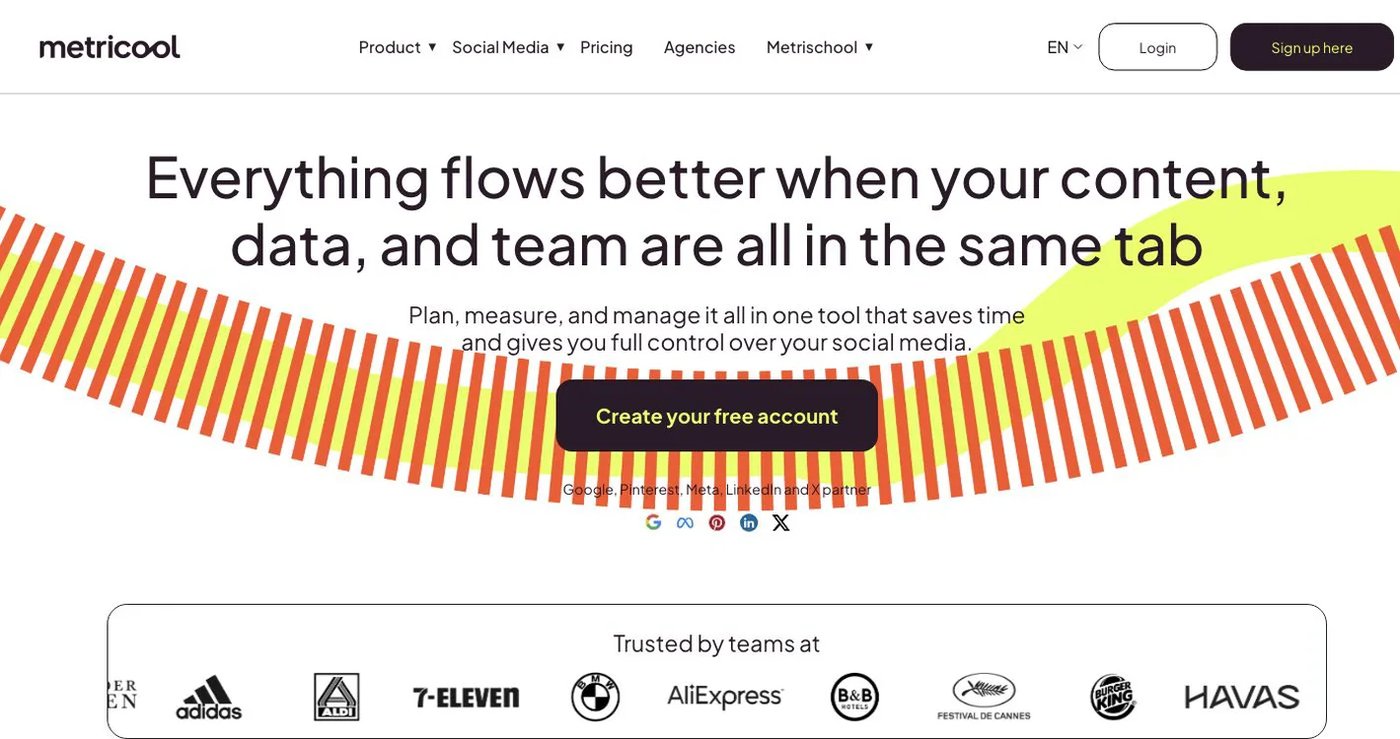
Metricool pairs a planner with cross-network analytics, competitor tracking, reports, ad data, an inbox, and SmartLinks. Free supports one brand and 20 posts per month but excludes LinkedIn and X.
Starter is $25/month for up to five brands with unlimited publishing and reports. Advanced starts at $67/month for 15 brands and adds approvals, client management, Looker Studio, and API access. Its plan guide says MCP is on every plan, while the API requires Advanced or Custom. X can involve an add-on.
Choose Metricool when reporting breadth and competitor data drive the decision.
7. Hypefury: best for writing and visual repurposing outside X
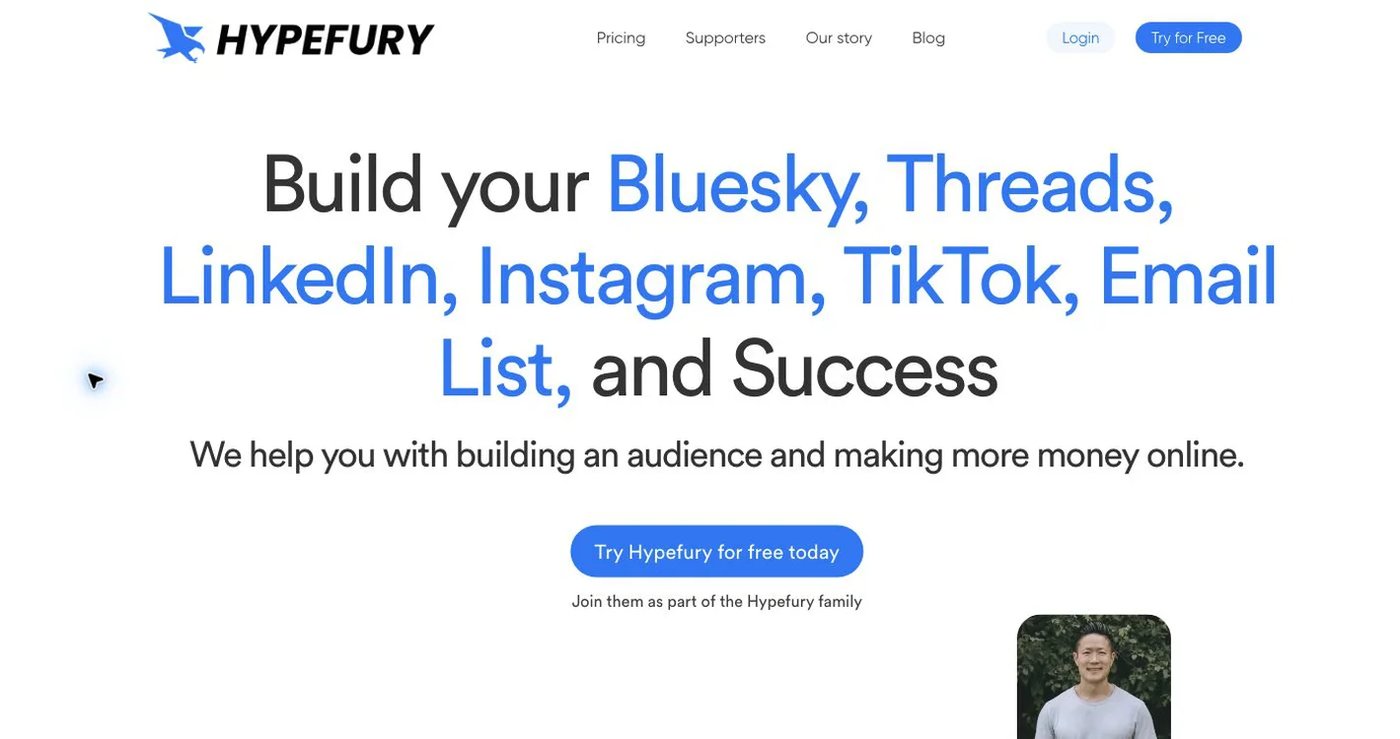
Hypefury’s pricing page lists Bluesky, Threads, LinkedIn, and Instagram, not X. Essentials starts at $6/month for one channel and includes unlimited scheduling, cross-posting, imports, analytics, AI generation, and engagement tools.
It turns text posts into Instagram visuals and moves one idea across its supported channels. It does not advertise a public API or MCP server.
Choose Hypefury when you are shifting away from X and want writing-led repurposing. It is not a replacement if X is still your main channel.
How do you choose a Tweet Hunter replacement?
- Separate X-only needs (Auto-DMs, CRM, research, X analytics) from ordinary scheduling.
- Count social accounts, users, workspaces, and external reviewers.
- List your formats: threads, carousels, short video, and images.
- If automation matters, confirm the API plan, rate limits, and retry behavior.
- Recreate one draft, approval, and published post before cancelling.
Final recommendation
Pick Postqued if you want one calendar, revision-aware approvals, and API plus MCP automation across X and nine other platforms for $9/month. Pick Typefully for a writing-first workspace, Taplio for LinkedIn, Buffer for a basic queue, Publer for recycling, Metricool for reporting, or Hypefury for non-X repurposing. Keep Tweet Hunter if Auto-DMs and the X CRM are the core of your work.
Moving beyond X? Solo at $9/month covers five accounts, about a third of Tweet Hunter Discover. Start a 7-day free trial.