7 Best Semrush Social Alternatives in 2026
Postqued is the best Semrush Social alternative for most teams: unlimited posts on 10 platforms, revision-aware approvals, and REST API plus MCP access on every plan from $9/month, with a 7-day free trial. Semrush Base caps you at 50 scheduled posts per month; Postqued Solo has no post cap.
Semrush Social still wins when competitor tracking and SEO data must live in the same system as your calendar.
What are the best Semrush Social alternatives?
| Product | Starting price | Best for | Main limit |
|---|---|---|---|
| Postqued | $9/month | Publishing, approvals, API and MCP | No competitor tracking, listening, or DMs |
| Metricool | Free; Starter $25/month | Analytics, reports, and ad data | API on Advanced; X is an add-on |
| Buffer | Free; $6/channel monthly | A simple queue and public API | Price grows per channel |
| ContentStudio | $29/month | Discovery, recycling, and AI creation | Listening is optional |
| Agorapulse | $99/user monthly | Inbox, reporting, and moderation | Per-user pricing; API on Custom |
| Vista Social | $99/month | Listening, DMs, and reviews | Web listening is an add-on |
| Loomly | $65/month | Calendar, approvals, and content ideas | No documented posting API |
How much does Semrush Social cost?
Semrush’s Social Toolkit plans show annual-billing rates:
- Base: $20/month billed annually. Five managed profiles, 10 tracked competitors, 50 scheduled posts per month.
- Pro: $40/month billed annually. 10 managed profiles, 20 tracked competitors, unlimited scheduling.
- Business: $250/month billed annually. Adds Influencer Analytics and Media Monitoring.
- Extra users: $20/month each.
- Networks: Facebook, Instagram, TikTok, LinkedIn, Pinterest, Google Business Profile, and YouTube, per the pricing and limits guide.
- API: the Social Toolkit documentation does not list a social publishing endpoint.
1. Postqued: best for publishing and agent workflows
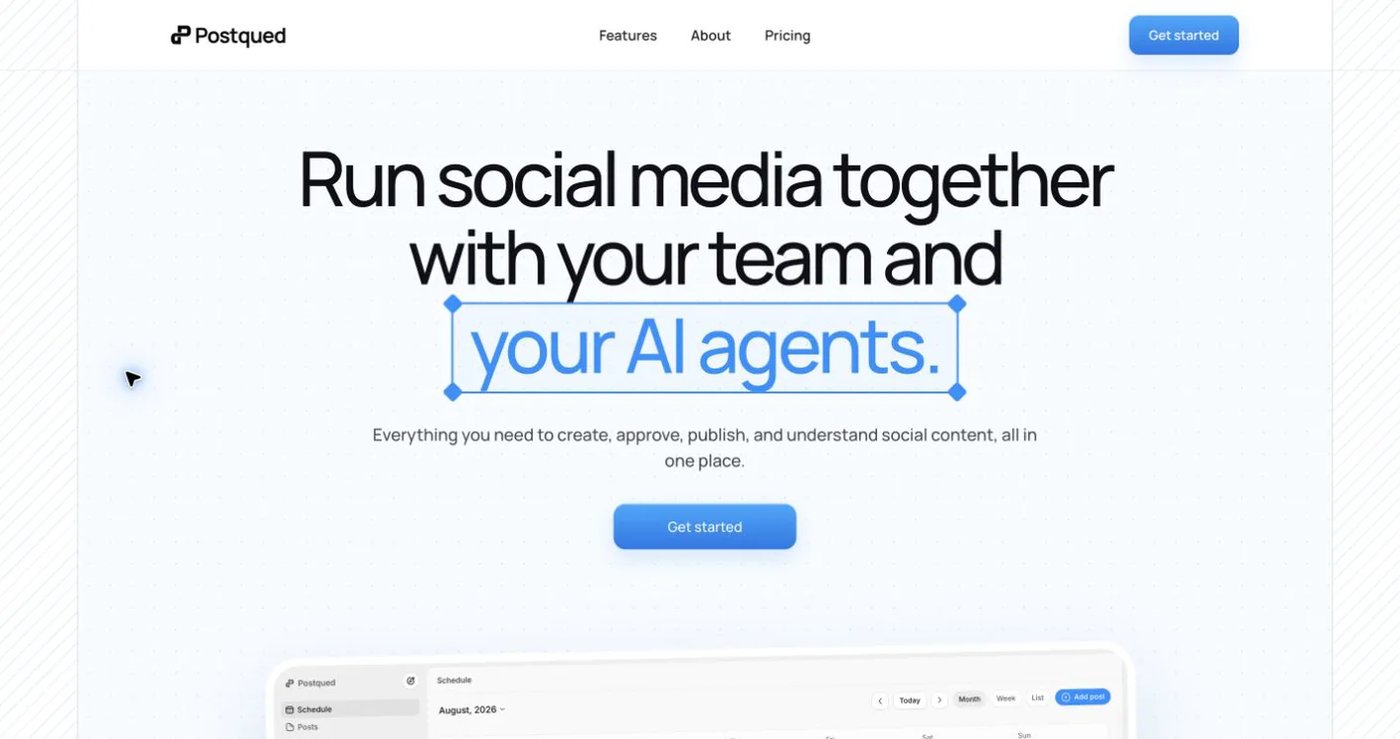
If you use Semrush Social mainly for Social Poster, Postqued gives you a dedicated publishing workspace without paying for research you rarely open. Reviewers comment or suggest an exact caption change, and approvals are revision-aware, so the approved snapshot is what publishes. You can invite external reviewers by email.
Scripts and AI agents publish through the REST API and a 62-tool MCP server, with dryRun validation and dispatchAt scheduling. The Engagement Inbox handles comments and replies on Facebook, Instagram, Threads, X, LinkedIn, and Mastodon, and analytics cover TikTok, Facebook, Instagram, Threads, and YouTube.
Semrush Pro costs $40/month for 10 profiles plus $20 per extra user; Postqued Creator covers 20 accounts for $29, and Pro covers 30 with unlimited seats for $49. Solo is $9 for 5 accounts, and Agency at $199 is unlimited. Yearly billing lowers Solo, Creator, Pro, and Agency to $7, $19, $39, and $159. Every plan includes unlimited posts on TikTok, Instagram, YouTube Shorts, Facebook, LinkedIn, Pinterest, Threads, Bluesky, Mastodon, and X, plus a 7-day free trial.
Postqued has no competitor tracking, listening, DMs, or SEO data.
See Postqued pricing or compare Postqued vs Semrush Social.
2. Metricool: best for analytics and reporting
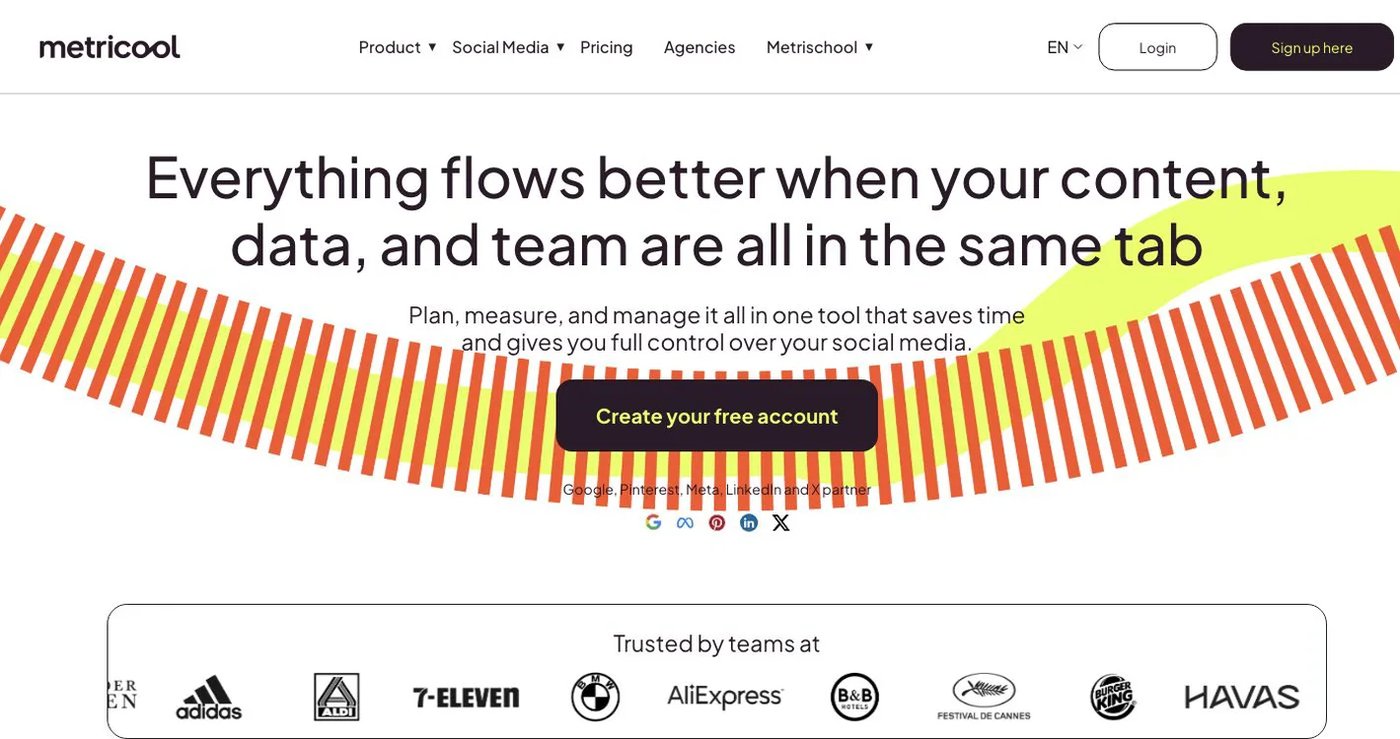
Metricool combines publishing with cross-network analytics, competitor tracking, ad data, and reports. The free plan covers one brand, 20 posts per month, and 30 days of analytics, without LinkedIn or X. Starter begins at $25/month with unlimited publishing under fair use and report exports.
Advanced begins at $67/month for up to 15 brands, adding team roles, approvals, report templates, and Looker Studio. X costs $10 per account per month on paid plans.
MCP is available on every plan including Free; the API is on Advanced and Custom only.
Choose it when measurement and ad reporting matter more than SEO integration. See Metricool plans and API access.
3. Buffer: best for a simple queue
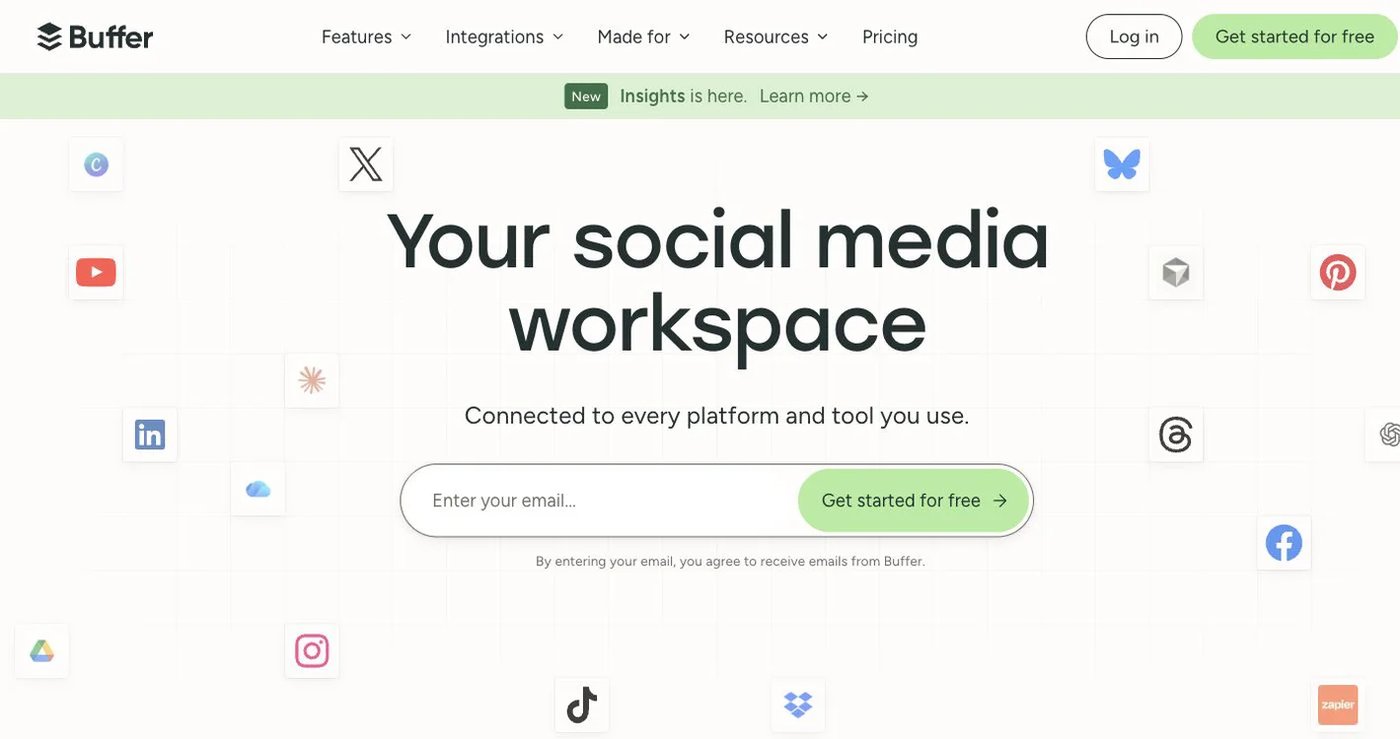
Buffer replaces Semrush’s Social Poster when scheduling is all you used. Each profile is a billable channel: Free covers three channels with 10 scheduled posts each, Essentials is $6 per channel monthly ($5 billed annually), and Team is $12 ($10) with approvals. Five channels on Essentials cost $30/month, close to Semrush Base, without Base’s 50-post monthly cap.
It has no competitor tracking or SEO data. Buffer documents a public GraphQL API. See Buffer plan limits.
Choose it for a small channel list and a dependable queue.
4. ContentStudio: best for discovery and content automation
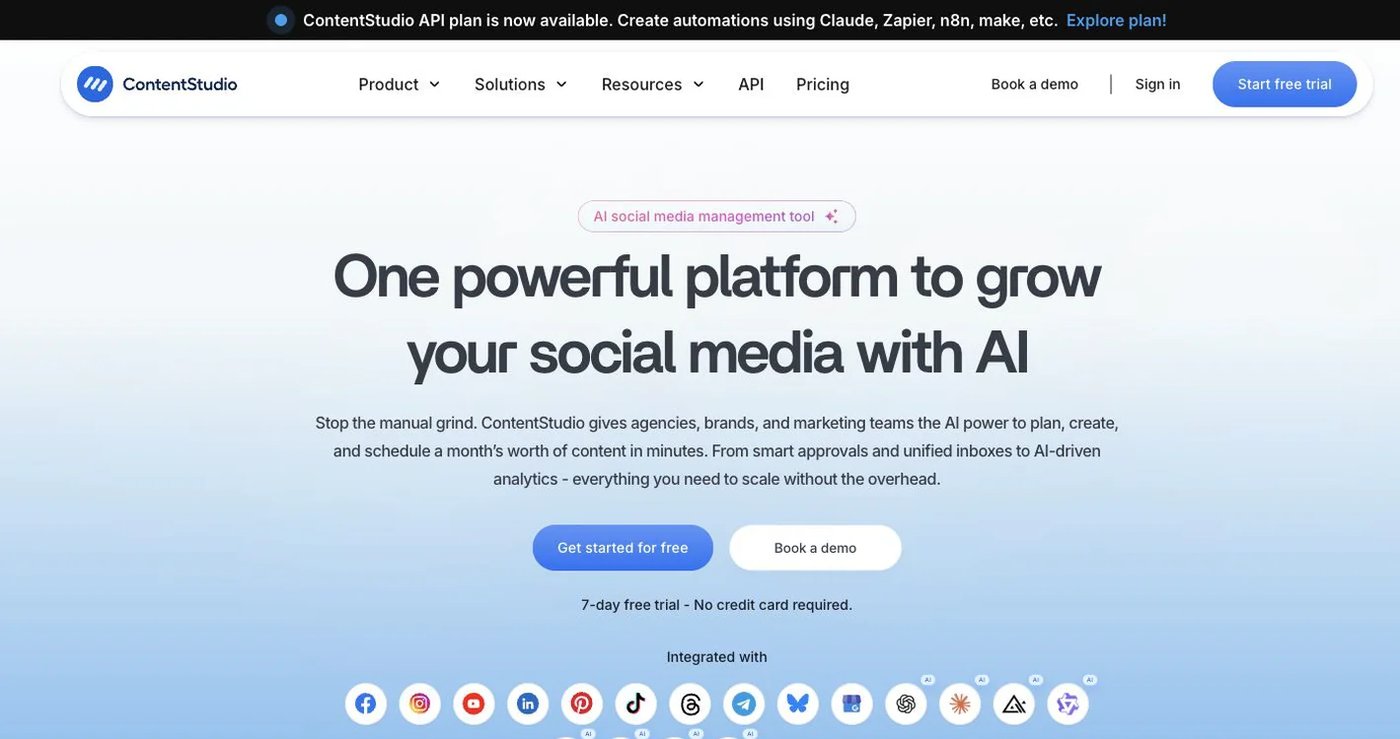
ContentStudio covers the part of Semrush’s Content Insights that suggests what to post. Its discovery feed surfaces trending articles by topic, and you schedule them alongside your own posts with AI captions, RSS automation, and evergreen recycling.
Standard is $29/month ($19 billed annually) for five accounts and one user. Advanced is $69 ($49) for 10 accounts and adds approvals, the inbox, and competitor analytics. Agency Unlimited is $139 ($99) for 25 accounts. The pricing page lists API and MCP access on all three.
Choose it when content ideas, not search data, drive your calendar.
5. Agorapulse: best for a full social inbox

Agorapulse fits teams moving from Semrush toward community management. Its inbox assigns comments and messages to teammates, and its reports sit next to the conversations. There is no free plan; a 30-day free trial is available.
Standard is $99 per user monthly or $79 billed annually with 10 profiles, Professional $149 or $119, and Advanced $199 or $149. Two users on Standard cost $158/month billed annually, about four times Semrush Pro. The Reports open API is on Custom only. See Agorapulse pricing.
Choose it when replying to people matters more than tracking competitors.
6. Vista Social: best for reviews, DMs, and listening
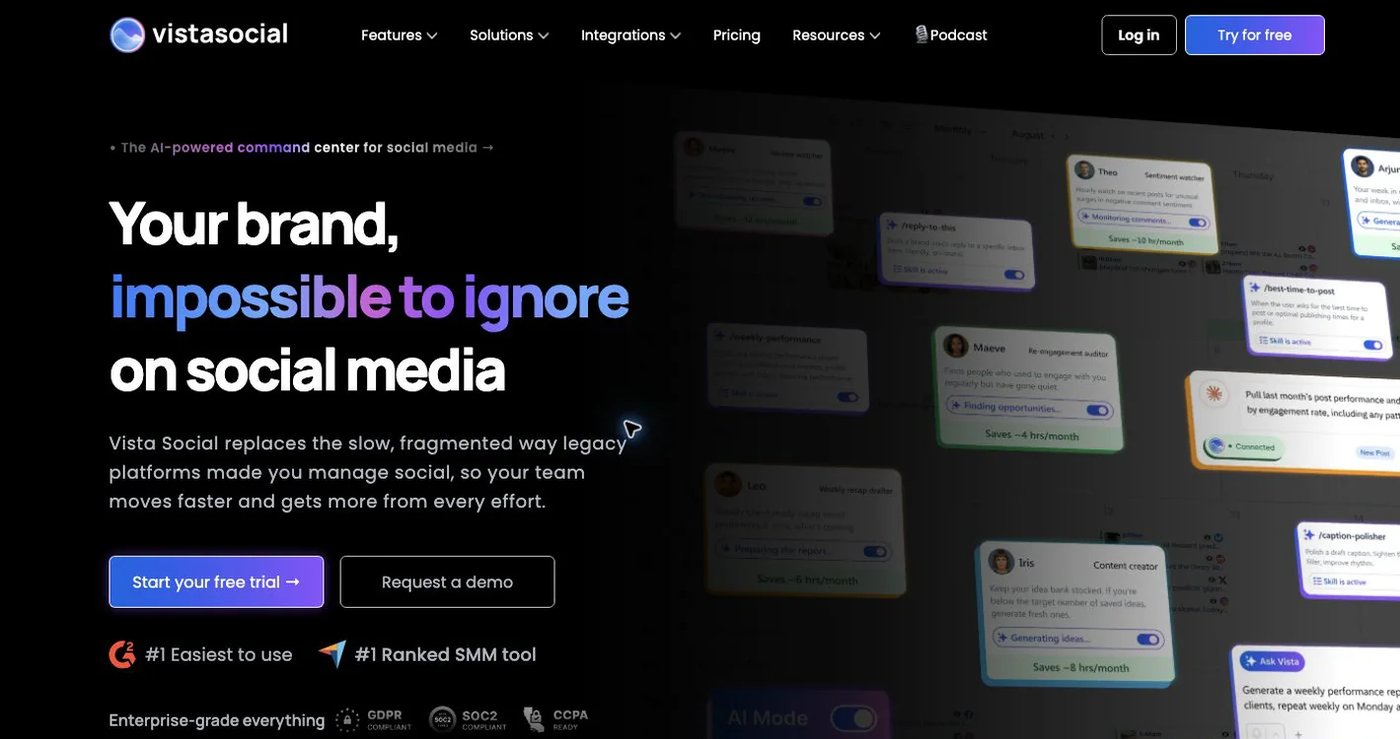
Vista Social packages publishing with engagement, DMs, review management, and listening. Professional costs $99/month ($950/year) for 15 profiles and two users. Advanced costs $199 for 30 profiles, and Scale $449 for 70. Review tools cover Facebook, Google, Yelp, TripAdvisor, OpenTable, and Trustpilot.
Listening on connected profiles is included; listening across social, web, and news starts at $75/month.
Choose it when inbox, reputation, and monitoring replace Semrush Business. See Vista Social pricing.
7. Loomly: best for calendar-led approvals
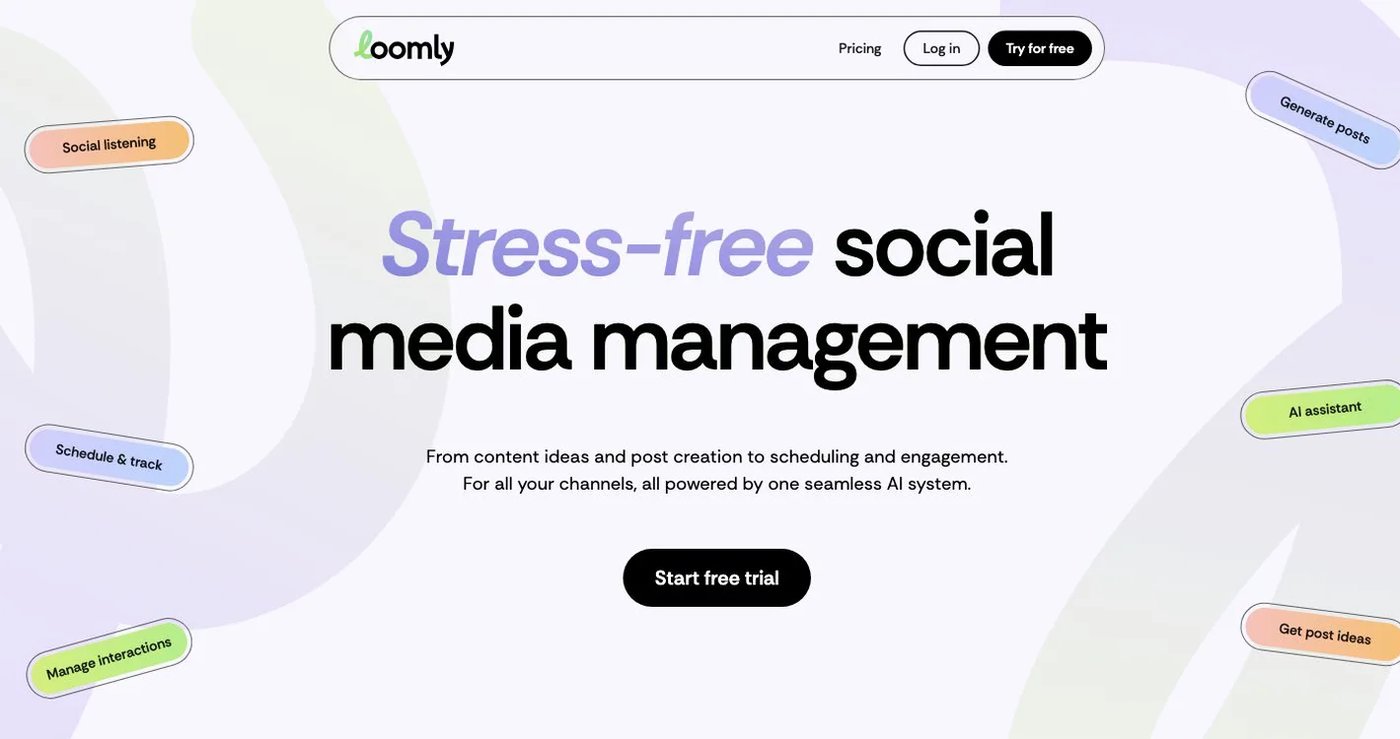
Loomly centers on a visual calendar, content ideas, previews, roles, and approvals. Starter costs $65/month for 12 accounts, three users, and unlimited calendars, with approval workflows, analytics, and a small listening allowance.
Beyond costs $332/month for 60 accounts and unlimited users, adding custom branding, custom roles, and a hashtag manager. Its plan page documents no posting API.
Choose it when content review, not competitor research, is your weak spot. See Loomly plans.
How do you choose a Semrush Social alternative?
- List the modules you use: Poster, Analytics, Tracker, Content Insights, Influencer Analytics, or Media Monitoring.
- Record your profiles, post formats, users, and monthly volume.
- Separate publishing analytics from competitor tracking, listening, and DMs.
- Compare annual rates with annual rates.
- Confirm the API actually publishes posts, not just marketing data.
- Keep Semrush active until exports and scheduled posts are checked.
Which Semrush Social alternative should you choose?
Postqued is the right pick for most teams: unlimited posts, revision-aware approvals, and API plus MCP access from $9/month. Choose Metricool for analytics, Vista Social or Agorapulse for engagement and monitoring, ContentStudio for discovery, Loomly for calendar approvals, and Buffer for a small queue.
Primary sources
- Semrush Social pricing and Social Toolkit pricing and limits
- Metricool pricing and plan, API, and MCP guidance
- Buffer pricing and plan limits and Buffer API
- ContentStudio pricing and billing documentation
- Agorapulse pricing and per-user pricing explanation
- Vista Social pricing
- Loomly pricing
Keep Semrush for SEO and publish from Postqued Creator at $29/month, starting with a 7-day free trial: See Postqued pricing.