7 Best Post for Me Alternatives in 2026
Postqued is the best Post for Me alternative for most teams: unlimited posts on all 10 platforms, revision-aware approvals, and REST API plus MCP access from $9/month with a 7-day free trial. Your developers keep a full Publish API, and your editors get a calendar and approval flow they can use without writing code.
Post for Me still wins when you are building social publishing into your own product and want usage-based API pricing.
What are the best Post for Me alternatives?
| Product | Best for | Starting price | Main limit |
|---|---|---|---|
| Postqued | Team calendar, approvals, API and MCP | $9/month | Not a white-label embedded API |
| Ayrshare | Multi-tenant social features | $149/month | Billed by profile, no free plan |
| Post Bridge | Scheduler with an included API | $39/month | Two plans only |
| Upload-Post | Publishing API and media processing | Free tier | Allowances vary by tier |
| Postiz | Open-source scheduler and API | $29/month cloud; self-hostable | Self-hosting means running it yourself |
| Mixpost | Self-hosted social workspace | One-time licence | You own hosting and provider apps |
| Buffer | Simple dashboard scheduling with an API | Free; paid per channel | Not built for embedding |
What does Post for Me offer in 2026?
Post for Me is a unified developer API for publishing, scheduling, media processing, account connections, feeds, post analytics, SDKs, and webhooks.
- Networks: its integration page lists TikTok, Facebook, Instagram, X, LinkedIn, Pinterest, Bluesky, Threads, and YouTube.
- Price: from $10/month for up to 1,000 successful posts on its pricing page, with unlimited accounts, projects, API keys, and team members.
- Overages: not charged automatically; high-usage customers are contacted about an upgrade.
- Sign-in: Quickstart uses Post for Me’s provider apps; White Label uses your credentials and needs provider approval (developer overview, OAuth guide).
- MCP: a local server with documentation search and sandboxed SDK execution. The security guide warns that the project key gives broad access.
There is no built-in calendar or approval flow for non-technical staff. Your team builds the review screens, scheduling UI, and error handling itself.
1. Postqued: best for a shared team workspace with an API
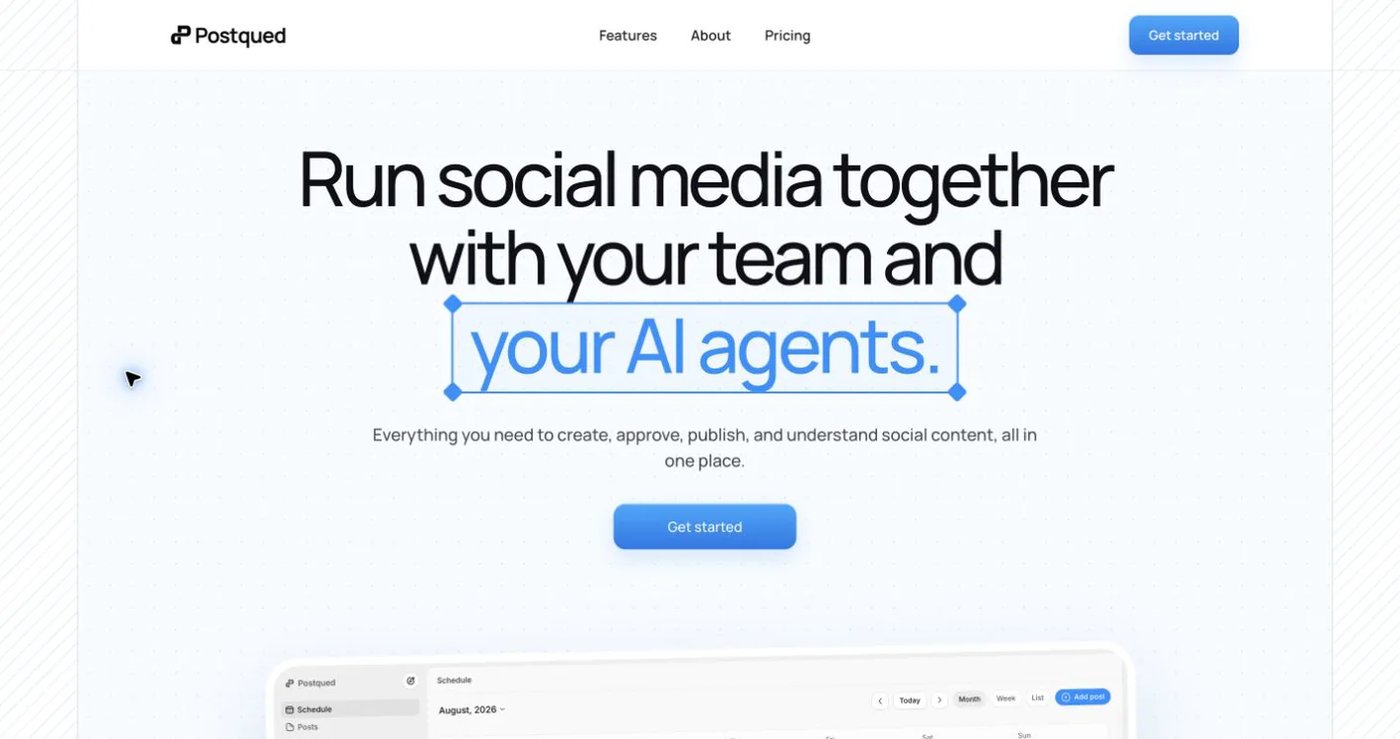
Postqued suits teams that want automation and human review in one place. Developers and AI agents create posts through the REST API or a 62-tool MCP server. Editors review them in a calendar before anything goes live.
Approvals are revision-aware, so the approved version is what publishes. You can invite external reviewers by email to sign off a post. The Publish API supports dryRun validation, an Idempotency-Key header for real publishes, and dispatchAt scheduling. Agents can draft and schedule through MCP while a person approves the final version.
Postqued publishes to TikTok, Instagram, YouTube Shorts, Facebook, LinkedIn, Pinterest, Threads, Bluesky, Mastodon, and X. The Engagement Inbox handles comments and replies on Facebook, Instagram, Threads, X, LinkedIn, and Mastodon. Analytics cover TikTok, Facebook, Instagram, Threads, and YouTube. Format support includes Instagram Stories and Reels, TikTok photo posts up to 35 images, send-to-TikTok-drafts, Threads posts with up to 20 media items, and first comments on six networks.
Post for Me’s $10 covers 1,000 posts but no review screens; Postqued Solo is $9/month for 5 accounts with unlimited posts and a calendar. Creator is $29 for 20, Pro $49 for 30 with unlimited seats, and Agency $199 for unlimited accounts. Every plan includes unlimited posts and a 7-day free trial. Postqued is not a white-label API for your own end users.
See Postqued pricing or compare Postqued vs Post for Me.
2. Ayrshare: best for multi-tenant product infrastructure
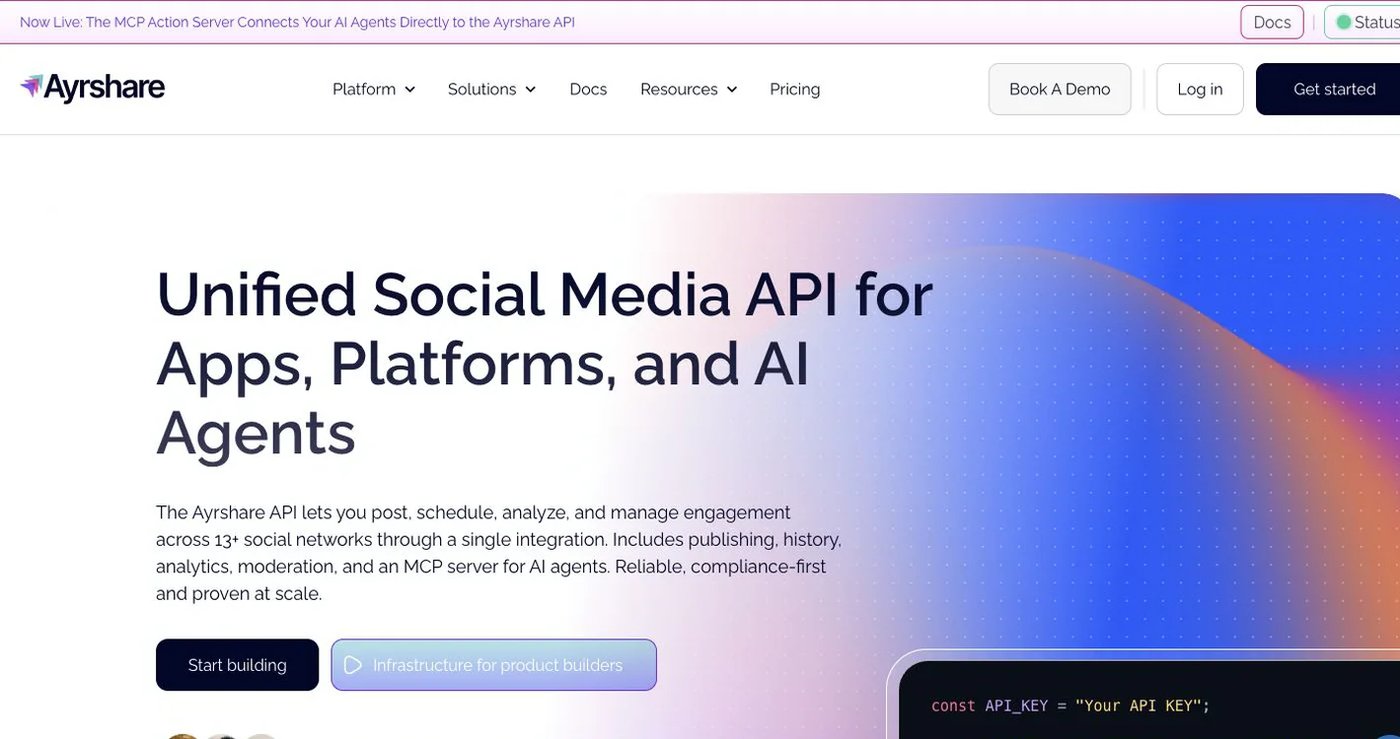
Ayrshare serves SaaS products, agencies, and multi-location businesses that need a normalized social API. Its billing unit is a social profile for one customer, brand, or location.
Ayrshare’s pricing page lists:
- Premium: $149/month for 1 profile.
- Launch: $299/month for up to 10 profiles, with a 28-day free trial.
- Business: $599/month with 30 profiles included.
- Enterprise: custom pricing from 300 profiles.
There is no free plan. Higher tiers add webhooks, branding, and higher limits. Prototype the exact tenant, sign-in, and analytics flow before you commit.
Choose it when tenant profiles and white-labelled account connection matter more than per-post pricing.
3. Post Bridge: best for a scheduler with an included API
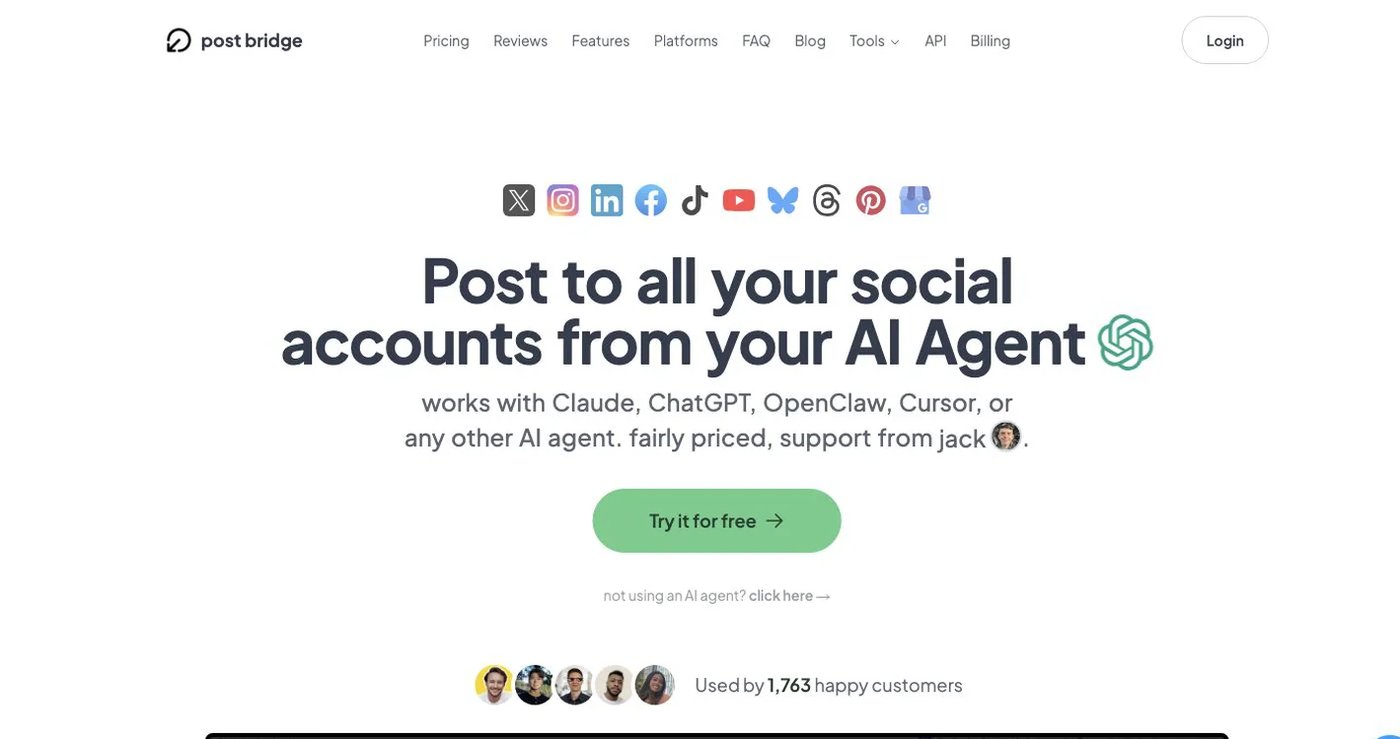
Post Bridge pairs a multi-platform scheduling dashboard with an API. Its pricing page lists Marketer at $39/month for 15 accounts with API included, and Operator at $99/month for 99 accounts plus $1 per extra account. Operator suits agencies running close to 99 accounts. Both include a 7-day free trial.
The API reference documents bearer authentication, posts, media, platform overrides, analytics, and a per-key rate limit. Post Bridge does not list revision-aware approvals. For 20 accounts, Marketer’s 15-account cap pushes you to Operator.
Choose it when you want a dashboard first and programmatic posting second.
4. Upload-Post: best for media processing and broad delivery
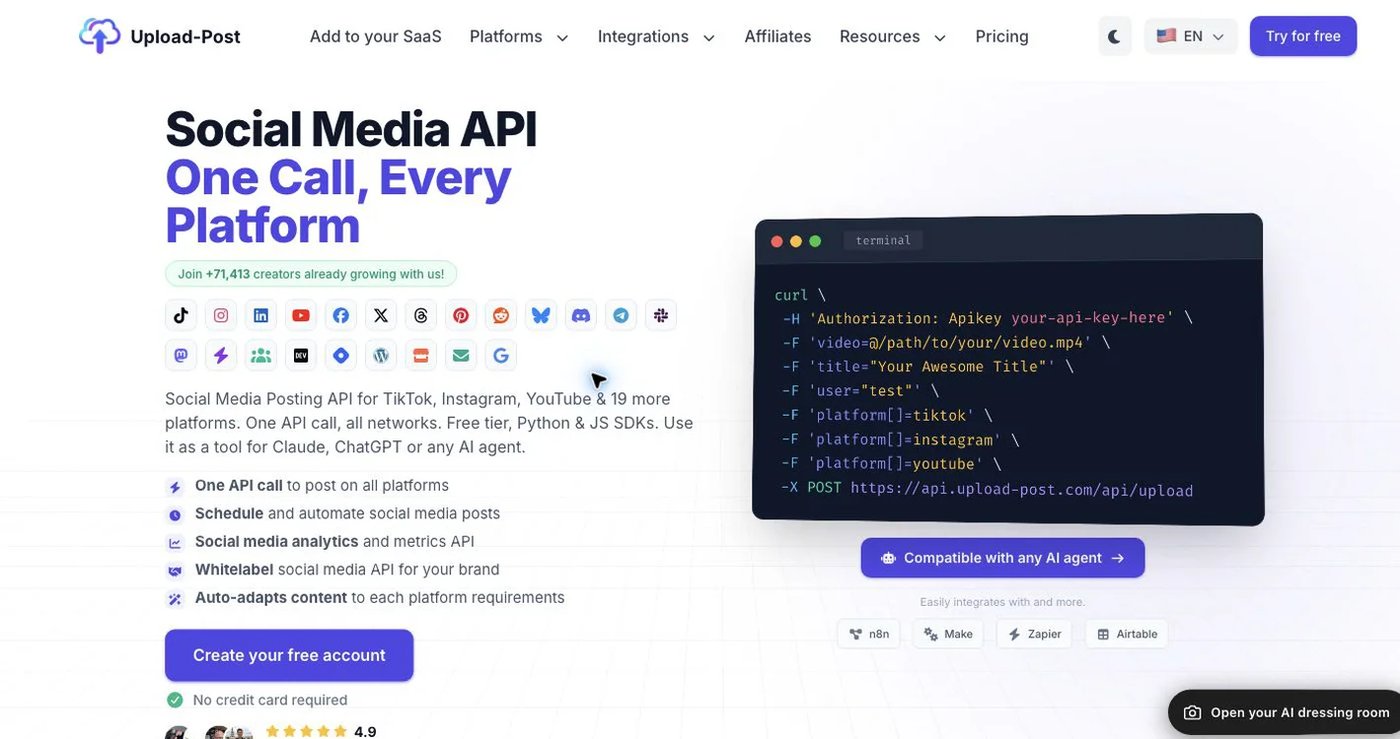
Upload-Post provides a dashboard, REST API, SDKs, automation integrations, and automatic media adaptation across many destinations. A free allowance supports early integration work. Paid tiers raise profile, upload, video-processing, seat, and white-label limits.
Do not assume its endpoints match Post for Me’s feeds, analytics, or webhook behavior. Test every endpoint and format first. See Upload-Post’s pricing and API documentation.
Choose it when media conversion is the hardest part of your product.
5. Postiz: best for an open-source scheduler and API
Postiz offers a hosted scheduler, public API, webhooks, integrations, and an open-source self-hosted option. Cloud plans start at $29/month.
Self-hosting gives code and deployment control. Your team then owns upgrades, databases, queues, media storage, backups, monitoring, secrets, and provider app setup. Self-hosted installs still need approved provider apps on each network.
Check Postiz pricing and its API introduction.
Choose it when you want the calendar and the source code together.
6. Mixpost: best for self-hosted workspace control
Mixpost is a self-hosted social media management app with free and commercial editions. Higher packages add networks, users, workspaces, analytics, inbox, API, MCP, and white-label features.
It is not a managed API. Your team maintains servers, queues, storage, databases, upgrades, security, backups, and provider apps. Include that labor when comparing a one-time licence with monthly pricing. Review Mixpost’s packages.
It suits agencies with in-house engineers more than solo creators.
Choose it when owning the deployment is worth the operational work.
7. Buffer: best for a simple internal publishing queue
Buffer is a dashboard-first scheduler with a public GraphQL API on every plan.
- Free: three channels, one user, 10 scheduled posts per channel.
- Essentials: $6/channel monthly or $5 billed annually.
- Team: $12/channel monthly or $10 billed annually; unlimited users and approvals.
The Buffer API works inside your own Buffer organization. It is not a tenant-profile service like Post for Me or Ayrshare. Ten channels on Essentials cost $60/month on monthly billing. Use the pricing calculator with your channel count.
Choose it when an internal team wants a clean queue it can extend with scripts.
How do you choose a Post for Me alternative?
- Decide whether publishing lives inside your product or inside the vendor’s dashboard.
- Model the real billable unit: posts, profiles, channels, accounts, or servers.
- List every network, post format, metric, and feed field you need.
- Test sign-in, expired tokens, retries, and duplicate requests on a non-critical account.
- Never expose a project-wide API key to browser code.
- Test the MCP permission model before giving an agent publishing access.
Which Post for Me alternative should you choose?
Postqued is the best choice for most teams: it combines a full Publish API and MCP server with a calendar, approvals, and unlimited posts on 10 platforms. Pick Ayrshare for multi-tenant products, Post Bridge or Buffer for dashboard-led scheduling, Upload-Post for media processing, and Postiz or Mixpost for self-hosting.
Primary sources
- Post for Me pricing, integrations, developer overview, OAuth flow, and MCP security
- Postqued pricing, About Postqued, and MCP setup
- Ayrshare pricing and Business plan overview
- Post Bridge pricing and API reference
- Upload-Post product and pricing and API documentation
- Postiz pricing and public API documentation
- Mixpost pricing and edition comparison
- Buffer pricing and Buffer API
Give your editors a calendar and keep the API on Postqued Solo at $9/month, starting with a 7-day free trial: See Postqued pricing.