7 Best Post Bridge Alternatives in 2026
Postqued is the best Post Bridge alternative for most teams: unlimited posts on all 10 platforms, revision-aware approvals, an Engagement Inbox, and REST API plus MCP access from $9/month with a 7-day free trial. That is $30 less per month than Post Bridge’s $39 Marketer plan for a five-account setup, with team review built in.
Post Bridge still wins when you want a simple dashboard and need around 99 accounts on one flat plan.
What are the best Post Bridge alternatives?
| Product | Best for | Starting price | Main limit |
|---|---|---|---|
| Postqued | Publishing, approvals, API and MCP | $9/month | No DMs or listening |
| Post for Me | Usage-based embedded publishing API | $10/month | Developer infrastructure, not a full dashboard |
| Upload-Post | Media-heavy publishing | Free tier | Allowances vary by profile and processing tier |
| Ayrshare | Multi-tenant social features | $149/month | Profile-based pricing, no free plan |
| Buffer | A simple queue for a few channels | Free; paid per channel | Cost grows with channel count |
| Postiz | Open-source scheduling with an API | $29/month cloud; self-hostable | Self-hosting means running it yourself |
| Mixpost | Self-hosted social workspace | One-time licence | Hosting and provider apps are your job |
How much does Post Bridge cost?
Post Bridge’s pricing page shows two plans:
- Marketer: $39/month, 15 connected accounts, unlimited posts, API included.
- Operator: $99/month for 99 accounts, then $1 per extra account. It suits agencies running close to 99 accounts.
- Trial: 7 days on both plans.
- Yearly billing: two months free.
- Free users: limited to 5 posts.
The API reference documents bearer-key authentication, post creation, media uploads, platform-specific overrides, analytics, and a limit of 10 requests per second per key. Post Bridge does not list a revision-aware approval flow or an MCP server on its pricing page. For a team with 20 accounts, Marketer’s 15-account cap pushes you to Operator at $99/month, while Postqued Creator covers 20 accounts for $29/month.
1. Postqued: best for team approvals and agent workflows
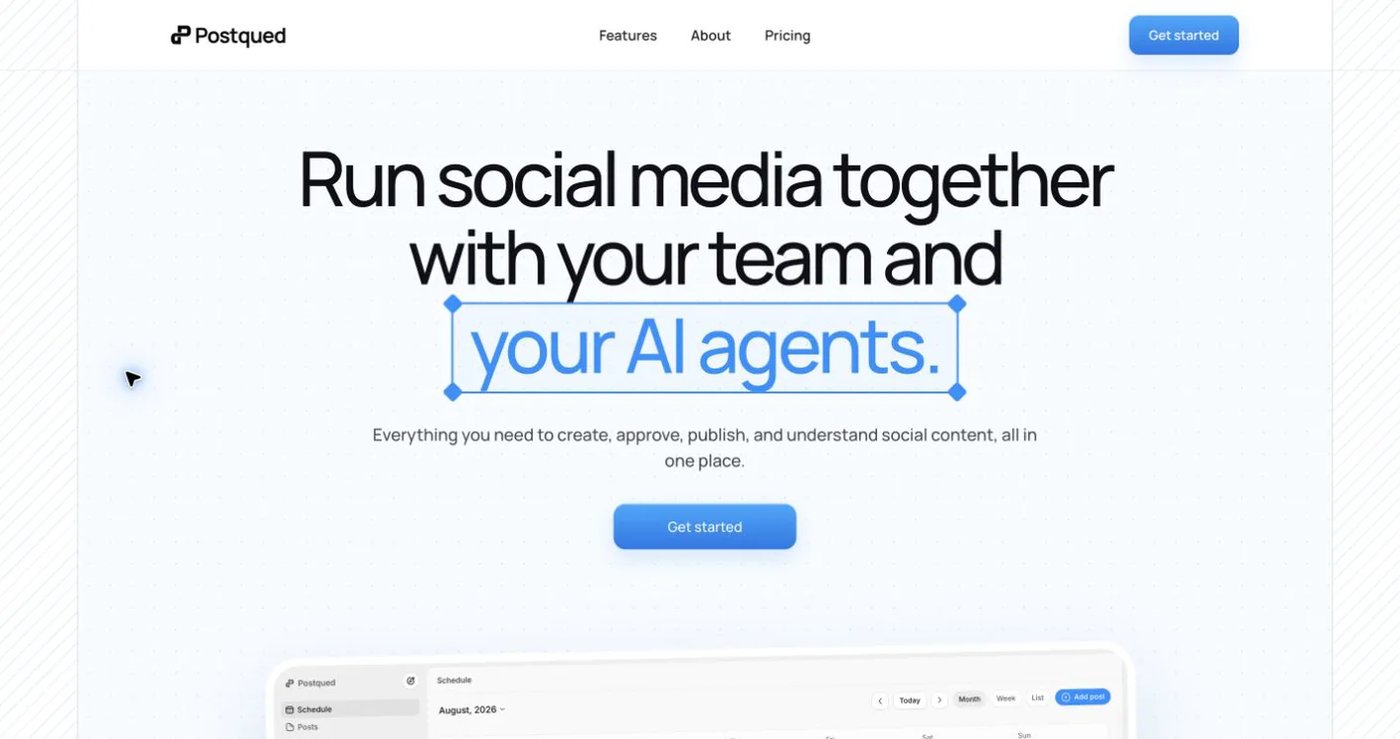
Postqued gives editors, reviewers, developers, and AI agents one place to plan, approve, and publish. It covers TikTok, Instagram, YouTube Shorts, Facebook, LinkedIn, Pinterest, Threads, Bluesky, Mastodon, and X with unlimited posts on every plan.
Approvals are revision-aware, so the approved version is the one that publishes. You can invite external reviewers by email. The Engagement Inbox handles comments and replies on Facebook, Instagram, Threads, X, LinkedIn, and Mastodon, and analytics cover TikTok, Facebook, Instagram, Threads, and YouTube.
For developers, the Publish API supports dryRun validation, an Idempotency-Key header for real publishes, and dispatchAt scheduling. The MCP server exposes 62 tools. Format support includes Instagram Stories and Reels, TikTok photo posts up to 35 images, send-to-TikTok-drafts, Threads posts with up to 20 media items, and first comments on six networks.
Five accounts cost $9/month on Postqued Solo versus $39 on Post Bridge Marketer, and 20 accounts cost $29 on Creator versus $99 on Operator. Pro covers 30 accounts with unlimited seats for $49, and Agency at $199 is unlimited. Every plan includes a 7-day free trial. Postqued has no DMs or social listening.
See Postqued pricing or compare Postqued vs Post Bridge.
2. Post for Me: best for a usage-based publishing API
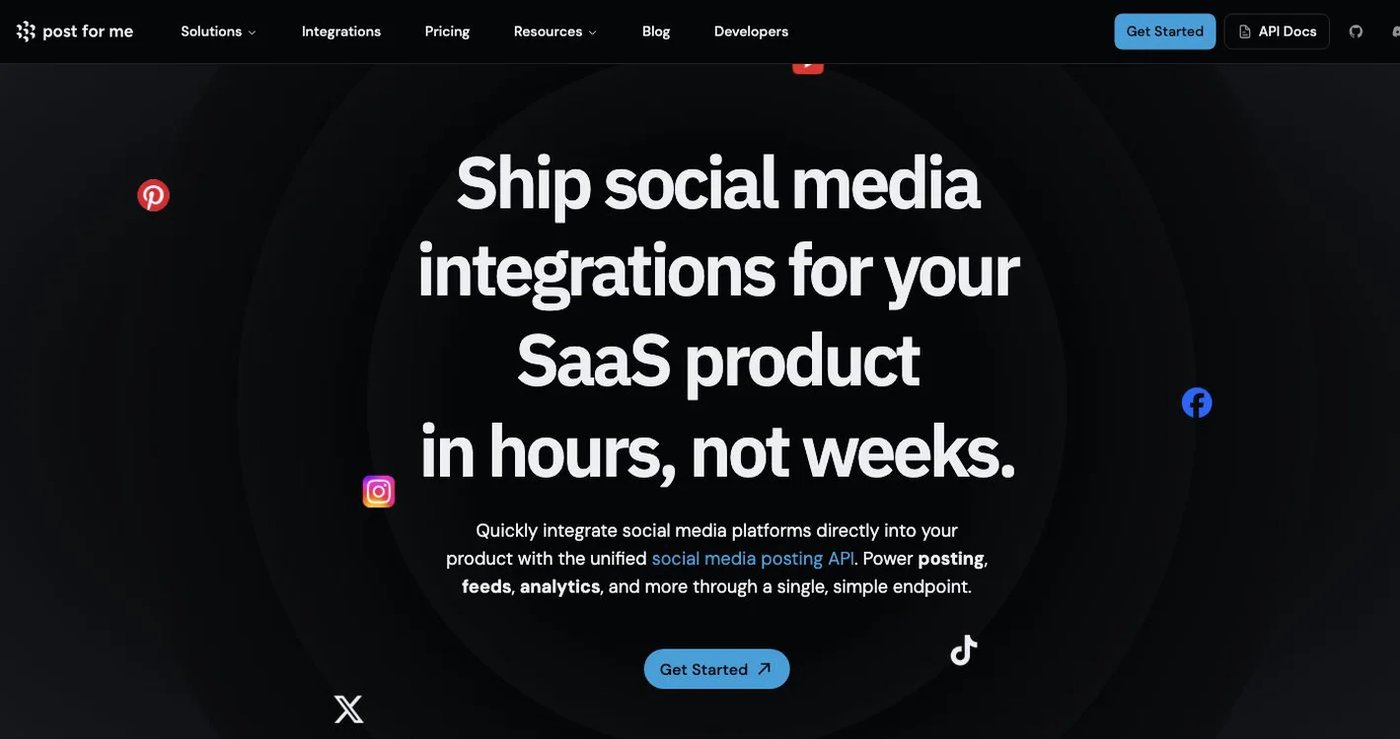
Post for Me is built for developers embedding social publishing in their own app. It offers one API for posting, scheduling, feeds, post analytics, webhooks, media processing, and account connection across nine networks.
Its pricing page starts at $10/month for up to 1,000 successful posts, with unlimited social accounts, projects, API keys, and team members.
Two credential paths exist. Quickstart uses Post for Me’s provider apps, so users see Post for Me during sign-in. White Label uses your own developer credentials and needs platform approvals. See the developer overview.
There is no finished team dashboard to hand to non-technical staff.
Choose it when you are building the interface and workflow yourself and pay mainly by post volume.
3. Upload-Post: best for media-heavy publishing
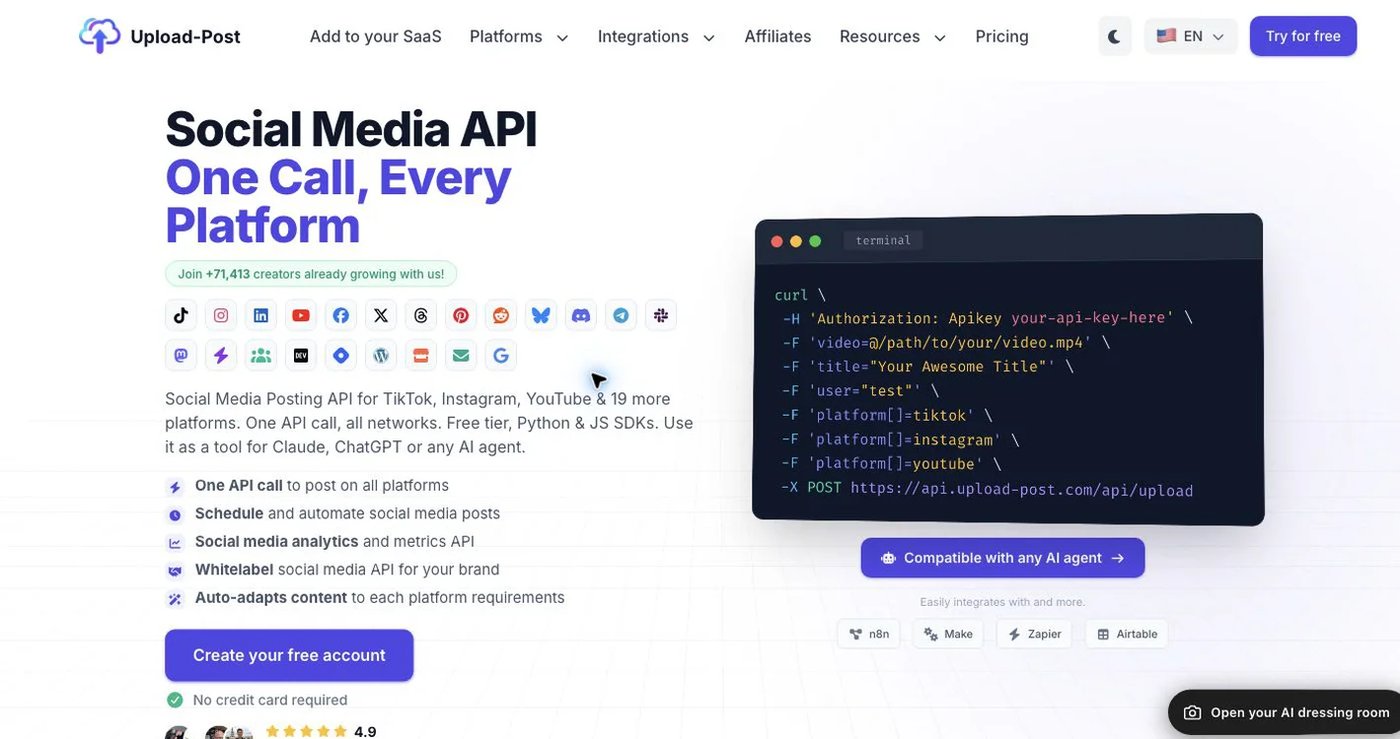
Upload-Post suits Post Bridge users whose bottleneck is video files rather than scheduling. You upload one video and it adapts the media for each network, through a dashboard, REST API, SDKs, and n8n and Make integrations. The free tier includes 10 uploads a month and two profiles, and paid tiers raise uploads, profiles, and processing.
It has no revision-aware approvals. Test each format and size limit on Upload-Post and in its API documentation before routing client work through it.
Choose it when media conversion, not the calendar, slows you down.
4. Ayrshare: best for multi-tenant social features
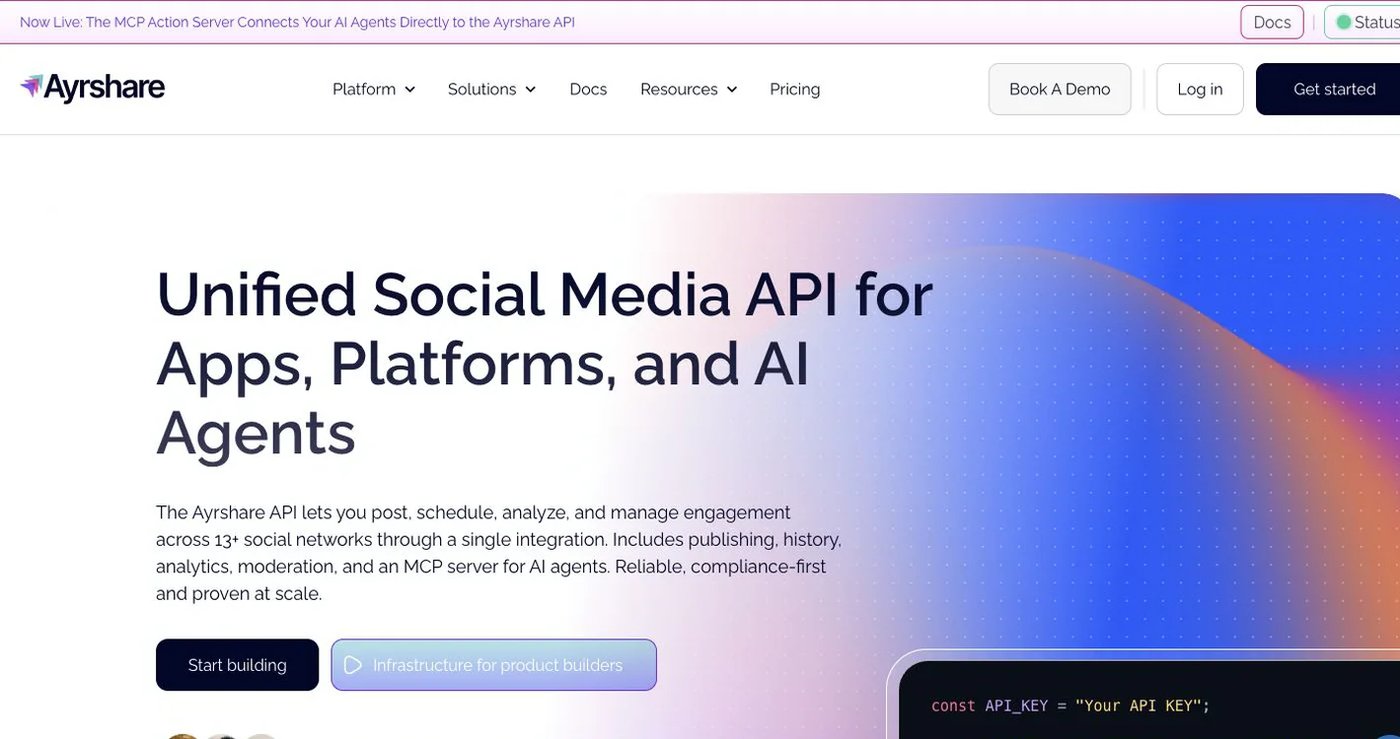
Ayrshare is the upgrade path if you started on Post Bridge’s API and now need your own customers to connect accounts inside your product. It bills per social profile (one customer, brand, or location) and covers posting, analytics, comments, and DMs.
Premium is $149/month for 1 profile, Launch $299 for up to 10 with a 28-day free trial, Business $599 with 30 included, and Enterprise custom from 300. There is no free plan. See Ayrshare pricing.
Choose it when you are building social features for other businesses, not scheduling your own accounts.
5. Buffer: best for a straightforward queue
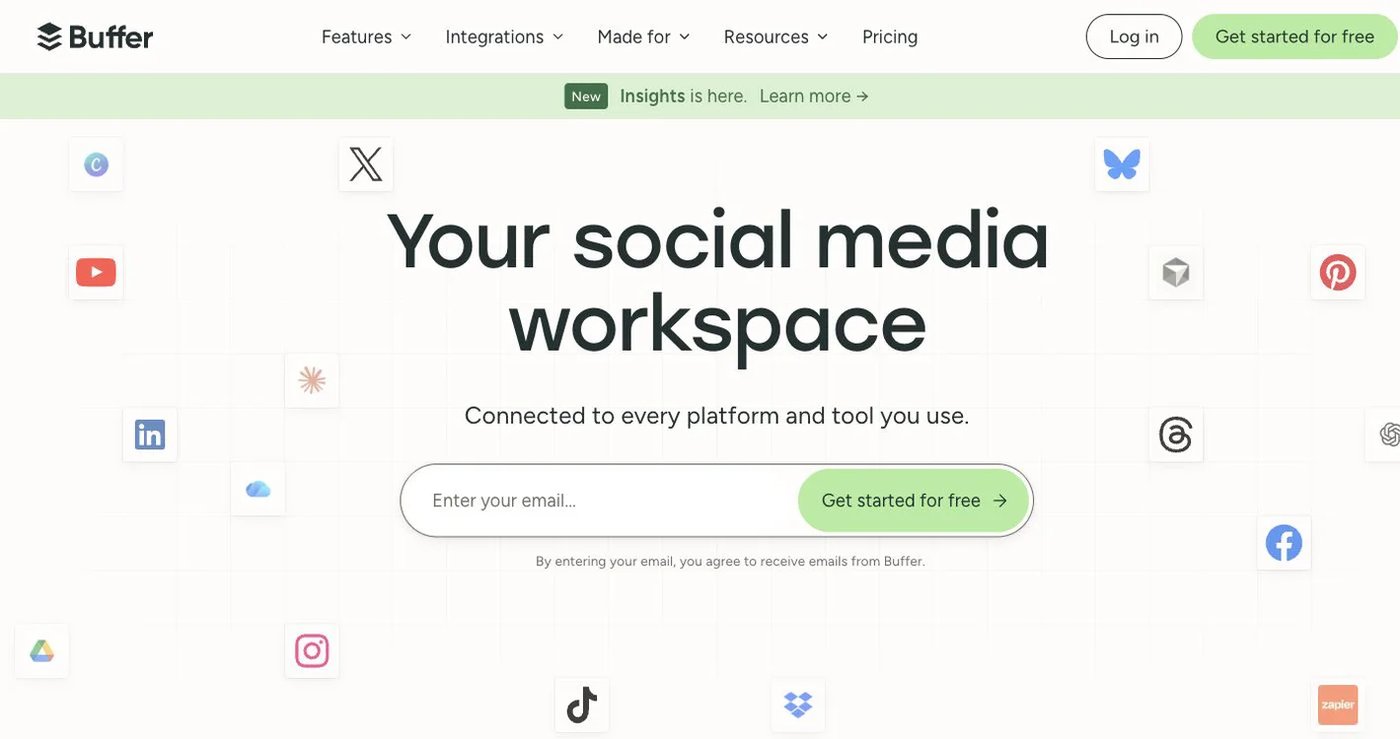
Buffer is the simplest sideways step from Post Bridge for a few channels. Free covers three channels with 10 scheduled posts each. Essentials is $6/channel monthly ($5 billed annually), and Team is $12 ($10) with unlimited users and approvals.
At 15 channels, Essentials costs more than Post Bridge Marketer’s $39, so it only wins on small setups. Its GraphQL API is on every plan with plan-based limits. Check the pricing calculator.
Choose it when you run five or fewer channels and want a familiar queue.
6. Postiz: best for open-source scheduling

Postiz is closest to Post Bridge on price. Standard is $29/month for 5 channels, Team $39 for 10, Pro $49 for 30, and Ultimate $99 for 100, all with unlimited posts. It adds webhooks, repeated posts, RSS automation, and an open-source edition you can self-host.
Self-hosting saves the subscription but moves deployment, backups, upgrades, and provider app approvals to your team. See Postiz pricing and the public API documentation.
Choose it when you want Post Bridge-style pricing with source access.
7. Mixpost: best for self-hosted data control
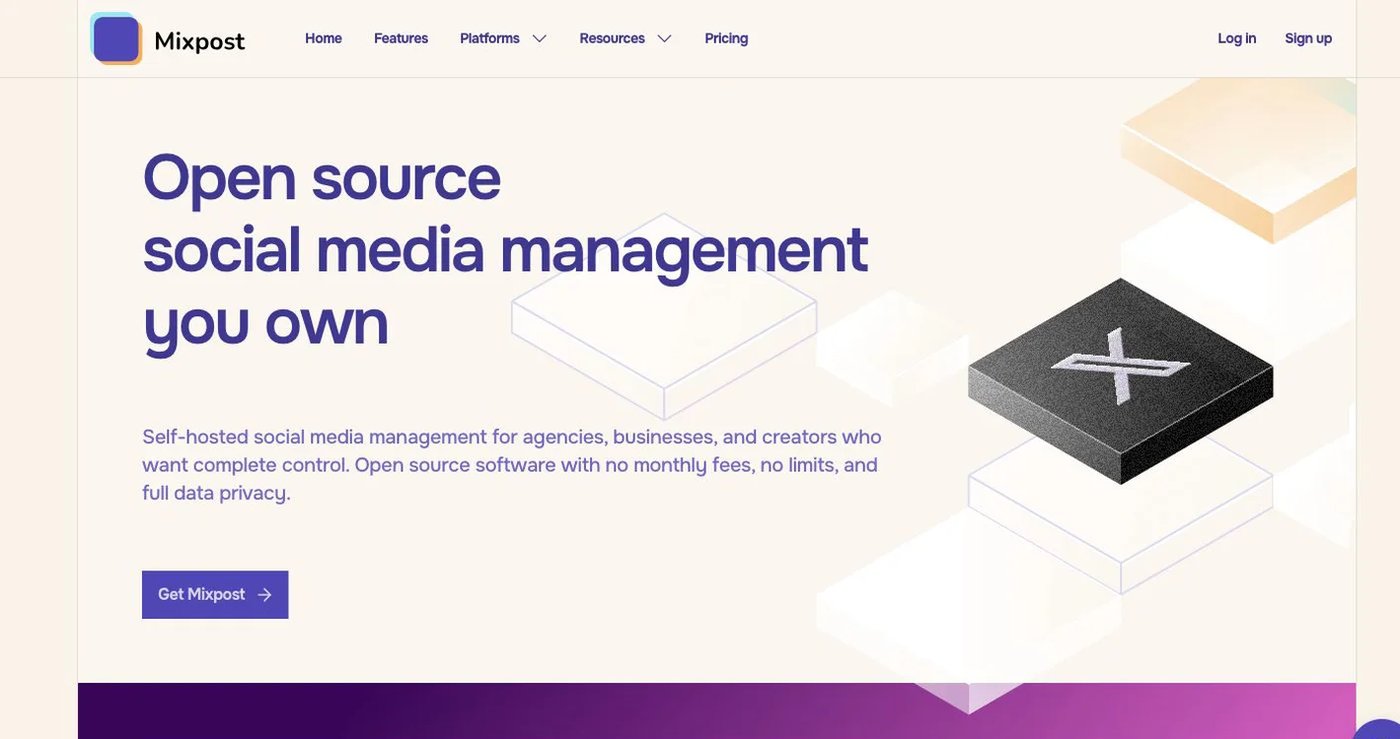
Mixpost trades Post Bridge’s monthly bill for a one-time license. Lite is free for Facebook Pages, X, and Mastodon. Pro is $299 once and adds the major networks, unlimited accounts and team members, approvals, API, MCP, and webhooks.
You still pay for hosting and spend time on backups, upgrades, and provider apps. Review the editions before buying.
Choose it when owning the deployment matters more than convenience.
How do you choose a Post Bridge alternative?
- List every network, account type, and post format you used in the last 90 days.
- Decide whether you need a finished dashboard, an embedded API, or self-hosting.
- Check whether approval locks the exact version that publishes.
- Connect one non-critical account and test scheduling, media upload, and final status.
- Confirm API and MCP access, rate limits, and keys on the plan you will buy.
- Price your real account, user, or post volume.
Which Post Bridge alternative should you choose?
Postqued is the best choice for most teams: it costs less for small account counts and adds approvals, an Engagement Inbox, and MCP to a full API. Pick Post for Me or Upload-Post for embedded developer workflows, Ayrshare for multi-tenant products, Buffer for a simple queue, and Postiz or Mixpost for self-hosting.
Primary sources
- Post Bridge pricing and API reference
- Postqued pricing, About Postqued, and MCP setup
- Post for Me pricing, developer overview, and OAuth flow
- Upload-Post product and pricing and API documentation
- Ayrshare pricing and Business plan overview
- Buffer pricing and Buffer API
- Postiz pricing and public API documentation
- Mixpost pricing and edition comparison
Move your accounts from Post Bridge to Postqued Creator at $29/month, starting with a 7-day free trial: See Postqued pricing.