7 Best NapoleonCat Alternatives in 2026
Postqued is the best NapoleonCat alternative for most teams: unlimited posts on all 10 platforms, revision-aware approvals, an Engagement Inbox, and REST API plus MCP access from $9/month with a 7-day free trial. NapoleonCat puts API access on Enterprise at $465/month. Postqued gives it to every plan.
NapoleonCat still wins when automatic moderation, sentiment rules, and social CRM drive your work.
What are the best NapoleonCat alternatives?
| Product | Starting price | Best for | Key limit |
|---|---|---|---|
| Postqued | $9/month | Publishing, approvals, API and MCP | No DMs, listening, or auto-moderation |
| Agorapulse | $79/user/month billed annually | Inbox assignments and moderation | API on Custom only |
| Vista Social | $99/month | Broad agency operations | API is a separate add-on |
| Buffer | Free; $5/channel/month billed annually | Simple queues | Light customer-care tools |
| Sprout Social | $79/seat/month billed annually | Governed care and reporting | Per-seat pricing and add-ons |
| eClincher | $149/month | Reviews and multi-location teams | Higher entry price |
| Sendible | $35/month | Client workspaces | White label on higher tiers |
How much does NapoleonCat cost?
NapoleonCat’s pricing page lists four tiers:
- Standard: $89 monthly or $67/month billed yearly, two users, five profiles. Scheduling, analytics, competitor tracking, and reports.
- Pro: $109 monthly or $82 yearly. Adds the Social Inbox, saved replies, team reports, and mobile access.
- Expert: $139 monthly or $105 yearly. Adds auto-moderation and sentiment tools.
- Enterprise: from $465 monthly. Adds API access, custom reporting, and an SLA.
Prices exclude VAT where applicable. If you mainly use the calendar and reports, you are paying for an inbox stack you may not need.
1. Postqued: best for publishing, approvals, and automation
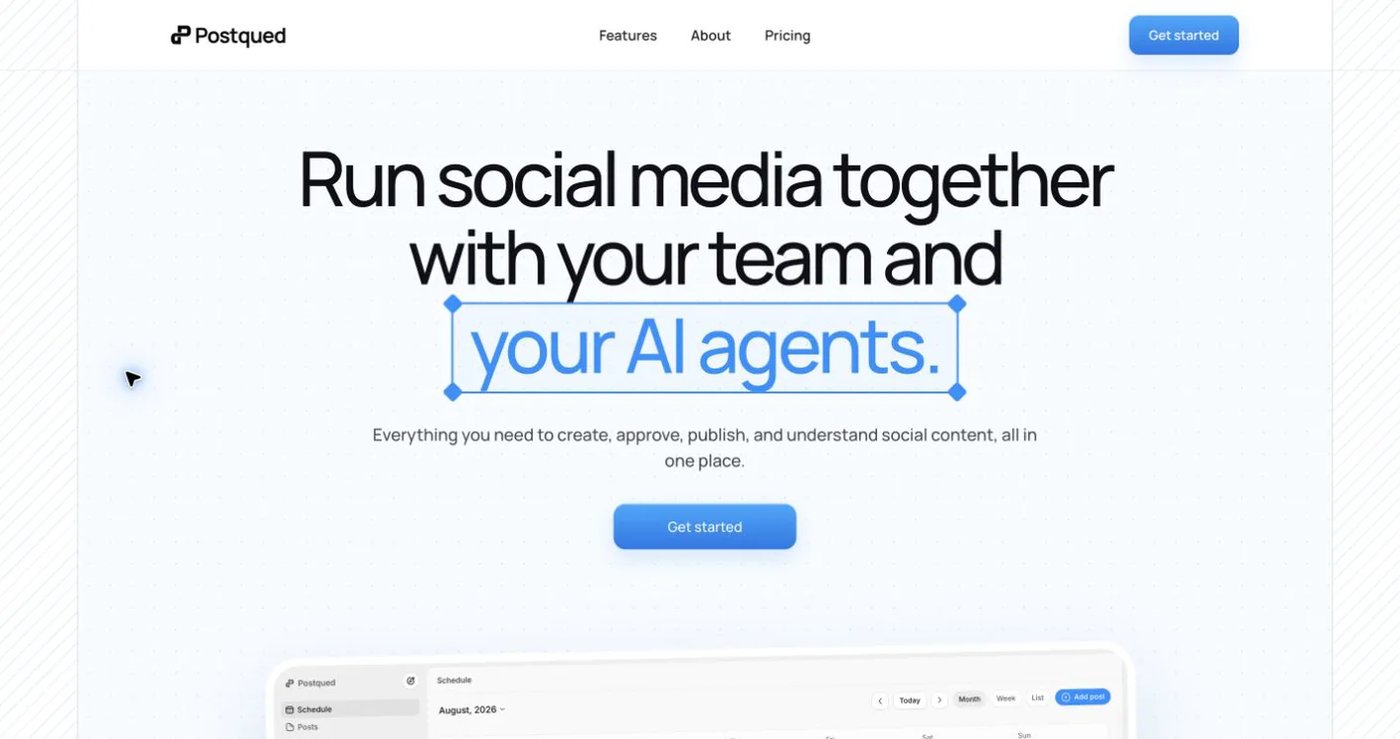
Postqued gives you planning, approvals, publishing, analytics, and comment replies in one workspace, with no post caps. It publishes to TikTok, Instagram, YouTube Shorts, Facebook, LinkedIn, Pinterest, Threads, Bluesky, Mastodon, and X.
Approvals are revision-aware: the approved snapshot is what publishes. You can invite external reviewers by email to check a post before it goes live. The Engagement Inbox handles comments and replies on Facebook, Instagram, Threads, X, LinkedIn, and Mastodon. Analytics cover TikTok, Facebook, Instagram, Threads, and YouTube.
Developers get a REST API with dryRun validation and Idempotency-Key protection, plus an MCP server with 62 tools for AI agents. NapoleonCat reserves API access for Enterprise.
NapoleonCat Standard costs $89/month for five profiles without an API; Postqued Solo covers five accounts with the API for $9. Creator is $29 for 20, Pro $49 for 30 with unlimited seats, and Agency $199 for unlimited accounts. Every plan has a 7-day free trial. Postqued does not offer DMs, social listening, or auto-moderation.
See Postqued pricing or compare Postqued vs NapoleonCat.
2. Agorapulse: best for inbox assignments and moderation

Agorapulse combines publishing, a social inbox, assignments, moderation, reports, and competitor analysis. Standard is $79 per user per month billed annually or $99 monthly. Professional is $119 or $149. Advanced is $149 or $199. Each plan includes 10 profiles. There is no free plan, only a 30-day free trial.
Professional adds assignments and team reports. Advanced adds moderation rules, bulk inbox actions, and competitor benchmarking. API access sits on Custom only.
Choose it when clearing, assigning, and reporting on conversations is the core job. See Agorapulse pricing.
3. Vista Social: best for a broad agency workspace
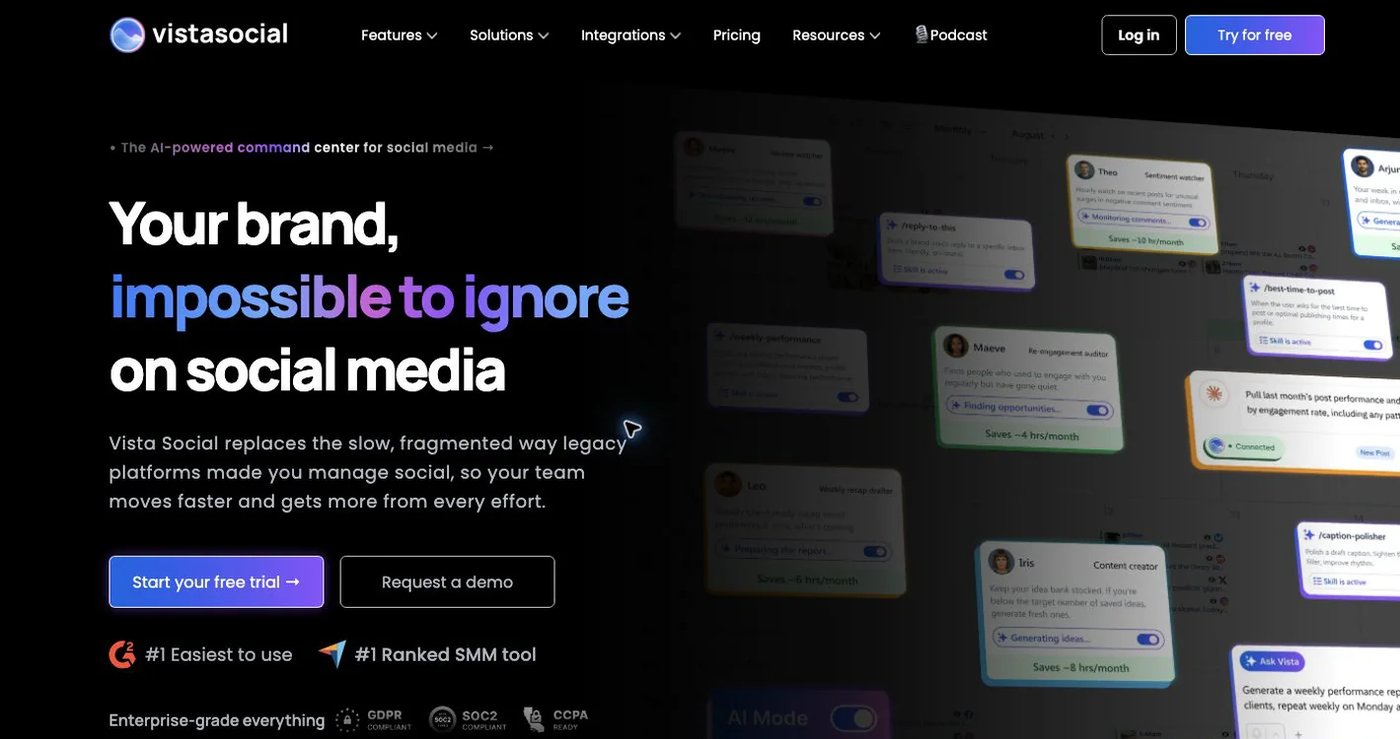
Vista Social bundles scheduling, approvals, an inbox, analytics, listening, review management, and AI writing. Professional costs $99/month ($950/year) for 15 profiles and two users. Advanced is $199 for 30 profiles and three users. Scale is $449 for 70 profiles and four users.
Its API documentation says custom API access is a separately enabled add-on. Zapier and Make come with Advanced and above.
Choose it when DMs, reviews, and listening matter as much as publishing.
4. Buffer: best for a straightforward queue
Buffer’s free plan covers three channels, one user, and 10 scheduled posts per channel. Essentials costs $5 per channel per month billed annually and adds unlimited scheduled posts and analytics. Team costs $10 per channel per month billed annually and adds unlimited users and approvals.
Buffer documents a GraphQL API on Free, Essentials, and Team with tier-based limits. It does not replace NapoleonCat’s moderation, social CRM, or care reporting.
Choose it for a small number of channels and a clean queue. Price your full channel count on Buffer’s pricing page.
5. Sprout Social: best for governed customer care

Sprout Social combines publishing, a unified inbox, permissions, analytics, and structured care workflows. Essentials starts at $79 per seat per month billed annually or $99 monthly for five profiles. Standard starts at $199, Professional at $299, and Advanced at $399 per seat per month billed annually. Listening and Premium Analytics are paid add-ons. API access is listed with Advanced.
Per-seat pricing adds up fast, so count users before you compare.
Choose it when governance and reporting matter as much as scheduling. See Sprout Social pricing.
6. eClincher: best for reviews and multi-location operations
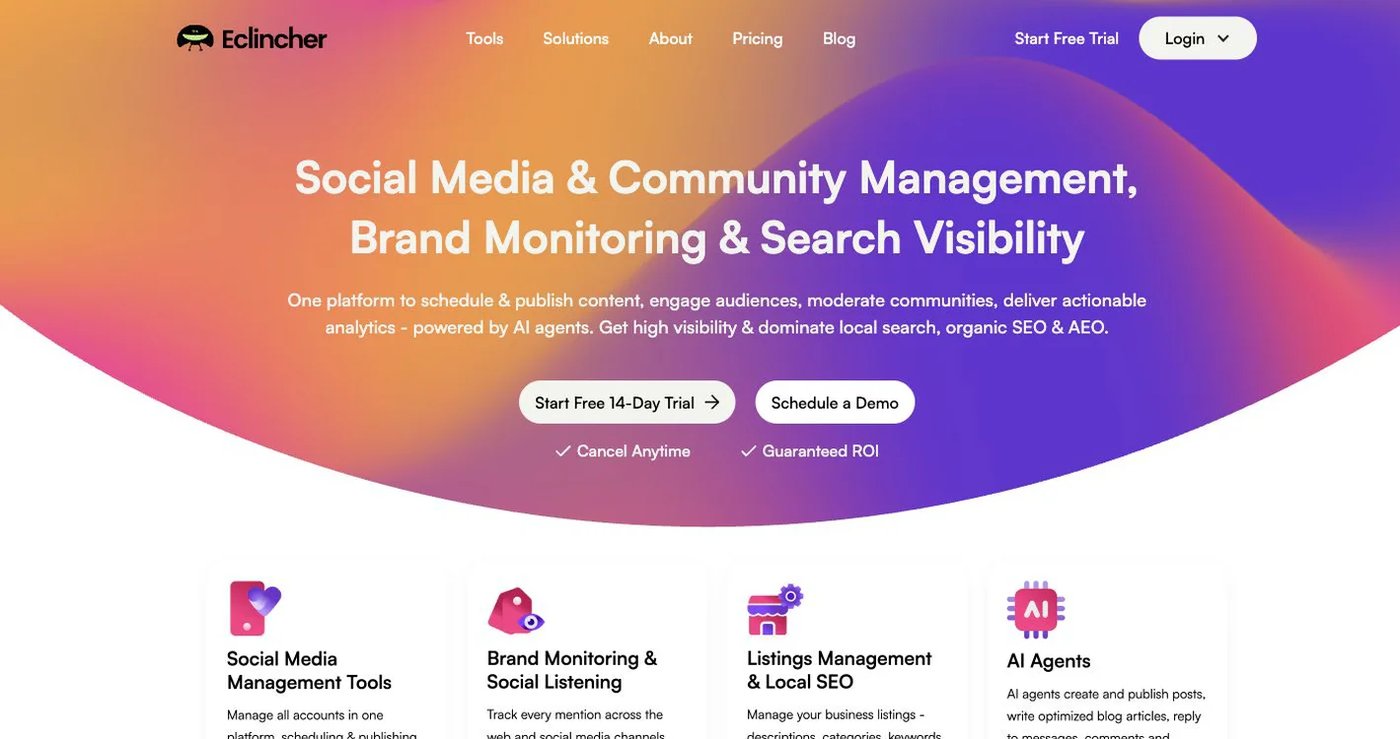
eClincher combines publishing, a unified inbox, analytics, review moderation, client dashboards, and optional listening and local-search tools. Standard costs $149/month for 1 user and 15 profiles. Professional costs $349/month for 5 users and 25 profiles. Enterprise is custom. API and MCP access are listed on all three tiers, and there is a 14-day free trial.
The entry price is well above most schedulers, so it pays off only if you use reviews and listings.
Choose it when reviews, local listings, and inbox automation justify a broader suite. See eClincher pricing.
7. Sendible: best for client workspaces
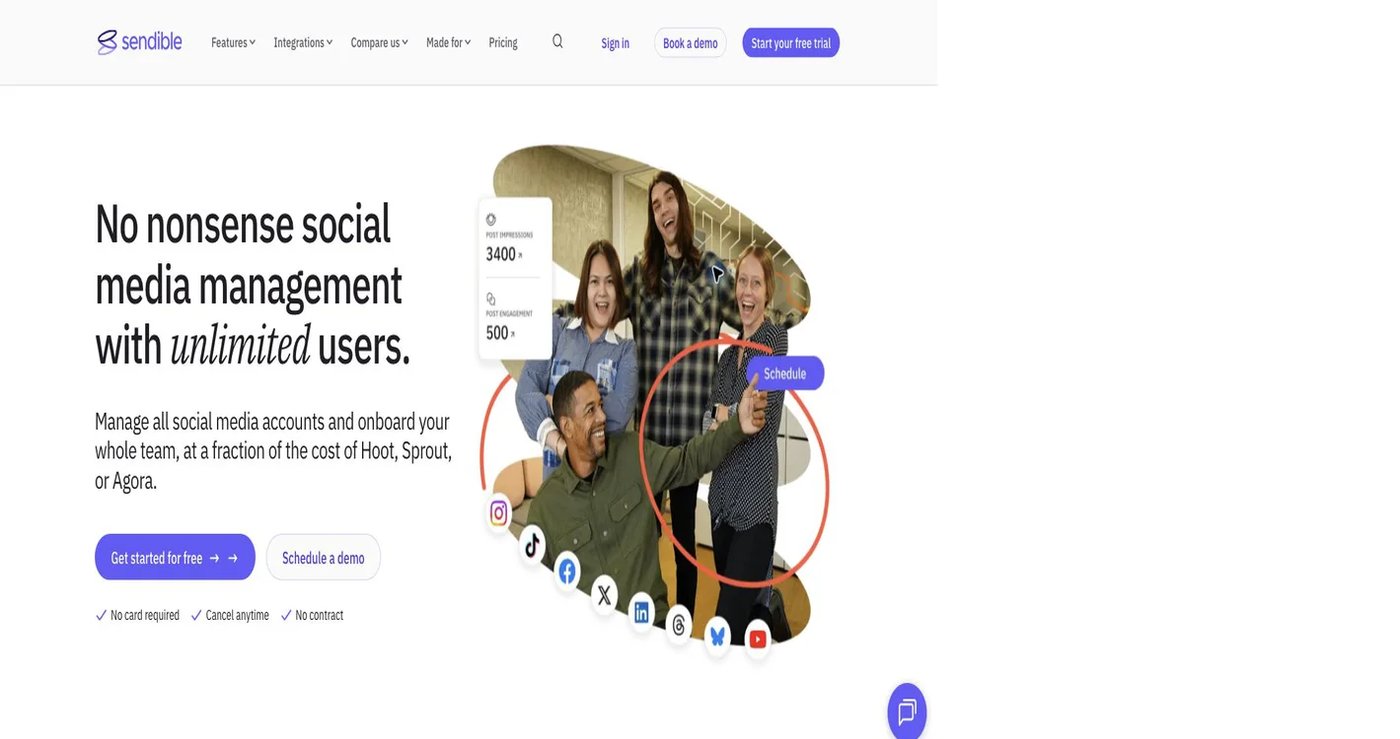
Sendible is built around client dashboards, content calendars, approvals, reports, and a priority inbox. Core costs $35/month ($31/month billed annually) for 1 workspace, 6 profiles, and unlimited users. Plus is $99, Premium $199, Elite $299, and Enterprise $750.
White-label features belong to Elite or Enterprise. Sendible does not offer automatic moderation rules.
Choose it when each client needs a clearly separated workspace. See Sendible’s pricing page.
How do you choose a NapoleonCat alternative?
- Count profiles, users, client groups, and monthly inbox volume.
- List the moderation rules and saved replies your team actually uses.
- Separate comments from DMs, reviews, and listening needs.
- Confirm every network and account type you publish to.
- Check which plan includes API access before you sign.
- Export reports before cancelling, since history may not transfer.
Which NapoleonCat alternative should you choose?
Postqued is the right pick for most teams that need publishing, approvals, comment replies, and API or MCP automation without Enterprise pricing. Choose Agorapulse or Sprout Social if moderation and customer care drive the purchase, eClincher for reviews and local listings, and Buffer for the simplest queue.
Primary sources
- NapoleonCat pricing
- Agorapulse pricing
- Vista Social pricing and API add-on
- Buffer pricing and API
- Sprout Social pricing
- eClincher pricing
- Sendible pricing
Get API access without Enterprise pricing on Postqued Solo at $9/month, starting with a 7-day free trial: See Postqued pricing.