7 Best Missinglettr Alternatives in 2026
Postqued is the best Missinglettr alternative for most teams: you get a full calendar with unlimited posts on all 10 platforms, revision-aware approvals, and REST API plus MCP access from $9/month, with a 7-day free trial. Missinglettr Solo costs $15/month for three profiles. Postqued Solo covers five accounts for $9, and an AI agent can draft promotion posts for each article through the MCP server.
Missinglettr still wins when you want automatic multi-month drip campaigns generated from a blog URL.
What are the best Missinglettr alternatives?
| Product | Starting price | Best for | Main limit |
|---|---|---|---|
| Postqued | $9/month | Full scheduling, approvals, API and MCP | No automatic blog-to-drip builder |
| MeetEdgar | $29.99/month | Evergreen category queues | Not built for per-article campaigns |
| SocialBee | $29/month | Category recycling and content sources | No public API |
| Nuelink | $18/month | RSS and source automations | Approvals marked “Soon” |
| Publer | Free; paid plans per account and member | Bulk scheduling, RSS, and recycling | API on Business and Enterprise only |
| Buffer | Free; paid plans per channel | Simple queue and calendar | No campaign generator |
| Pallyy | Free; Pro $25/month | Visual planning and client approvals | One social set per Pro plan |
How much does Missinglettr cost?
Missinglettr’s pricing page lists three plans:
- Solo: $15/month. One workspace, one extra user, three social profiles.
- Pro: $39/month. Three workspaces, 10 profiles.
- Agency: from $147/month. Unlimited workspaces and users, 25 profiles, 10,000 scheduled posts, white-label interface.
Each plan includes a trial with no credit card required. Missinglettr’s schedule templates support evergreen and short campaigns lasting up to two years, with up to 50 posts per connected profile. Its AI guide describes three modes: full AI generation, source-grounded quote extraction, and a no-AI mode that extracts content from a URL.
Teams usually leave when they need more profiles per dollar, approvals across a full calendar, or posts that are not tied to a blog article.
1. Postqued: best for full publishing and agent workflows
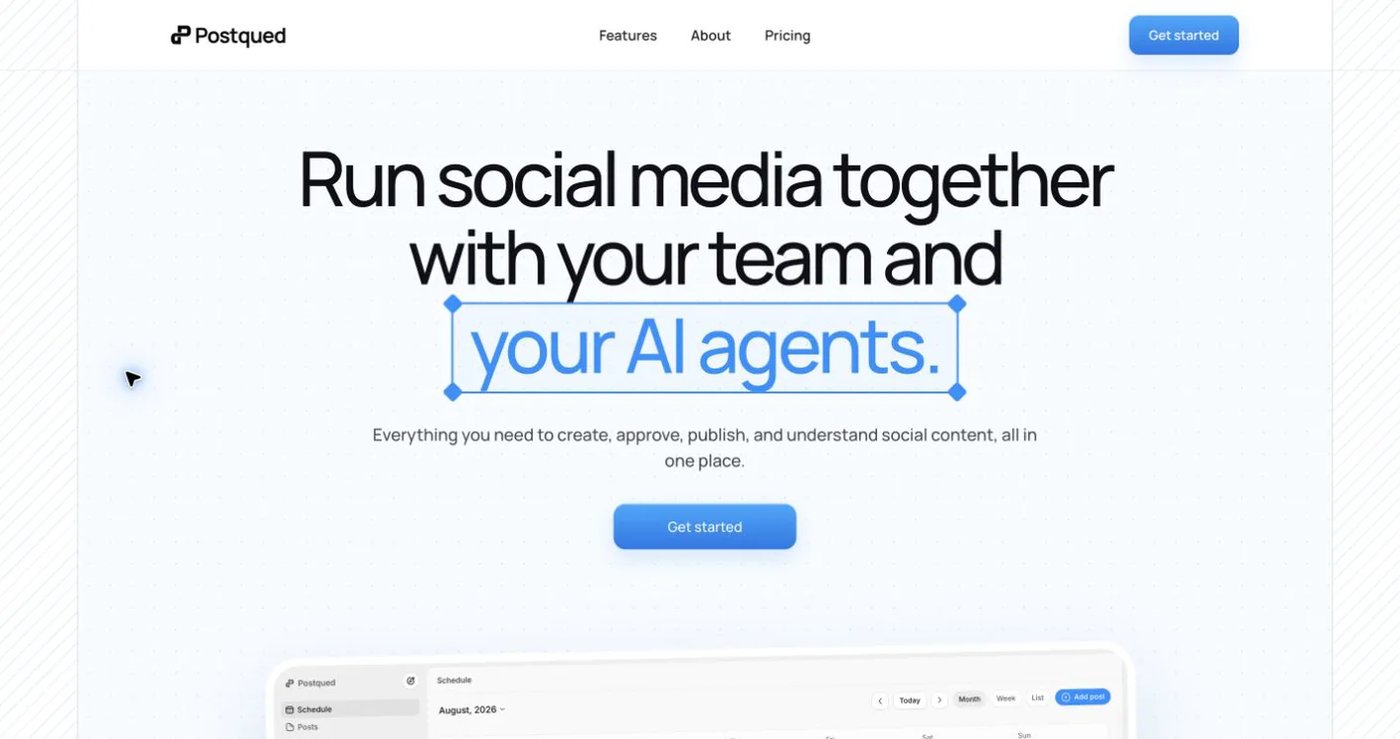
Postqued fits teams that want every post, not just blog promotion, in one calendar. Connect an AI agent through the MCP server (62 tools) and it can draft a series of posts from each new article. Your team then reviews them. Approvals are revision-aware: the approved snapshot is what publishes, and you can invite external reviewers by email.
It publishes to TikTok, Instagram, YouTube Shorts, Facebook, LinkedIn, Pinterest, Threads, Bluesky, Mastodon, and X with unlimited posts. Formats include Instagram Stories and Reels, TikTok photo posts up to 35 images, and Threads posts with up to 20 media items. A first comment can carry your article link on Instagram, Facebook, Threads, LinkedIn, X, and Mastodon. The publish API supports dryRun validation and dispatchAt scheduling, and an Idempotency-Key header prevents duplicate publishes when you retry. The Engagement Inbox handles comments and replies on Facebook, Instagram, Threads, X, LinkedIn, and Mastodon. Analytics cover TikTok, Facebook, Instagram, Threads, and YouTube.
Missinglettr Pro costs $39/month for 10 profiles; Postqued Creator covers 20 accounts for $29. Solo is $9 for 5, Pro $49 for 30 with unlimited seats, and Agency $199 for unlimited accounts. Every plan has a 7-day free trial.
Postqued does not import RSS feeds or build drip campaigns automatically.
See Postqued pricing or compare Postqued vs Missinglettr.
2. MeetEdgar: best for a reusable evergreen library
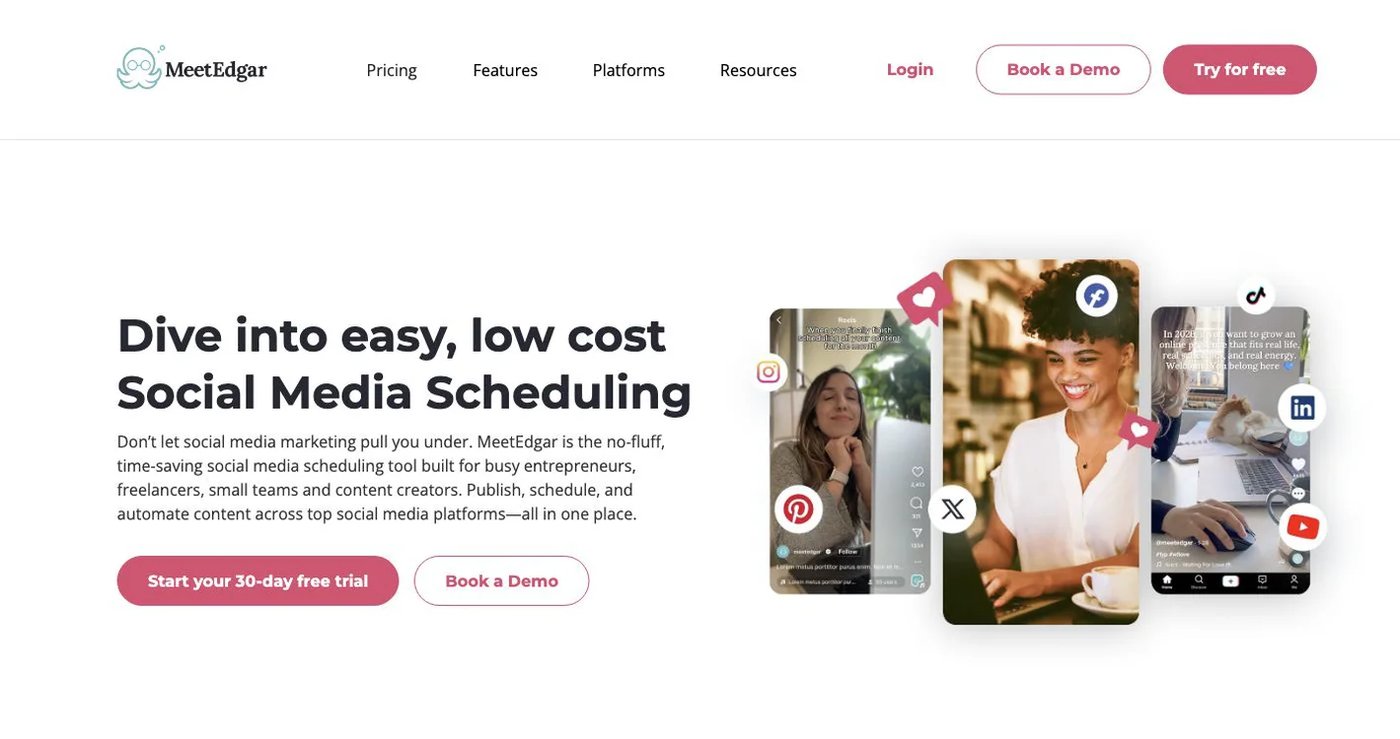
Missinglettr builds a campaign for each article and then stops. MeetEdgar keeps every promo post in a category and pulls from it each week, so your blog archive keeps circulating without a new campaign per URL. RSS and spreadsheet imports let you load past article links in bulk.
Eddie costs $29.99/month for five accounts, four categories, and 10 weekly automations. Edgar costs $49.99 for 25 accounts, unlimited categories, and 1,000 weekly automations. See MeetEdgar pricing.
Choose it when your back catalog matters more than promoting each new post on launch day.
3. SocialBee: best for a planned content mix

SocialBee suits blogs that want article promotion to share the calendar with tips, offers, and curated posts. Blog posts get their own category with its own frequency, and SocialBee mixes it with the rest of your queue. RSS sources drop new articles into that category, and post variations stop the same quote from repeating.
Bootstrap is $29/month for five profiles, Accelerate $49 for 10 with approvals, and Pro $99 for 25. SocialBee’s help center says it does not offer a public API. See SocialBee pricing.
Choose it when blog promotion is one category among several, not the whole workflow.
4. Nuelink: best for RSS and source automations
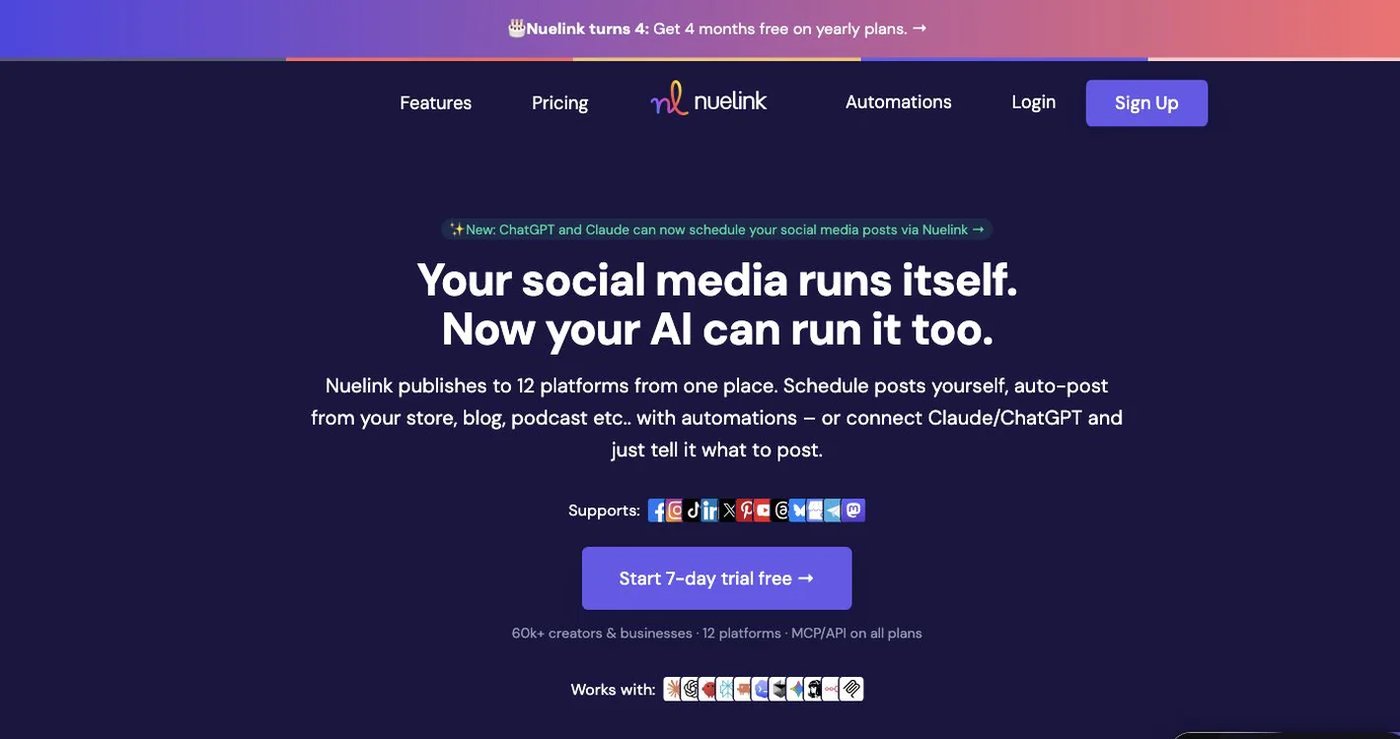
Nuelink is the nearest match to Missinglettr’s “publish an article, get social posts” trigger. Connect a blog or RSS feed and each new article becomes queued posts without opening the app. It also reads podcasts, YouTube channels, and stores, which helps if your content goes beyond a blog.
Standard is $18/month for 10 channels, 10 automations, and 365 queued posts, with API and MCP access. Premium is $48 for 30 channels and an unlimited queue. Approvals and branded reports are still marked “Soon” on Nuelink’s pricing page.
Test one real feed first, since extraction quality decides how much rewriting the posts need.
5. Publer: best for bulk planning, RSS, and recycling
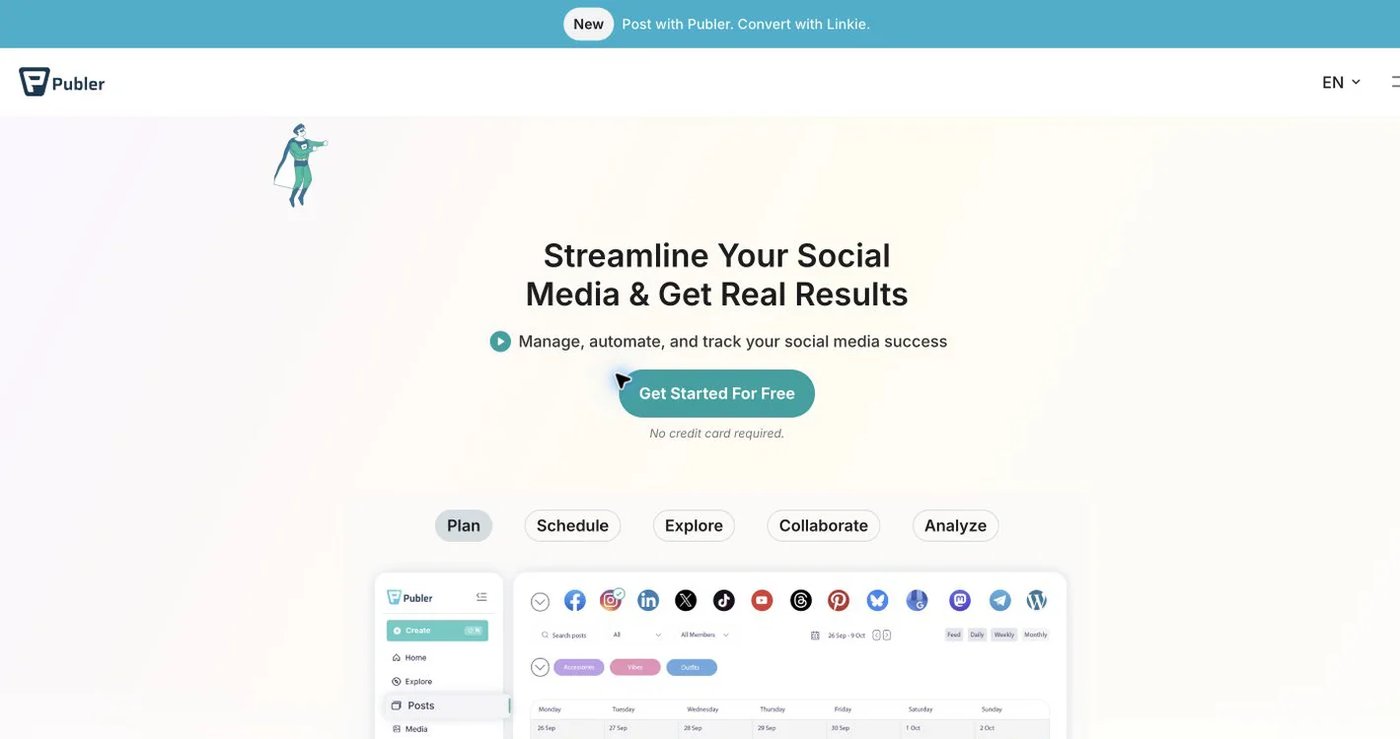
Publer suits teams that write their own promo copy and want to schedule it in bulk. Upload a spreadsheet of article links and captions, set recurring posts for evergreen pieces, and let an RSS feed catch new articles. The free plan covers three accounts with 10 scheduled posts each.
Professional starts at $5/month and Business at $10, scaling with accounts and members. Recycling, analytics, and the API sit on Business and Enterprise.
Choose it when you want cheap bulk distribution and do not need AI to write the posts.
6. Buffer: best for a simple editorial queue
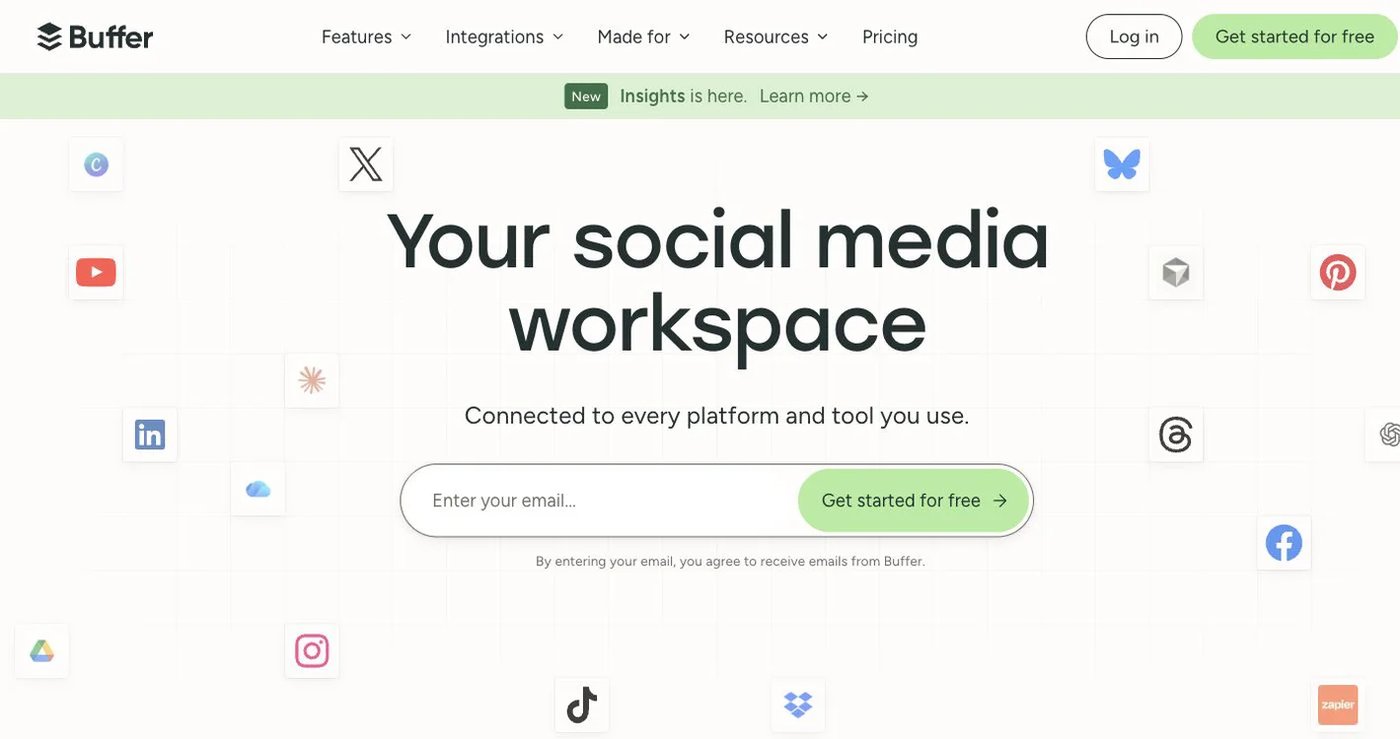
Buffer works when one person shares each new article by hand. Its browser extension queues a post from the article page, and the queue spreads posts across your set times. There is no article extraction, drip template, or campaign generator.
The free plan covers three channels with 10 queued posts each. Essentials is $6 per channel monthly ($5 billed annually), and Team is $12 ($10) with approvals. Buffer’s GraphQL API is on every plan. See Buffer pricing.
Choose it when you publish a few articles a month to a few channels.
7. Pallyy: best for visual planning and client review
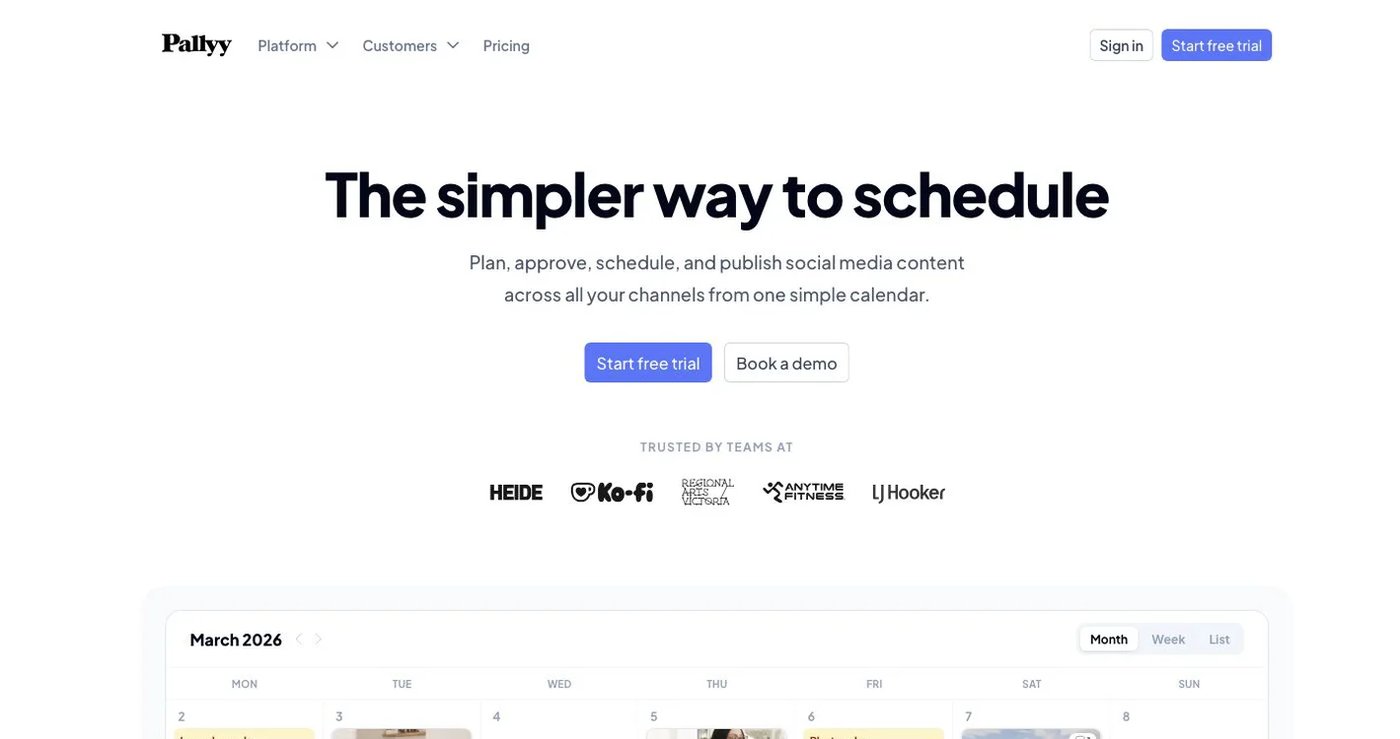
Pallyy fits content teams whose promotion is visual: blog graphics, carousels, and Instagram posts that clients approve before they go out. The grid preview shows how each promo image sits in the feed, and shared calendars give clients one place to review.
Free covers one social set and 15 scheduled image posts a month. Pro is $25/month for one set with unlimited posts, approvals, and the inbox, and Agency is $99 for 10 sets and three users. See Pallyy’s pricing.
Choose it when presenting promo creative to clients matters more than automation.
How do you choose a Missinglettr alternative?
- Pick one article that reflects how you use Missinglettr today.
- Record its campaign template, post sequence, media, links, and profiles.
- Decide whether the new tool should generate copy, reuse copy, or take posts from an agent.
- Rebuild that campaign and check every caption and image.
- Test approvals, publishing, and link tracking.
- Keep Missinglettr active until the sample completes correctly.
Which Missinglettr alternative should you choose?
Postqued is the best choice for most teams: a full calendar with unlimited posts on 10 platforms, approvals, and API plus MCP access so agents can draft article promotion from $9/month. Pick Nuelink for RSS-fed automation, MeetEdgar or SocialBee for evergreen libraries, Publer or Buffer for simple queues, and Pallyy for visual client review.
Primary sources
- Missinglettr pricing and campaign FAQ, schedule templates, and AI campaign modes
- Postqued pricing, About Postqued, and analytics coverage
- MeetEdgar pricing and automation guide
- SocialBee pricing and public API status
- Nuelink pricing
- Publer plans and API access
- Buffer pricing and Buffer API
- Pallyy pricing
Promote your next article from Postqued Solo at $9/month, starting with a 7-day free trial: See Postqued pricing.