7 Best Loomly Alternatives in 2026
Postqued is the best Loomly alternative for most teams: you get revision-aware approvals, unlimited posts on all 10 platforms, and REST API plus MCP access from $9/month, with a 7-day free trial. Loomly Starter costs $49/month billed yearly for 12 accounts and has no public API. Postqued Creator covers 20 accounts for $19/month billed yearly, with the API included.
Loomly still wins when its AI-assisted content ideas and custom branded workflows drive the purchase.
What are the best Loomly alternatives?
| Product | Starting price | Best for | Main limit |
|---|---|---|---|
| Postqued | $9/month | Approvals, unlimited publishing, API and MCP | No listening or DMs |
| Planable | First 50 posts free; Basic $33/month billed annually | Multi-level content approvals | Analytics and inbox are add-ons |
| Buffer | Free plan | Clean queue for small teams | Per-channel pricing |
| Agorapulse | $79/user/month billed annually | Inbox, moderation, reporting | No free plan; API on Custom only |
| Hootsuite | $99/user/month billed annually | Broad management and monitoring | Per-user plans and tiers |
| Sprout Social | $79/seat/month billed annually | Customer care and governed reporting | Listening and analytics add-ons |
| SocialBee | $29/month | Content categories and recycling | No public posting API listed |
How much does Loomly cost?
Loomly’s pricing page lists three plans:
- Starter: $65/month or $49/month billed yearly. 12 accounts, three users, unlimited calendars, scheduling, approval workflows and roles, advanced analytics, an AI assistant, media storage, and content export.
- Beyond: $332/month or $249/month billed yearly. 60 accounts, unlimited users, custom branding, custom roles and workflows, a hashtag manager, and calendar-level two-factor enforcement.
- Enterprise: custom pricing above 60 accounts.
Annual billing carries a 25% discount. The jump from Starter to Beyond is steep: a team that needs a fourth user or a 13th account pays $249/month billed yearly. Loomly’s pages do not list a public API or MCP server.
1. Postqued: best for approvals plus publishing automation
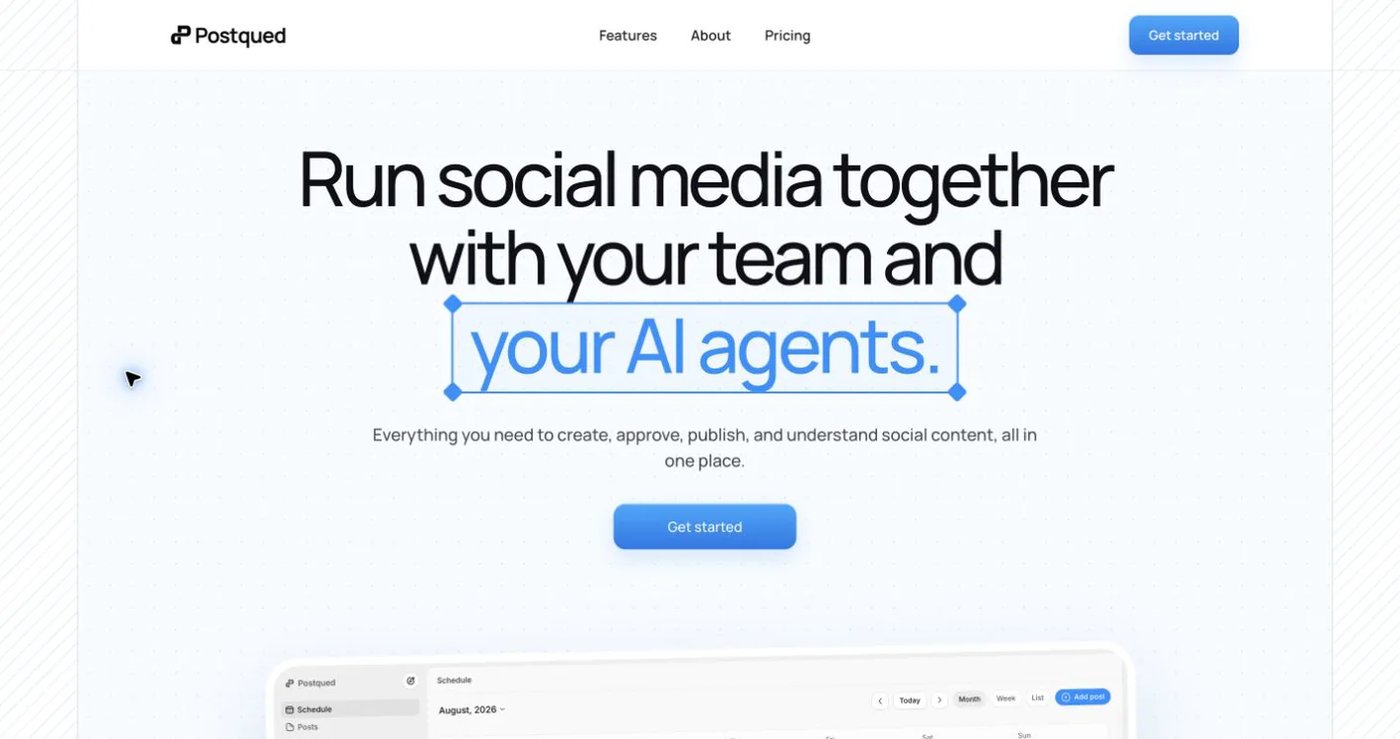
Postqued fits teams that leave Loomly over user limits or the lack of an API. Pro costs $49/month for 30 accounts with unlimited workspaces and team seats, so adding a reviewer never forces a plan jump.
Approvals are revision-aware: the approved snapshot is what publishes. Reviewers can comment and suggest caption changes, and you can invite external reviewers by email. It publishes to TikTok, Instagram, YouTube Shorts, Facebook, LinkedIn, Pinterest, Threads, Bluesky, Mastodon, and X, including Instagram Stories and Reels and TikTok photo posts up to 35 images.
The Engagement Inbox handles comments and replies on Facebook, Instagram, Threads, X, LinkedIn, and Mastodon. Analytics cover TikTok, Facebook, Instagram, Threads, and YouTube. Every plan includes the REST API and an MCP server with 62 tools, so scripts and AI agents can draft, validate, and schedule posts. The publish API supports dryRun validation and dispatchAt scheduling, and an Idempotency-Key header prevents duplicate publishes when you retry. A first comment can go out automatically on Instagram, Facebook, Threads, LinkedIn, X, and Mastodon.
Solo covers 5 accounts for $9/month, Creator covers 20 for $29, and Agency at $199 removes the account cap. Every plan has a 7-day free trial.
Postqued does not offer DMs, social listening, or competitor tracking.
See Postqued pricing or compare Postqued vs Loomly.
2. Planable: best for multi-level content approvals

Planable is built around collaborative creation and review. Its pricing page gives teams the first 50 posts free. Basic costs $39 per workspace monthly or $33/month billed annually for 60 posts, four social pages, unlimited users, and optional approvals. Higher plans add required, multi-level, and custom approval workflows.
Each workspace represents a brand or client, so agencies should total the cost across every workspace. Analytics and the social inbox are separate add-ons. Planable lists an MCP connector.
Choose it when stakeholder feedback and formal sign-off drive your workflow. It is the closest match to Loomly’s approval focus, with more control over approval layers.
3. Buffer: best for a simple publishing queue
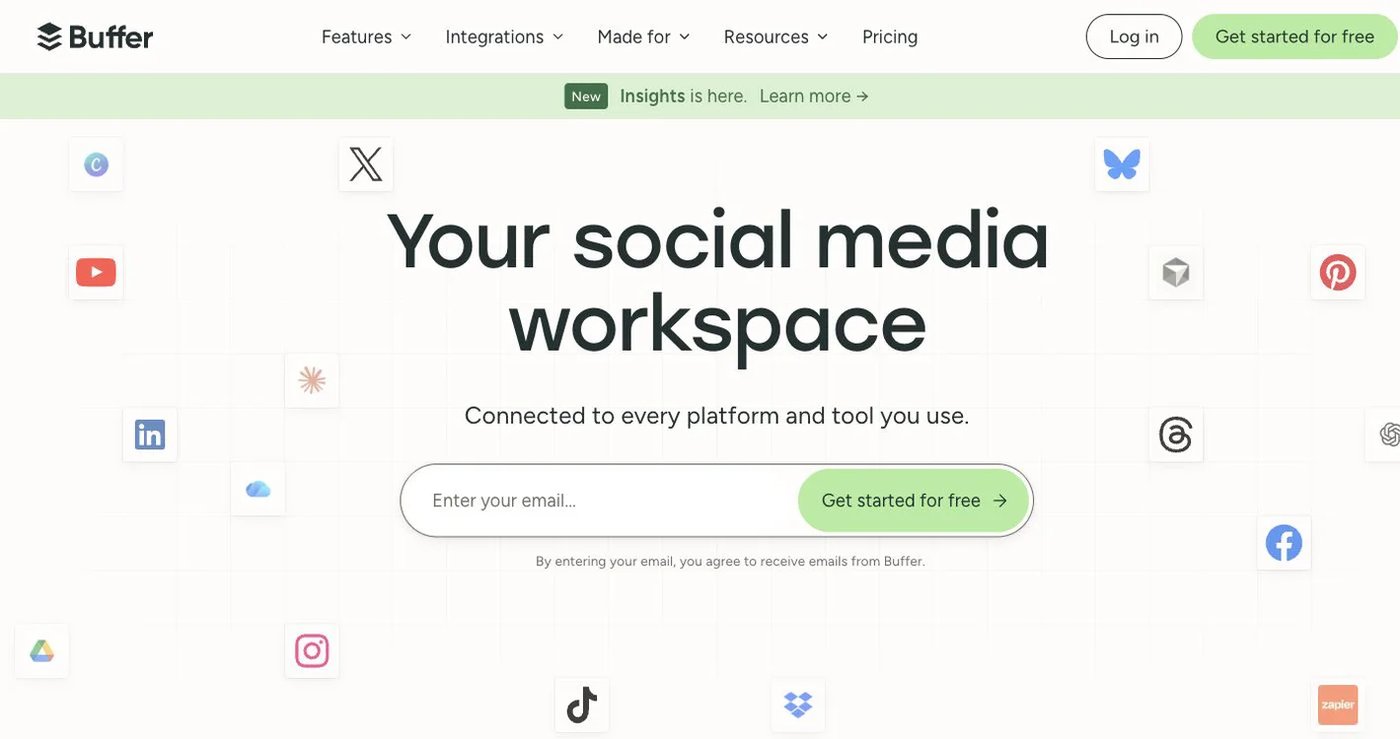
Buffer’s pricing page lists a free plan for three channels and 10 queued posts per channel. Paid plans offer unlimited scheduling with per-channel pricing and volume discounts after the first 10 channels.
Buffer offers a documented API and MCP server. Its API page says access is available on Free and paid plans with different key and request limits.
Choose it when Loomly feels too broad for a small team that mainly needs a queue and calendar. Price it from your real channel count, since costs climb as accounts grow.
4. Agorapulse: best for inbox and moderation work

Agorapulse combines unlimited publishing, a social inbox, reports, comment moderation, assignments, and team workflows. It has no free plan; it offers a 30-day free trial.
- Standard: $99/user monthly or $79/user/month billed annually
- Professional: $149 or $119
- Advanced: $199 or $149
Each plan includes 10 social profiles. Custom adds enterprise controls, multi-step approvals, and the Reports open API. Advanced Listening is a paid add-on. See the pricing page.
A three-person team on Standard pays $237/month billed annually, close to Loomly Beyond. Choose it when your team spends much of the day moderating comments and assigning conversations.
5. Hootsuite: best for broad management and monitoring
Hootsuite combines publishing, analytics, an inbox, monitoring, competitor benchmarking, and AI content tools. Its plans page lists Standard at $99 per user per month billed annually, Professional at $199, and Advanced at $399, with Enterprise custom.
Standard includes up to 10 social accounts, unlimited scheduling, an inbox, and recent brand or competitor monitoring. Professional adds unlimited accounts, automation, and custom reports. Advanced adds approvals, message routing, and team coordination. Enterprise adds SSO and premium support.
Choose it when monitoring, inbox automation, and broad social operations matter more than a simple calendar. Note that approvals start on Advanced, so a team moving from Loomly Starter for its approval workflow should price that tier.
6. Sprout Social: best for customer care and governed reporting
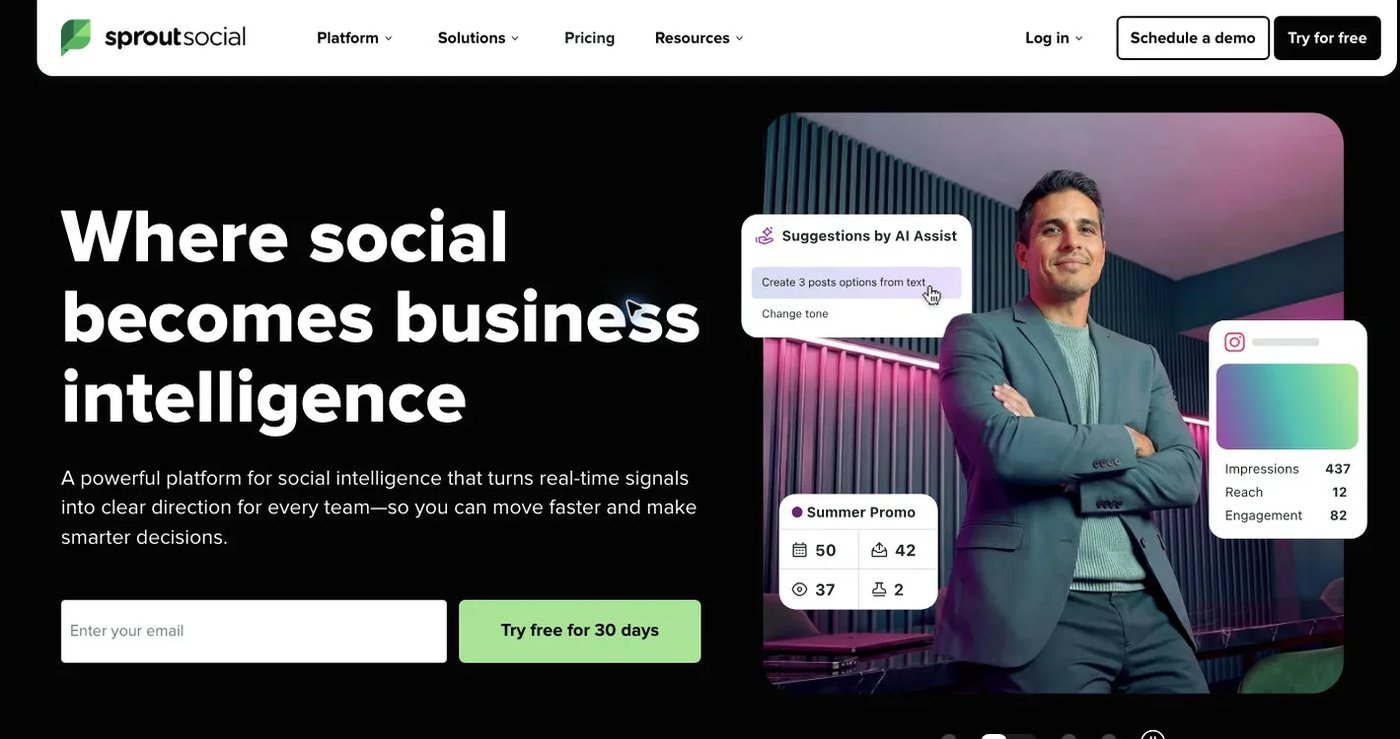
Sprout Social combines publishing, a unified inbox, reviews, monitoring, reports, workflows, and customer-care tools. Its 2026 pricing guide lists Essentials at $99 per seat monthly or $79 per seat per month billed annually for five profiles. Standard, Professional, and Advanced add deeper inbox, reporting, approval, automation, and external-review features.
Price the full seat count: one Essentials seat is not equivalent to Loomly Starter’s three users. Listening, analytics, and influencer marketing are separate products.
Choose it when social is a customer-service channel, not only a content calendar.
7. SocialBee: best for content categories and recycling

SocialBee organizes posts into categories with recurring schedules, evergreen recycling, content sources, variations, and AI-assisted creation. Its pricing page lists Bootstrap at $29/month for five profiles, Accelerate at $49 for 10, and Pro at $99 for 25. Annual billing lowers the rate.
Accelerate adds approvals, CSV uploads, a bulk editor, and advanced analytics. SocialBee integrates with Zapier, Make, and Pabbly, but its pricing page does not list a public posting API or MCP server.
Choose it when you want reusable content moving through a balanced queue. Loomly users who mostly repost evergreen content will find category scheduling saves the most time.
How do you choose a Loomly alternative?
- Create a draft for each important network and format.
- Invite an internal approver and an external reviewer.
- Request a change, revise, and confirm which revision publishes.
- Check whether the inbox covers comments, DMs, reviews, or ad comments.
- Confirm analytics coverage and API or MCP access by plan.
- Export Loomly content and reports before cancelling.
Which Loomly alternative should you choose?
Postqued is the best choice for most teams: revision-aware approvals, unlimited posts on 10 platforms, and API plus MCP access from $9/month. Pick Planable for multi-level client sign-off, Buffer for a small simple queue, Agorapulse or Sprout Social for inbox-heavy teams, Hootsuite for monitoring, and SocialBee for evergreen recycling.
Primary sources
- Loomly pricing and plan features
- Planable pricing and approval workflows
- Buffer pricing and Buffer API
- Agorapulse pricing and features
- Hootsuite plans
- Sprout Social 2026 pricing guide
- SocialBee pricing
Add reviewers without a plan jump on Postqued Pro at $49/month, starting with a 7-day free trial: See Postqued pricing.