7 Best dlvr.it Alternatives in 2026
Postqued is the best dlvr.it alternative for most teams: you get a shared calendar, revision-aware approvals, and REST API plus MCP publishing to 10 platforms, with unlimited posts from $9/month and a 7-day free trial. Your team plans and approves posts in one place, and your scripts or AI agents publish through the same workflow.
dlvr.it still wins when the only job is watching RSS feeds and posting new items automatically. For that, OneUp and RecurPost are the closest replacements.
What are the best dlvr.it alternatives?
| Product | Starting price | Best for | Main limit |
|---|---|---|---|
| Postqued | $9/month | Approvals, publishing, API and MCP | No RSS ingestion or evergreen recycling |
| OneUp | $25/month | RSS, repeating posts, API and MCP | Starter holds 300 scheduled posts |
| RecurPost | $9/month | Evergreen content libraries | Two accounts on the entry plan |
| SocialBee | $29/month | Category queues | No public API |
| Publer | Free; paid scales by account | Bulk scheduling and recycling | API on Business and Enterprise only |
| Buffer | Free; paid per channel | A simple manual queue | No RSS automation |
| Sendible | $35/month | Client workspaces and reports | White label on higher tiers |
How much does dlvr.it cost?
dlvr.it is built for automated distribution: it watches RSS feeds, applies filters and formatting, and posts new items to social destinations. Its pricing lists:
- Starter: $4.99/month or $49/year
- Basic: $9.99/month or $99/year
- Pro: $14.99/month or $119.88/year
Each tier raises the limits on feeds, social destinations, queued posts, and API requests. dlvr.it also publishes API documentation with account API keys and link shortening, but not a full social publishing API.
Pick a replacement by the job you need done:
- Planned campaigns: calendar, drafts, approvals, scheduling.
- Feed distribution: RSS monitoring, filters, automatic delivery.
- Evergreen automation: reusable libraries and repeating queues.
- Custom integration: documented API or MCP access.
1. Postqued: best for approvals and agent workflows
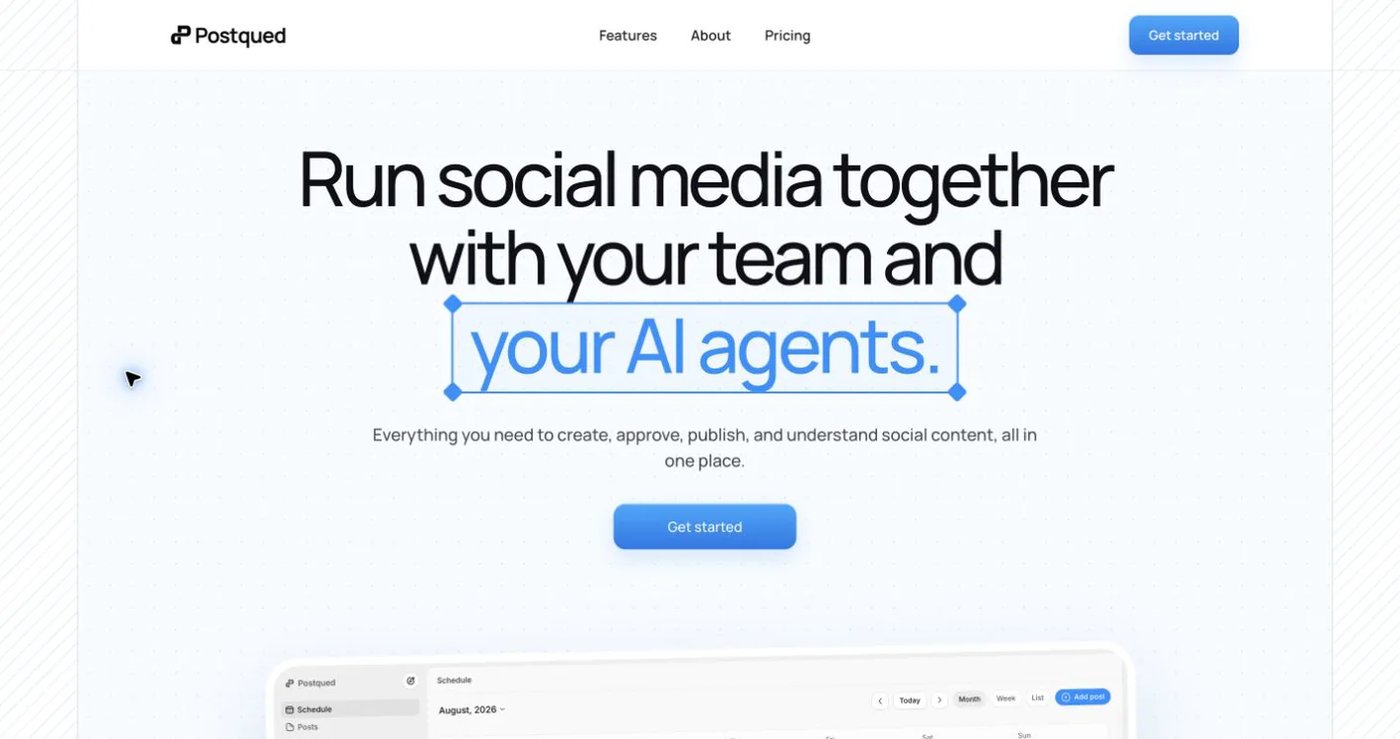
Postqued suits teams that outgrow a feed bot and need people and AI agents to publish through one controlled process. You schedule to TikTok, Instagram, YouTube Shorts, Facebook, LinkedIn, Pinterest, Threads, Bluesky, Mastodon, and X. Reviewers suggest caption edits, approve a specific revision, and that approved snapshot is what publishes. You can invite external reviewers by email.
Developers get a REST API with dryRun validation, Idempotency-Key headers, and dispatchAt scheduling, plus an MCP server with 62 tools. Every plan includes unlimited posts, API and MCP access, and an Engagement Inbox for comments on six networks.
dlvr.it Pro costs $14.99/month for feed posting alone; Postqued Solo is $9/month for 5 accounts with approvals and API access. Creator is $29 for 20, Pro $49 for 30 with unlimited seats, and Agency $199 for unlimited accounts. Every plan starts with a 7-day free trial. Postqued does not ingest RSS feeds or recycle evergreen posts.
See Postqued pricing or compare Postqued vs dlvr.it.
2. OneUp: best for RSS and repeating posts
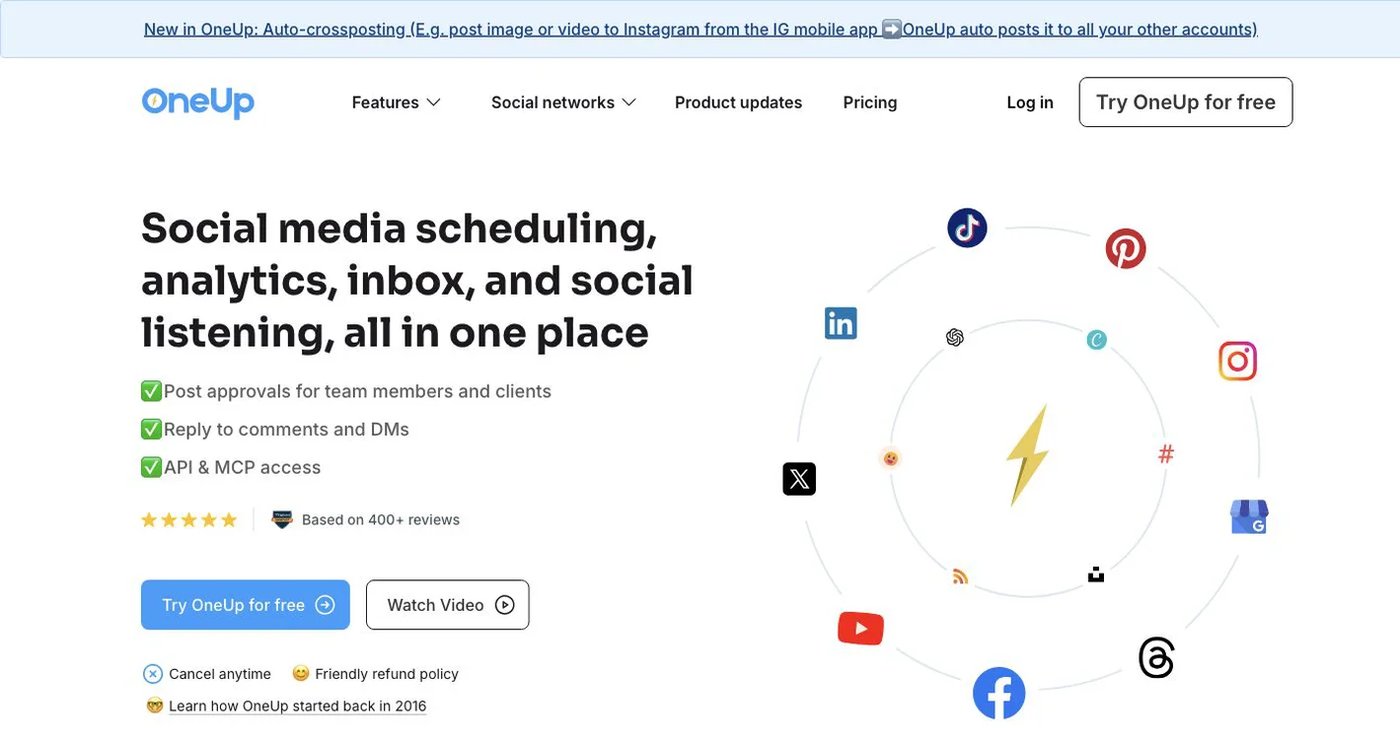
OneUp combines scheduling with repeating posts, RSS feeds, bulk uploads, a social inbox, listening, and reports. Its pricing page lists Starter at $25/month for five accounts and 300 scheduled posts, with API and MCP scheduling included. Intermediate raises that to 15 accounts and unlimited scheduled posts and adds team members.
Its approval model is lighter than Postqued’s revision-aware flow. Choose it when you want to replace dlvr.it’s feed automation and keep a broad social toolset.
3. RecurPost: best for evergreen libraries
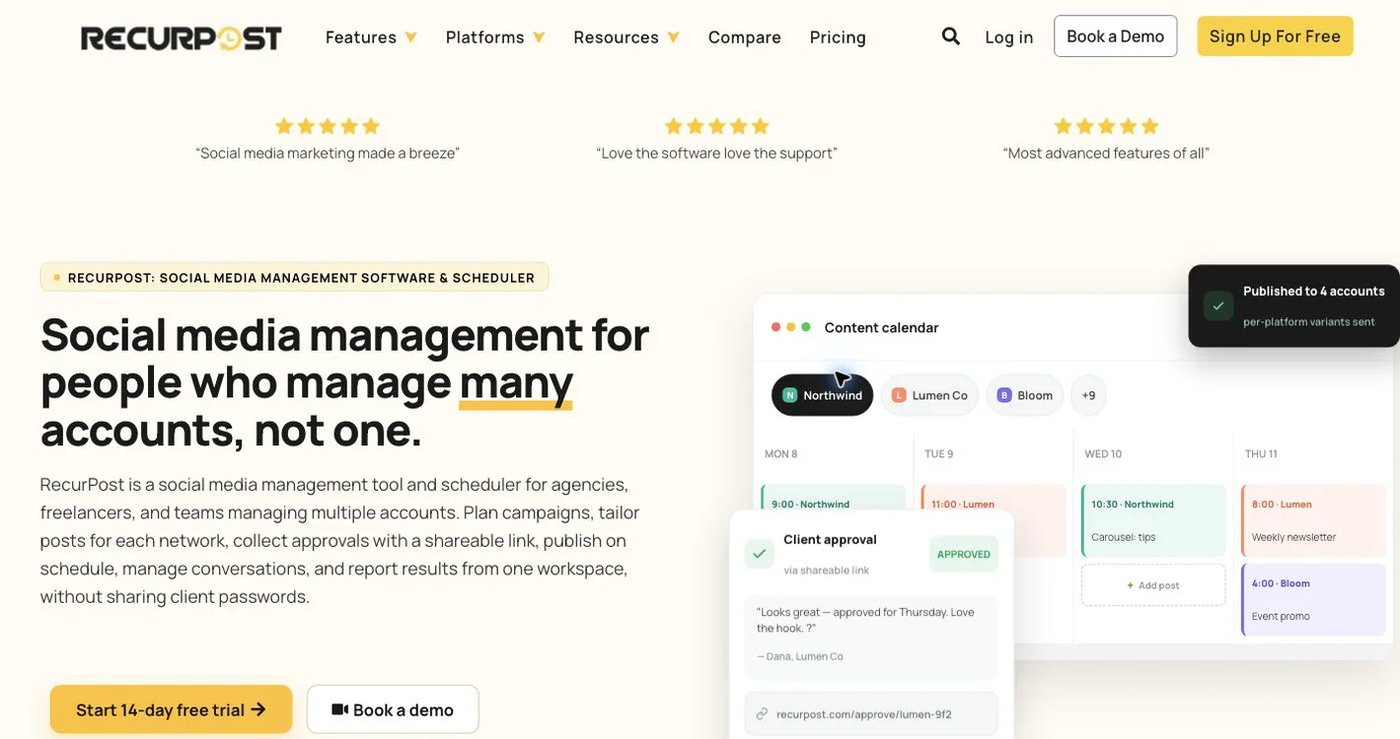
RecurPost is built around reusable content libraries. You group evergreen posts, attach a schedule to each library, and proven content keeps returning without being rebuilt.
RecurPost’s plans start at $9/month for two social accounts. Personal is $25 for five accounts, and Agency is $79 for 20 accounts with client workspaces. Check format support for your networks before moving a large library. Choose it when repetition is the core workflow.
4. SocialBee: best for category-based queues

SocialBee sorts posts into content categories with evergreen recycling, content sources, approvals, analytics, and AI-assisted planning. Bootstrap starts at $29/month for five profiles, Accelerate is $49 for 10 with approvals, and Pro is $99 for 25 profiles and five workspaces. See SocialBee pricing.
Its help center confirms there is no public API. Choose it when you want structured category queues in a finished interface and do not need custom integrations.
5. Publer: best for flexible bulk scheduling
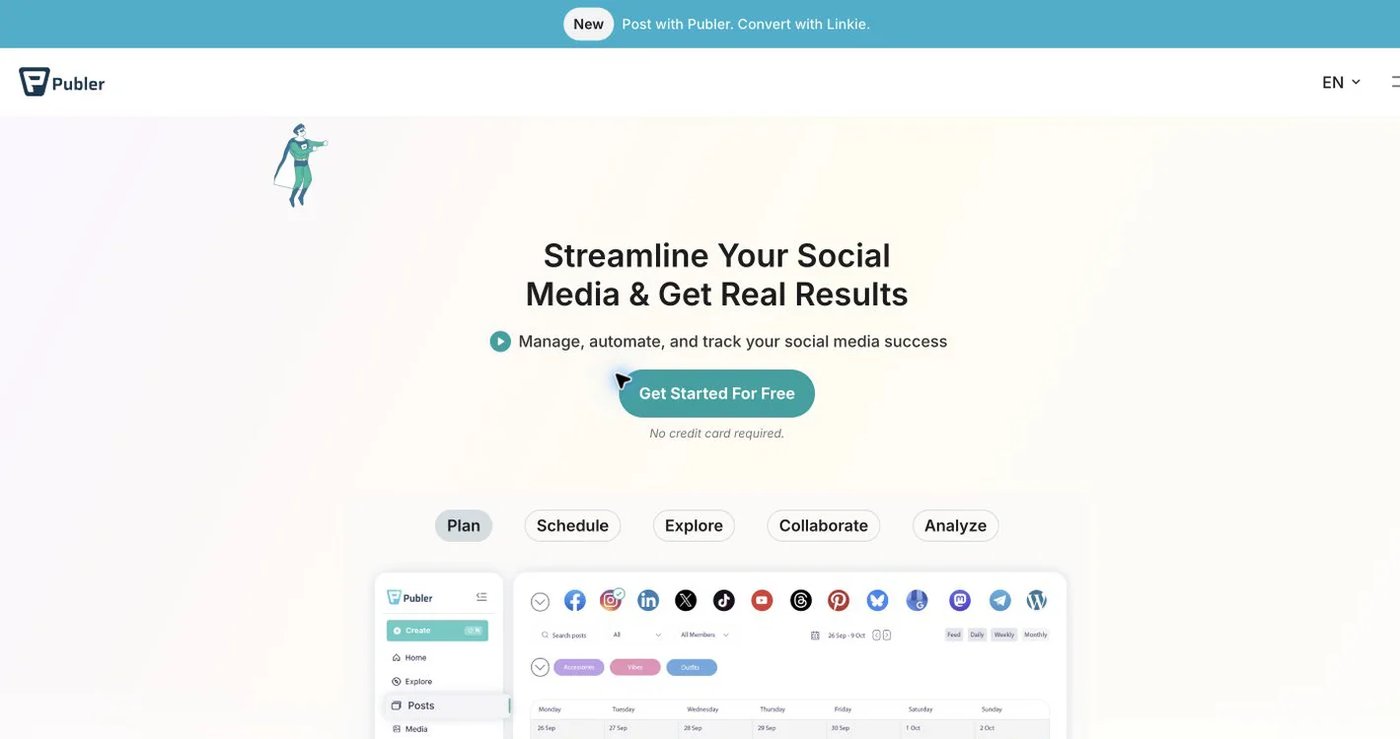
Publer supports bulk scheduling, recurring and recycled posts, workspaces, and AI assistance across many networks. The free tier works for a small test. Professional is advertised from $5/month and Business from $10, with the final price set by account and member count in Publer’s calculator.
API access is limited to Business and Enterprise customers. Choose it when bulk uploads and recycling matter more than a public API.
6. Buffer: best for a straightforward queue
Buffer lets you draft, queue, and publish without managing feed rules. The free plan covers three channels with up to 10 queued posts per channel. Paid plans add unlimited scheduled posts, collaboration, and analytics, priced per channel. Buffer also documents a GraphQL API.
It does not replace automatic RSS posting. Choose it for a clean manual workflow, and price it by the exact number of channels you manage. See Buffer pricing.
7. Sendible: best for client workspaces
Sendible targets agencies that need client separation, approvals, reports, an inbox, and publishing in one product. Sendible pricing starts with Core at $35/month ($31/month billed annually) for one workspace and six profiles, with unlimited users. Plus is $99, Premium $199, and Elite $299, each adding workspaces and profiles.
Choose it when replacing dlvr.it is part of a wider move into client delivery.
How do you choose a dlvr.it alternative?
- List every feed, filter, destination, and queue dlvr.it runs today.
- Decide whether you need automatic feed posting or planned campaigns.
- Count accounts, users, and client workspaces before comparing prices.
- If you automate, confirm API or MCP access is on the plan you will buy.
- Test one post per network in the new tool before you cancel dlvr.it.
Which dlvr.it alternative should you choose?
Choose Postqued if you want planned publishing, revision-aware approvals, and API plus MCP access on all 10 platforms for $9/month. Choose OneUp or RecurPost if RSS or evergreen recycling is non-negotiable, SocialBee for category queues, Buffer for a simple manual queue, Publer for bulk scheduling, and Sendible for client delivery.
Primary sources
- dlvr.it pricing
- dlvr.it API documentation
- OneUp pricing
- RecurPost pricing
- SocialBee pricing
- Publer pricing
- Buffer pricing
- Sendible pricing
- Postqued pricing
- Postqued platforms
Move your planned posts to Postqued Solo for $9/month and test approvals in a 7-day free trial: See Postqued pricing.