7 Best Crowdfire Alternatives After Its Shutdown
Crowdfire went offline on May 15, 2025. Postqued is the best Crowdfire alternative for most teams: an active scheduler with unlimited posts on 10 platforms, revision-aware approvals, an Engagement Inbox, and API plus MCP access from $9/month. Every plan starts with a 7-day free trial.
If you relied on Crowdfire’s RSS curation or evergreen recycling, Nuelink, OneUp, RecurPost, MeetEdgar, or SocialBee rebuild that workflow more directly.
What are the best Crowdfire alternatives?
| Product | Starting price | Best for | Main boundary |
|---|---|---|---|
| Postqued | $9/month (5 accounts) | Publishing, approvals, API and MCP | No RSS or recycling |
| Nuelink | $18/month | RSS and source automation | Approvals listed as coming soon |
| OneUp | $25/month | Repeating posts with API and MCP | Starter caps the queue at 300 posts |
| RecurPost | $9/month | Evergreen content libraries | Daily post limits by plan |
| MeetEdgar | $29.99/month | Category-based evergreen queues | Weekly automation limits |
| SocialBee | $29/month | Content categories and RSS sources | No public API |
| Buffer | Free; Essentials $6/channel | A simple queue with a public API | No evergreen library |
What happened to Crowdfire?
Crowdfire posted Crowdfire is Saying Goodbye on May 5, 2025:
- The service went offline on May 15, 2025.
- Scheduled content ran only until that date.
- Customers received subscription and refund details by email.
Before picking a replacement, decide which part of Crowdfire you need to rebuild:
- Publishing: accounts, future posts, media, and per-network settings.
- Curation: RSS feeds, saved sources, and suggested content.
- Evergreen automation: categories, repeat intervals, and queue times.
- Team work: reviewers, clients, and comments.
1. Postqued: best for active multi-network publishing

Postqued gives former Crowdfire users a stable home for publishing across TikTok, Instagram, YouTube Shorts, Facebook, LinkedIn, Pinterest, Threads, Bluesky, Mastodon, and X.
Teams draft posts, comment, suggest caption edits, and approve a specific revision: the approved snapshot is what publishes. External reviewers can be invited by email. The Engagement Inbox handles comments and replies on Facebook, Instagram, Threads, X, LinkedIn, and Mastodon. Analytics cover TikTok, Facebook, Instagram, Threads, and YouTube. Scripts and AI agents use the REST API or the MCP server with 62 tools.
If Crowdfire handled a handful of profiles, Solo covers 5 accounts for $9/month. Creator covers 20 for $29, Pro covers 30 with unlimited seats for $49, and Agency at $199 is unlimited. Yearly billing drops Solo, Creator, Pro, and Agency to $7, $19, $39, and $159. Every plan includes unlimited posts and a 7-day free trial.
Limitation: no RSS ingestion, content discovery, or evergreen recycling.
See Postqued pricing or compare Postqued vs Crowdfire.
2. Nuelink: best for RSS and source automation
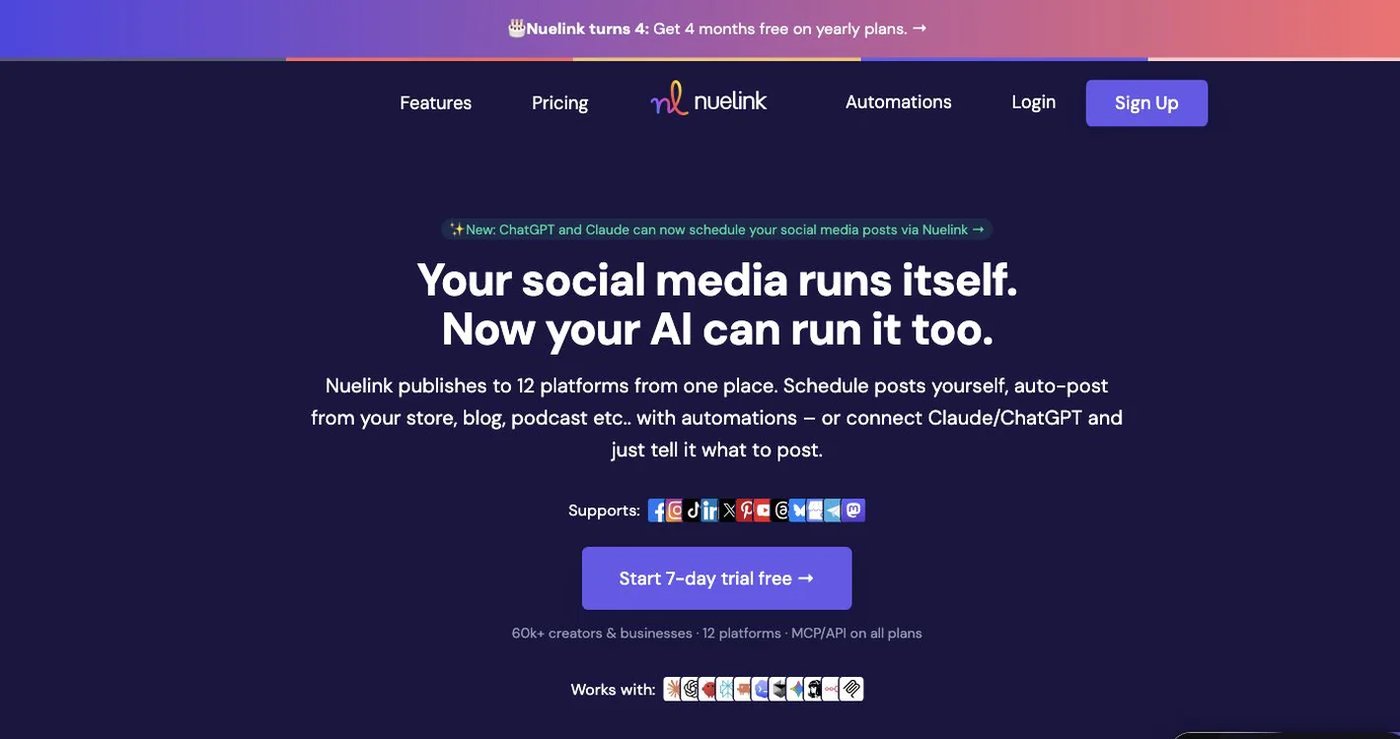
Nuelink fills collections from RSS and blog feeds, WordPress, Medium, Shopify, Etsy, Substack, podcasts, and YouTube channels. It is one of the closest matches for Crowdfire’s curation.
Standard is $18 monthly with 10 channels, one brand, one member, 10 automations, 365 queued posts, and API and MCP access. Premium is $48 with 30 channels, three brands, three members, and unlimited queued posts. Its public API is in Alpha, and approvals are listed as coming soon. See Nuelink pricing, API documentation, and MCP documentation.
Choose it when source automation is the job.
3. OneUp: best for repeating posts with developer access
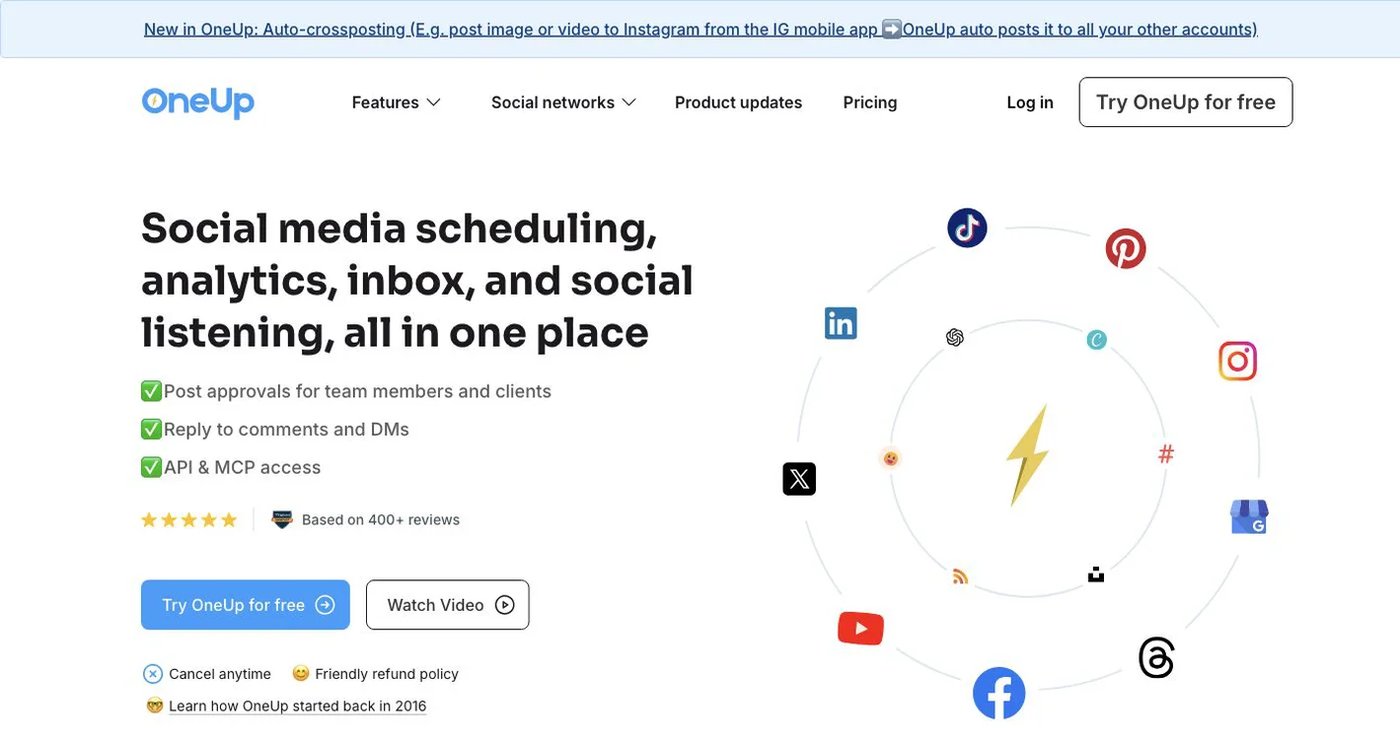
OneUp supports repeating posts, queue times, RSS automation, bulk uploads, a social inbox, listening, and API and MCP scheduling.
Starter is $25 monthly or $15 billed annually for five accounts and 300 scheduled posts. Intermediate is $60 or $48 for 15 accounts, unlimited posts, two extra team members, and video bulk uploads. See OneUp pricing.
Intermediate also adds three cross-posting workflows and API and MCP comment replies. Confirm the queue allowance and exact API action before you migrate.
Choose it when repeating posts and developer access belong in one product.
4. RecurPost: best for evergreen content libraries
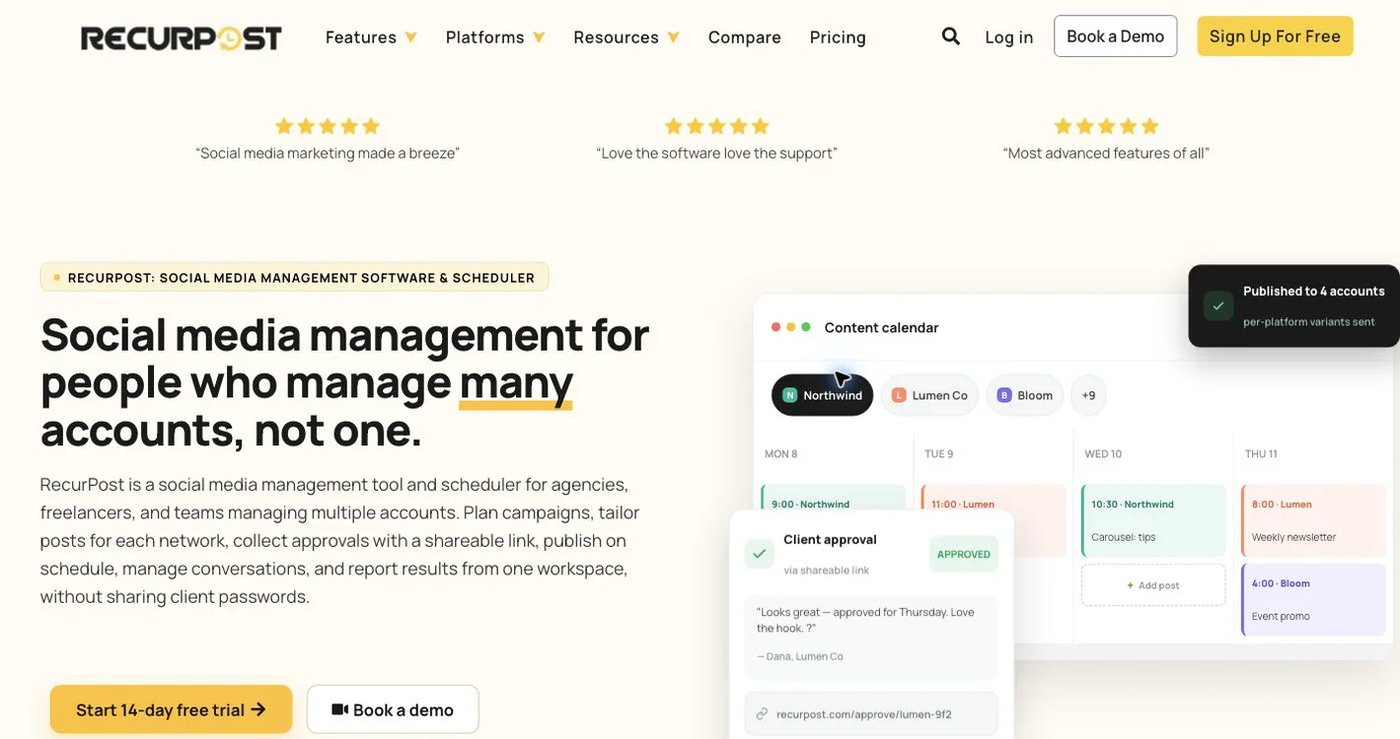
RecurPost organizes recurring and one-time posts into libraries, with bulk scheduling, client approvals, an inbox, and analytics on relevant plans.
Starter is $9 monthly for two accounts and up to 10 posts per account per day. Personal is $25 for five accounts and 20 posts per account per day. Agency is $79 for client teams. Extra accounts cost $4 per month on Starter and Personal. See RecurPost plans.
Check the exact network, format, daily allowance, and approval tier before rebuilding your library.
Choose it when rebuilding an evergreen library matters most.
5. MeetEdgar: best for category-based queues

MeetEdgar stores content in categories and fills weekly slots from them. Eddie is $29.99 monthly for five accounts, four categories, 20 team members, and 10 weekly automations. Edgar is $49.99 for 25 accounts, unlimited categories, and 1,000 weekly automations.
It supports TikTok, Instagram, X, Threads, LinkedIn, Facebook, Pinterest, and Google Business Profile. It has no documented public publishing API. See MeetEdgar pricing.
Annual billing lowers the effective monthly price, and both plans allow 20 team members. Its category queue is one of the closest matches to Crowdfire’s set-and-forget posting.
Choose it for a simple, self-filling category queue.
6. SocialBee: best for categories, sources, and team review

SocialBee combines categories, RSS sources, recycling, expiry rules, post variations, and analytics. Bootstrap is $29 monthly for five profiles, one user, 10 categories, and 10 sources. Accelerate is $49 for 10 profiles with approvals. Pro is $99 for 25 profiles and five workspaces.
SocialBee has no public API. See SocialBee pricing and its API guidance.
Accelerate also adds CSV uploads and bulk editing, and Pro adds report exports and internal notes. Annual billing lowers the effective monthly price on every plan.
Choose it when evergreen organization and team review matter most.
7. Buffer: best for a straightforward queue
Buffer’s free plan connects three channels with 10 scheduled posts each. Essentials is $6 per channel monthly or $5 billed annually. Team is $12 or $10 per channel and adds unlimited users and approvals.
Buffer offers a public GraphQL API on all plans, from 3,000 requests per month on Free to 15,000 on Team. It does not recreate Crowdfire’s curation or recycling. See Buffer pricing and Buffer API access.
Per-channel pricing stays cheap for a handful of profiles, and Team also adds permissions.
Choose it when a clean manual queue is enough.
How do you choose a Crowdfire alternative?
- Gather your old calendars, spreadsheets, source-feed URLs, and media.
- Separate evergreen posts from time-sensitive ones.
- Decide if you need curation, recycling, approvals, or an API.
- Reconnect each account in the new tool.
- Rebuild one automation or category and review the drafts.
- Test your hardest media format before loading a full queue.
Which Crowdfire alternative should you choose?
Postqued is the best pick for most former Crowdfire users: active publishing on 10 platforms, approvals, an inbox, and API plus MCP from $9/month. Pick Nuelink for RSS automation, OneUp for repeating posts, RecurPost, MeetEdgar, or SocialBee for evergreen libraries, and Buffer for a basic queue.
Primary sources
- Crowdfire’s official shutdown announcement
- Postqued pricing
- Nuelink pricing, API documentation, and MCP documentation
- OneUp pricing
- RecurPost pricing
- MeetEdgar pricing
- SocialBee pricing and public API status
- Buffer pricing and Buffer API
Rebuild your Crowdfire queue on Postqued Solo for $9/month, starting with a 7-day free trial: See Postqued pricing.