7 Best Agorapulse Alternatives in 2026
Postqued is the best Agorapulse alternative for most teams: you pay per connected account, not per user, and get unlimited posts on 10 platforms, approvals, an Engagement Inbox, and API plus MCP access from $9/month. Pro at $49 adds unlimited team seats, and every plan starts with a 7-day free trial.
Agorapulse still wins when DMs, social listening, and automated inbox moderation drive the purchase.
What are the best Agorapulse alternatives?
| Product | Best for | Starting price | Main boundary |
|---|---|---|---|
| Postqued | Per-account pricing, approvals, API and MCP | $9/month (5 accounts) | No DMs or listening |
| Buffer | A simple queue for a few channels | Free tier; paid per channel | Cost grows with channel count |
| NapoleonCat | Inbox and automated moderation | $89/month | API on Enterprise only |
| Planable | Visual review and approval | $39/workspace monthly ($33 yearly) | Light on inbox and analytics |
| Sendible | Client dashboards and reports | $35/month | Profile caps by tier |
| Hootsuite | Publishing, listening, governance | $99/user/month billed annually | Higher entry cost |
| Sprout Social | Customer care and governed reporting | Per-seat plans | Seats and add-ons add up |
How much does Agorapulse cost?
Agorapulse has no free plan. It offers a 30-day free trial, then these per-user plans from its pricing page:
- Standard: $99 per user monthly, or $79 per user per month billed annually.
- Professional: $149 monthly, or $119 billed annually. Adds assignments and team reporting.
- Advanced: $199 monthly, or $149 billed annually. Adds automated moderation, bulk inbox actions, and ROI analysis.
- Custom: quoted pricing, enterprise controls, and the Reports open API.
Each self-service plan includes 10 social profiles. A team of five on Professional pays $595 per month billed annually before adding profiles. That per-user math is the main reason teams look elsewhere.
1. Postqued: best for per-account pricing and automation
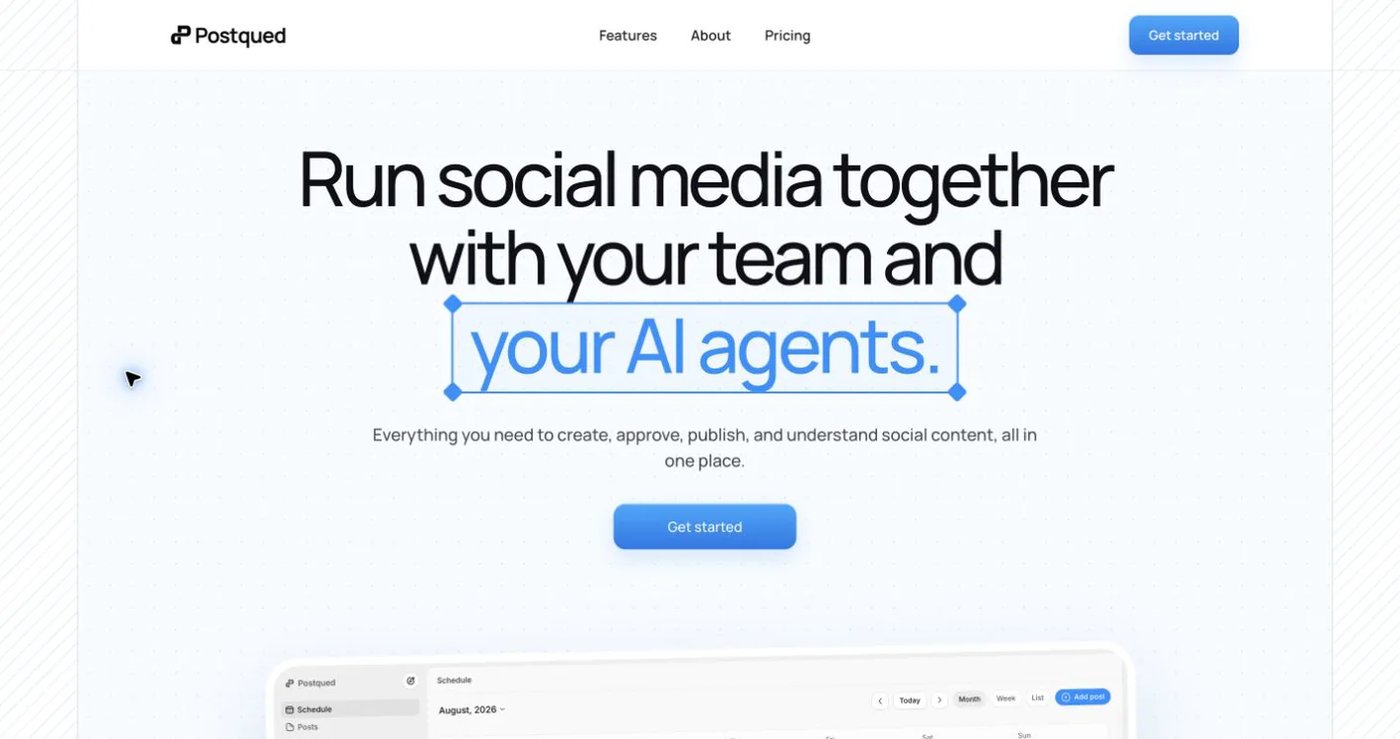
Postqued charges for connected accounts, not users. On Pro and Agency, team seats are unlimited, so adding a teammate does not raise your bill. Plan, approve, and publish to TikTok, Instagram, YouTube Shorts, Facebook, LinkedIn, Pinterest, Threads, Bluesky, Mastodon, and X from one calendar.
Approvals are revision-aware: the approved snapshot is what publishes. You can invite external reviewers by email, so clients sign off without a seat. The Engagement Inbox handles comments and replies on Facebook, Instagram, Threads, X, LinkedIn, and Mastodon. Analytics cover TikTok, Facebook, Instagram, Threads, and YouTube.
Every plan includes the REST API and an MCP server with 62 tools, so scripts and AI agents can draft and schedule posts.
A five-person Agorapulse team on Professional pays $595/month billed annually; Postqued Pro covers 30 accounts with unlimited seats and workspaces for $49/month. Solo starts at $9 for 5 accounts, Creator covers 20 for $29, and Agency at $199 removes the account cap. Yearly billing drops Solo, Creator, Pro, and Agency to $7, $19, $39, and $159. All plans include unlimited posts and a 7-day free trial.
Limitation: no DMs, social listening, or competitor tracking.
See Postqued pricing or compare Postqued vs Agorapulse.
2. Buffer: best for a simple publishing queue
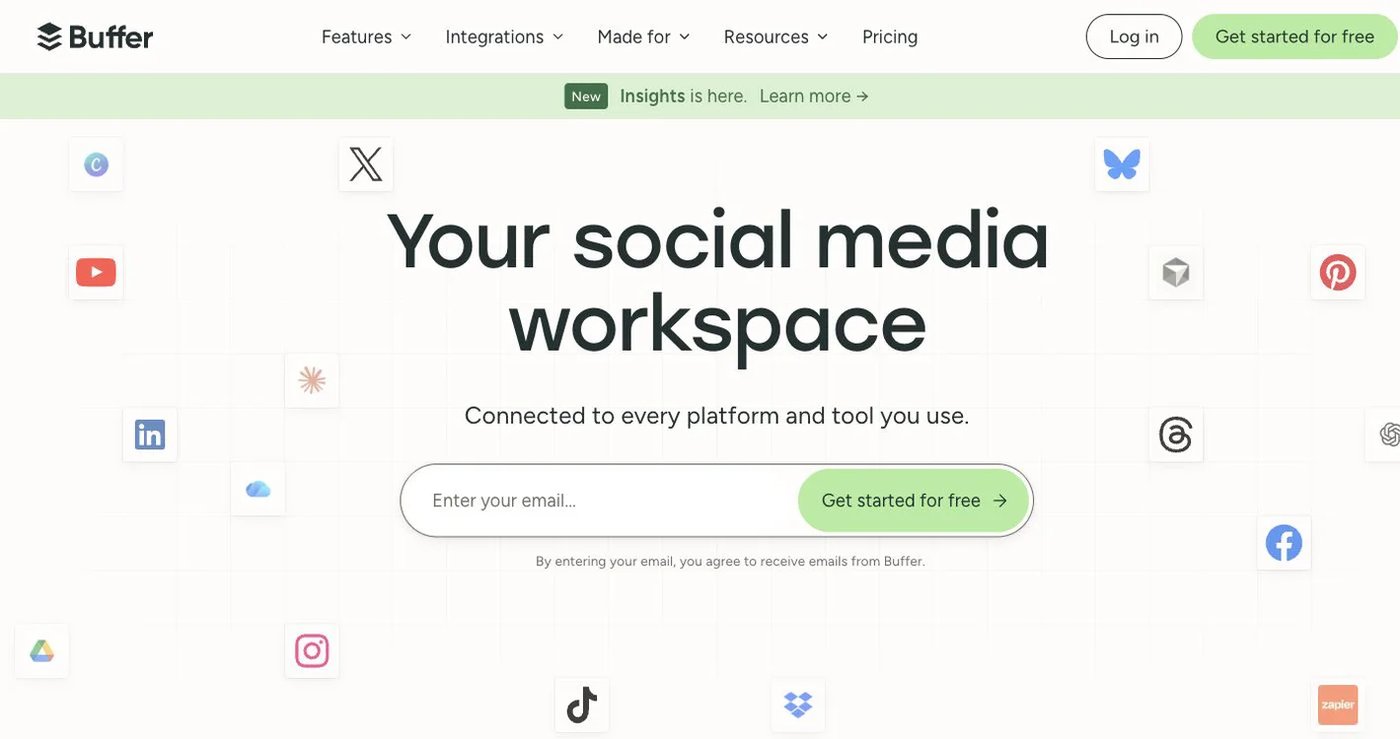
Buffer suits small teams that mainly need planning, scheduling, and light analytics. Its free plan covers three channels with 10 scheduled posts per channel. Essentials is priced per channel and adds unlimited scheduled posts. Team adds collaborators, permissions, and draft approvals.
Per-channel pricing is cheap for a few profiles and less predictable as an agency grows. Price it with your real channel count. Buffer has a developer platform, but API quotas depend on the plan. Check the Buffer pricing page and API documentation together.
Choose it when a clean queue for a handful of channels is all you need.
3. NapoleonCat: best for inbox automation
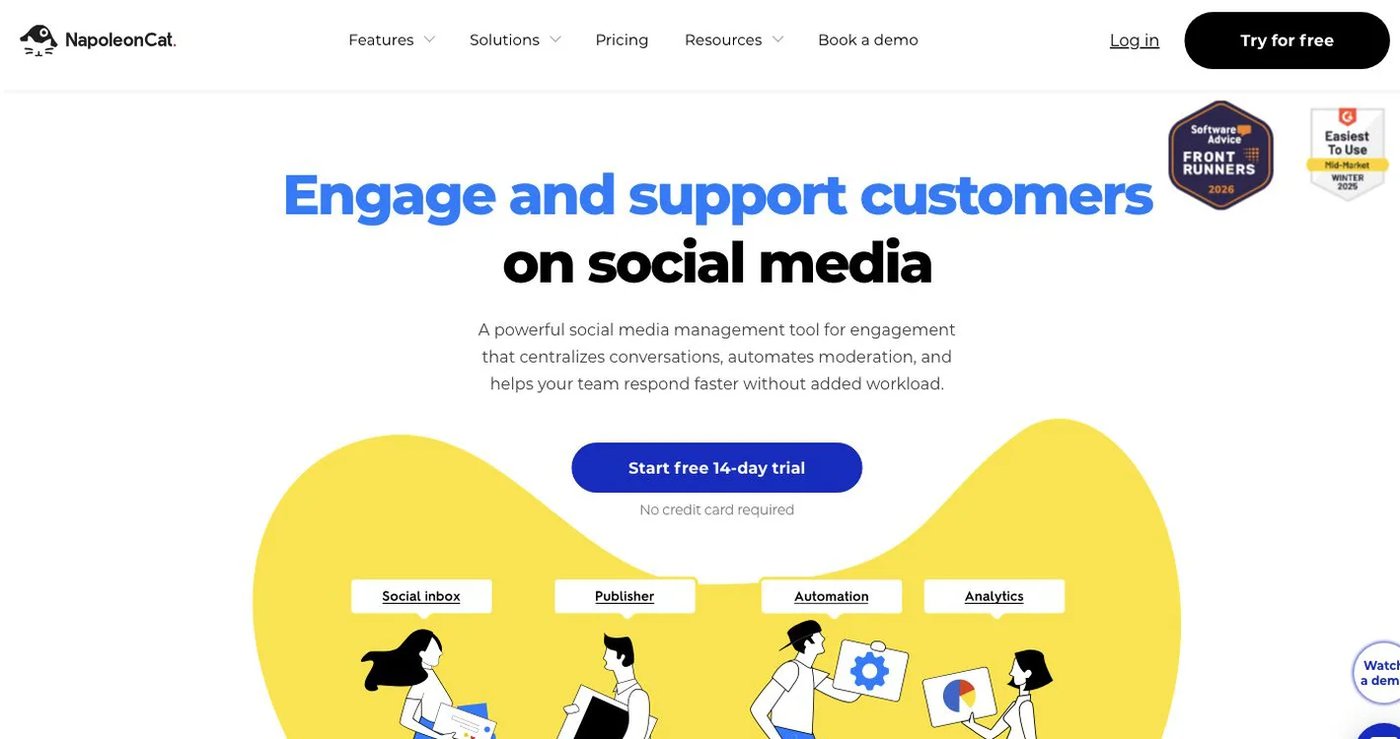
NapoleonCat focuses on a social inbox, automated moderation, publishing, and analytics. Standard starts at $89 per month with two users and five profiles. Pro starts at $109 and adds the inbox. Expert starts at $139 and adds auto-moderation and sentiment analysis. Annual billing lowers the rate.
It is the closest functional match to Agorapulse for teams handling high comment volume. The NapoleonCat pricing page places API access on Enterprise.
Count the profile slots you need, since Standard covers only five.
Choose it when moderation rules and customer service matter more than a developer-friendly publishing workflow.
4. Planable: best for visual review and approvals

Planable is built around the review cycle. Drafts appear in a visual calendar, stakeholders comment beside the content, and approval steps gate publishing. It fixes feedback scattered across email, chat, and documents.
It does not lead with listening, customer care, or deep reporting. Basic costs $39 per workspace monthly ($33 billed yearly) and Pro $59 ($49), with post allowances per workspace, so count the workspaces, posts, and approval levels you need on Planable’s pricing page.
Test every post format you publish before moving the team over, and confirm how many reviewers each workspace allows.
Choose it when content review is the bottleneck and another tool can handle engagement.
5. Sendible: best for client-facing agency work
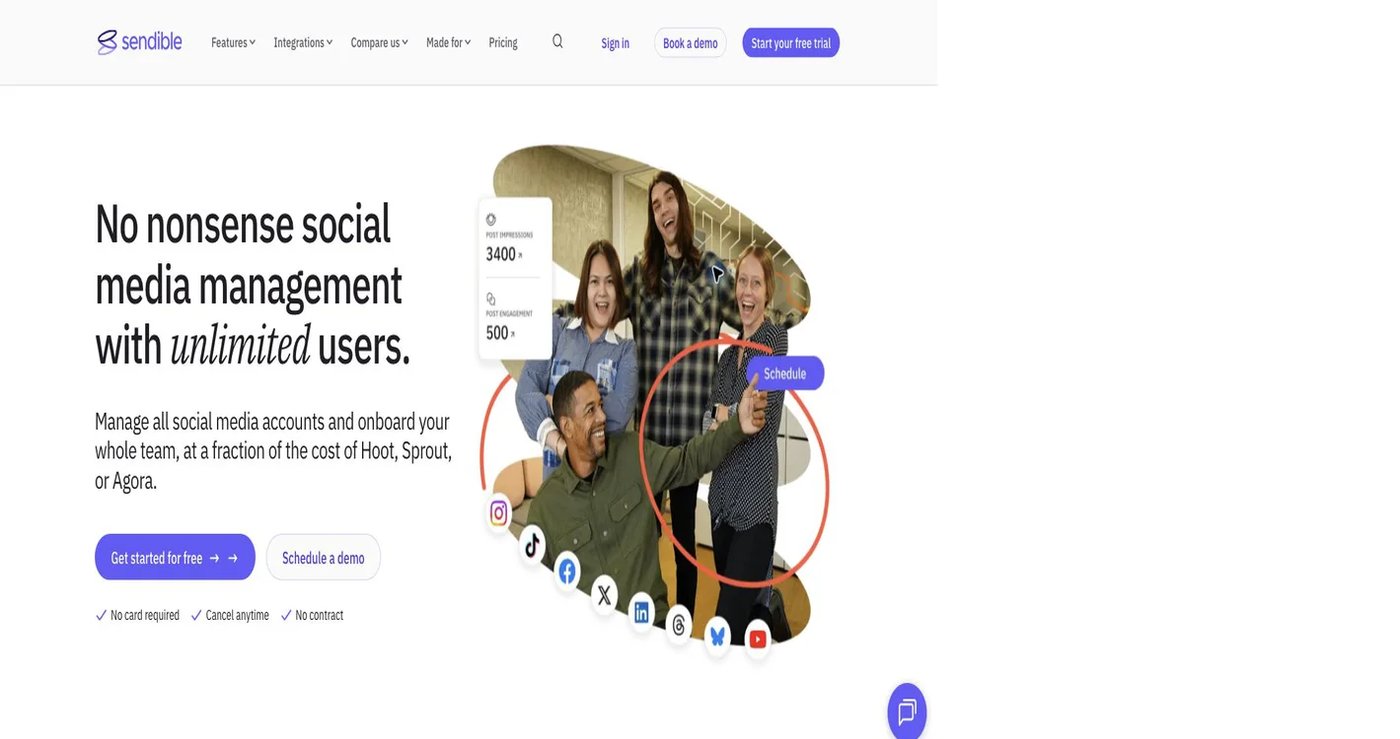
Sendible organizes publishing around client dashboards, permissions, approvals, and branded reports. Core is $35 per month, or $31 per month billed annually, with 1 workspace, 6 profiles, and unlimited users. Plus is $99, Premium $199, Elite $299, and Enterprise $750.
Unlimited users make it cheaper than Agorapulse for larger teams, but profile and workspace caps rise steeply by tier. See Sendible’s pricing for allowances.
Agencies use it to give each client a controlled workspace instead of access to the whole account.
Choose it when client presentation and recurring reports matter more than API access.
6. Hootsuite: best for a mature management suite
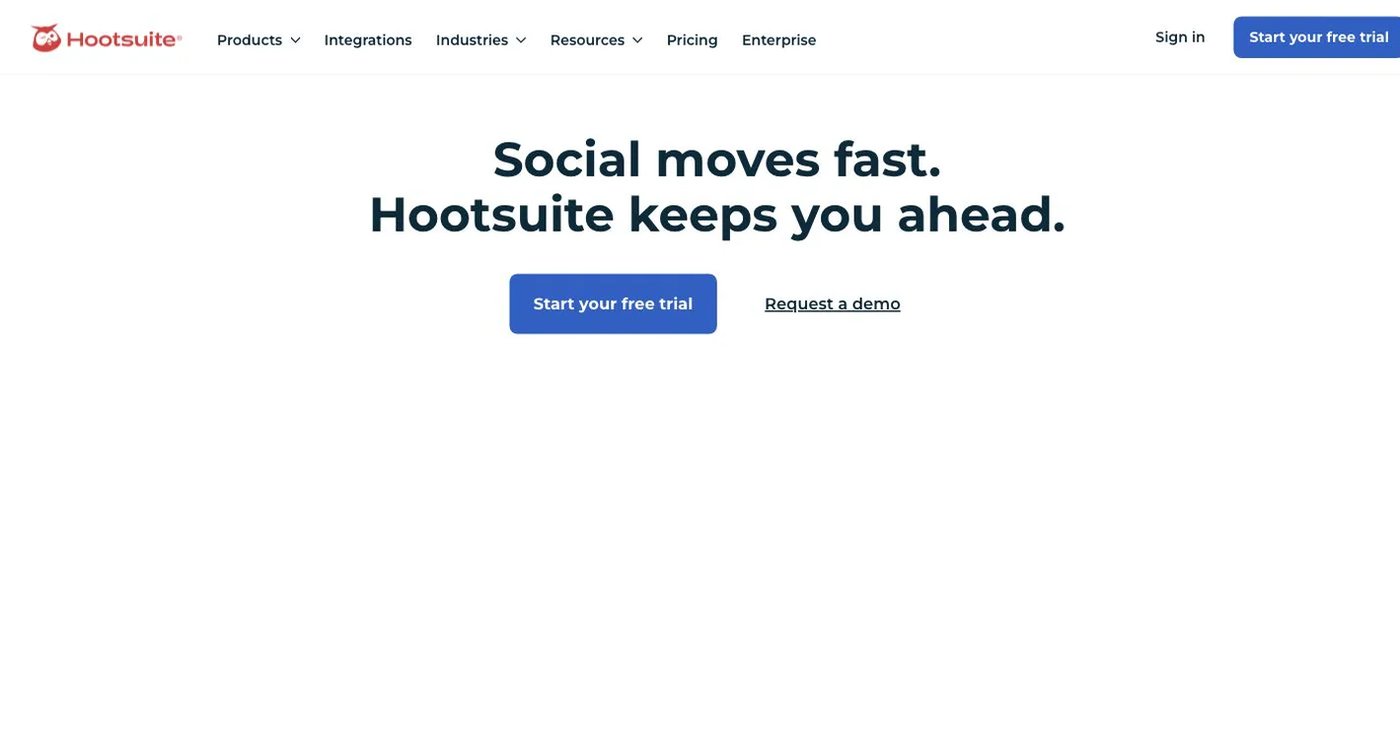
Hootsuite combines publishing, analytics, an inbox, listening, and team governance. It suits organizations that want one vendor for social operations and can absorb per-user pricing.
Standard costs $99 per user per month billed annually for 10 accounts, and Professional at $199 adds unlimited accounts. Price the users, accounts, approval needs, listening access, and reporting modules on Hootsuite’s plans page. The suite costs more than a focused scheduler, so make sure you will use listening and governance.
Its long history and broad suite make it a common pick for larger organizations consolidating vendors. Plan names and included features change often, so compare against the live plans page, not an old table.
Choose it when governance and listening justify a larger suite.
7. Sprout Social: best for customer care and governed reporting
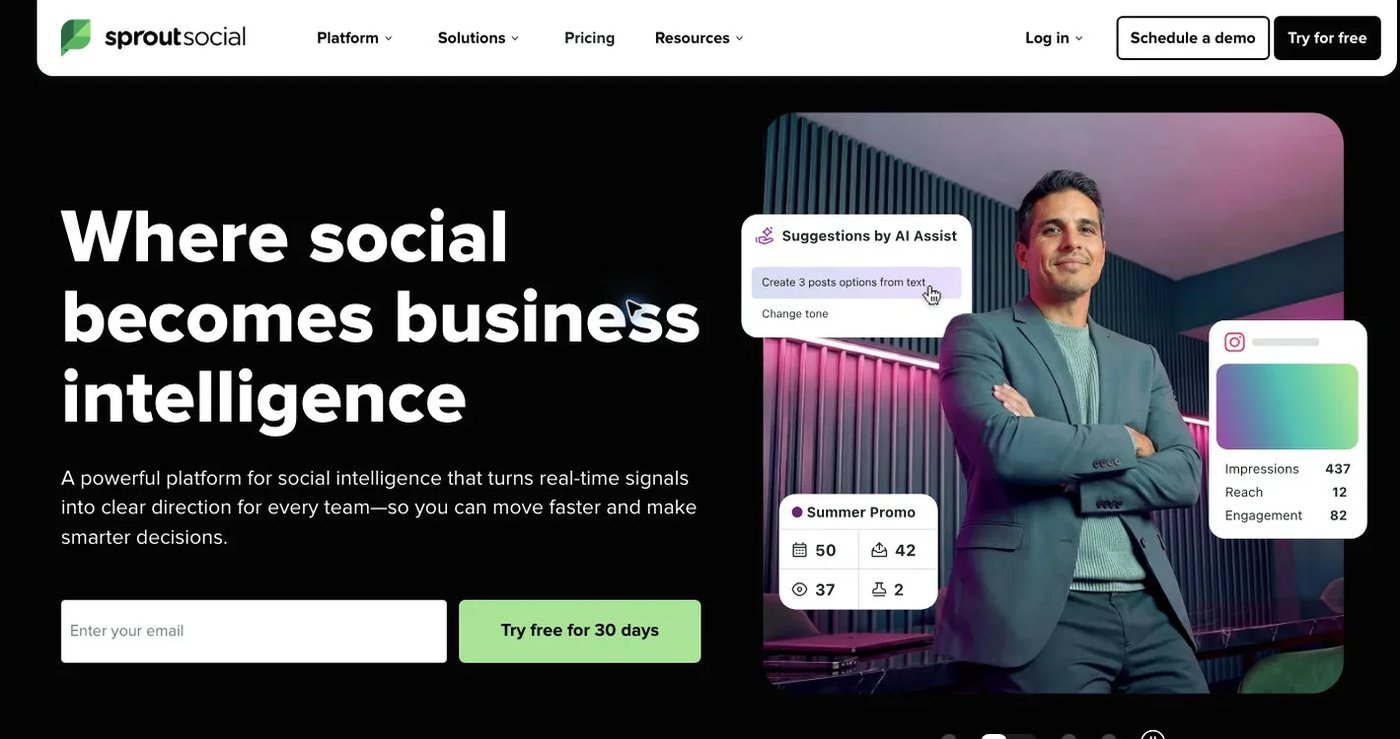
Sprout Social combines publishing, its Smart Inbox, permissions, analytics, and care workflows. Higher tiers and add-ons extend it into listening and premium analytics.
Sprout prices by seat, and specialist features often need higher plans or add-ons. Compare it with your full team size on Sprout Social pricing, not a single-seat headline.
Its Smart Inbox and care workflows go deeper than most schedulers, which helps teams answering high volumes of customer messages. Model the cost using the full team size and every module you need.
Choose it when reporting, care workflows, and formal governance outweigh cost.
How do you choose an Agorapulse alternative?
- List every profile, account type, and post format you publish.
- Count everyone who publishes, approves, or only reviews, then price per user vs per account.
- Separate comments and replies from DMs, listening, and moderation.
- Run one real approval cycle in each trial.
- Confirm analytics network by network.
- If automation matters, check which plan includes the API.
Which Agorapulse alternative should you choose?
Postqued is the best pick for most teams leaving Agorapulse: per-account pricing, approvals with external reviewers, an inbox for comments, and API plus MCP access on every plan from $9/month. Pick NapoleonCat for moderation-heavy inboxes, Sprout Social or Hootsuite for listening and governance, Planable for review-only workflows, Sendible for client reporting, and Buffer for a tiny queue.
Primary sources
- Agorapulse pricing and network API limitations
- Postqued pricing, About Postqued, and analytics coverage
- Buffer pricing and Buffer API
- NapoleonCat pricing
- Planable pricing
- Sendible pricing
- Hootsuite plans
- Sprout Social pricing
Bring your whole team onto Postqued Pro for $49/month and start with a 7-day free trial: See Postqued pricing.